Desserts · Part 2 of 3: Instructions
Peach Pecan Brioche Brown Butter Cobbler Bake in One Skillet Step-by-step instructions
- Prep
- Cook
- Total
- Serves
- 8
Before you start
Gather everything before you start, since the brown butter and custard move quickly once you begin. Set the oven rack in the middle position and heat the oven to 350°F (175°C). Cut the peaches into wedges and set them aside, so they do not brown while you work. Toast the pecan halves in a dry pan until fragrant, let them cool, and chop about one cup, keeping the remaining halves whole for the top.
Cut the day-old brioche into cubes about one inch across. Grate the cold butter on a box grater so it is ready for the saucepan. Have the whisk, the mixing bowl and the cast iron skillet within reach, and measure the milk, cream, sugar, vanilla and salt in advance.
Ingredients at a glance (12)
- 4 tbsp unsalted butter, grated on a box grater
- 3 ripe yellow peaches, pitted and cut into wedges
- 1 cup pecan halves, toasted and chopped, plus extra halves for topping
- 8 oz day-old brioche, cut into cubes
- 4 large eggs
- 1 1/2 cups whole milk
- 1/2 cup heavy cream
- 1/2 cup granulated sugar
- 2 tsp vanilla extract
- 1/4 tsp kosher salt
- caramel sauce, for drizzling, to taste
- vanilla ice cream, for serving
Instructions
Build the layers and brown the butter
- Prepare the peaches and pecansCut the ripe peaches into wedges on a wooden cutting board. Toast the pecan halves in a dry pan until fragrant, then chop about 1 cup of them and set the remaining halves aside for topping.Look for Pecans smell toasty and nutty, and the peach wedges hold their shape.Tip Toast the pecans until just fragrant, then let them cool before chopping so they stay crisp.
- Cube the briocheCut the day-old brioche into even cubes, about 1 inch each. Day-old bread absorbs the custard without turning mushy, so use bread that is slightly dry to the touch.Look for Cubes are even and feel dry and firm on the outside.Tip If the brioche is fresh, leave the cubes out on a tray for an hour to dry slightly.
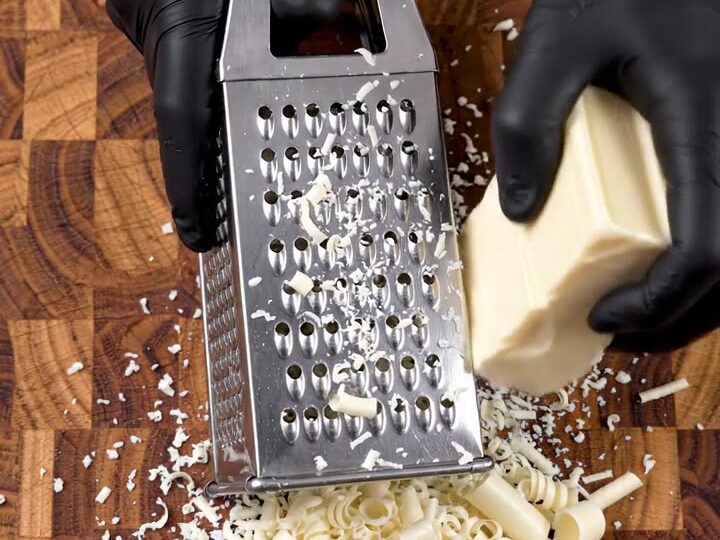
- Brown the butterGrate the cold butter on a box grater into curly shreds. Melt the shreds in a small saucepan over medium heat, swirling until the butter foams, then turns golden with nutty brown specks at the bottom.Look for Butter smells nutty and the milk solids are amber brown.Tip Pull the pan off the heat as soon as the solids turn brown, because they burn fast.
At the end of this phase, the peach wedges and brioche cubes should be spread evenly in the cast iron skillet, with chopped and whole pecans scattered over the top. The brown butter should smell nutty and look amber, with dark specks on the bottom of the saucepan. Before going on, check that no area of the skillet is left bare and that the butter is brown but not black.
If the butter darkens too fast, pull the pan off the heat right away and pour it into a bowl to stop the cooking. Taking a moment to level the layers now makes the custard soak in evenly later, so the bread should look full and the fruit should sit between the cubes without large gaps.
Whisk the custard and let it soak
- Layer the peaches, brioche and pecansArrange the peach wedges and brioche cubes in the cast iron skillet, alternating them so the fruit sits between the bread. Scatter the chopped pecans and the reserved pecan halves over the top.Look for Peaches and bread are spread evenly, with no large gaps in the skillet.Tip Press the bread down lightly so the custard can reach every cube.
- Whisk the custardWhisk the eggs, sugar, salt, milk, heavy cream and vanilla extract in a bowl until smooth and pale. Stir in the warm brown butter, then pour the custard slowly over the peaches and brioche.Look for Custard is smooth, pale golden and evenly mixed with no sugar grains.Tip Pour slowly so the custard soaks into the bread instead of pooling.
- Let the brioche soakLet the skillet rest for about 15 minutes so the custard soaks into the brioche cubes. Press any dry bread gently with a spoon to moisten it.Look for Bread cubes look soaked and glossy, with no dry corners showing.Tip Soaking longer gives a more custard-like center, while a short rest keeps more texture.
At the end of this phase, the custard should be smooth, pale golden and fully blended, with no streaks of egg and no sugar grains left at the bottom of the bowl. After pouring it over the skillet, the brioche cubes should look saturated and glossy, with the custard reaching into the crumb.
Before going on, lift one cube with a spoon and check that it feels heavy and moist all the way through. If dry corners are still showing, press them gently with the spoon and let the bake rest a few more minutes. The soaking step decides the final texture, so the bread should look evenly wet before it goes into the oven.
Bake until golden and set
- Bake until golden and setHeat the oven to 350°F (175°C). Bake the skillet on the middle rack for 40 to 45 minutes, until the brioche is deep golden and the custard is set and moist in the center. The eggs must be fully cooked through, reaching 160°F (71°C).Look for Top is golden and flaky, and the custard no longer looks wet in the center.Safe temperature 160°F (71°C) internal temperature (egg dishes)Tip Cover loosely with foil if the top browns too fast before the center sets.
- Rest and serveLet the bake rest for 15 minutes so the custard firms slightly. Drizzle with caramel sauce, top with a scoop of vanilla ice cream and garnish with pecan halves.Look for Edges are firm, the top is shiny and the bake holds its shape when cut.Tip Spoon the bake straight from the skillet so it stays warm and tender.
At the end of this phase, the brioche should be deep golden at the edges, the top should look flaky, and the center should feel set and moist when gently pressed, not wobbly. The eggs need to reach 160°F (71°C) in the center to be cooked through. Before going on, check the temperature with an instant-read thermometer and confirm that the bake has rested for 15 minutes so the custard firms. A slightly jiggle in the very middle is normal as it rests. Bake a few minutes longer if the center still looks wet, because a fully set bake slices cleanly and holds its shape on the plate.
Common mistakes
The most common mistake is using fresh brioche, which turns soft and collapses under the custard. Use bread that is a day old or dried out on a tray for an hour. Another frequent problem is overbrowned butter: once the milk solids turn dark brown and smell burnt, the bake tastes bitter, so pull the saucepan off the heat as soon as the solids turn amber.
Do not pour the custard all at once, because it pools and leaves dry bread on top. Taking the bake out too early leaves a loose center and a watery base, so check the temperature before you remove it. Finally, do not skip the rest; cutting the bake too soon makes the custard run across the plate.
How to tell it’s done
The bake is done when the brioche is deep golden and flaky at the edges, and the custard is set and moist in the center. Use an instant-read thermometer: the center of the custard should reach 160°F (71°C), which is the safe temperature for the eggs. A gentle wobble in the middle is fine, since it firms as the bake rests for 15 minutes. If the top browns before the center sets, cover loosely with foil and bake a few minutes longer. A toothpick inserted into the middle should come out with only moist crumbs, not raw custard.
- Egg dishes: 160°F (71°C) in the thickest part
Up next · Part 3 of 3
4 variations · storage & make-ahead · 5 answers · printable card
Tips, FAQ & printable recipe (Part 3)← Back to the ingredients (Part 1)