Desserts · Part 2 of 3: Instructions
Peach Pecan Brioche Cobbler with Brown Butter Custard Step-by-step instructions
- Prep
- Cook
- Total
- Serves
- 8
Before you start
Gather everything before you turn on the stove so the custard can be whisked and poured without pause. Cut the peaches into halves and slices, chop the pecans and toast them, and cube the brioche into bite-sized pieces. Keep the brioche in one layer on a tray so it dries a little more while you work. Grate the cold butter on a box grater and place the curls in the refrigerator on a small plate.
Preheat the oven to 350°F (175°C) with a rack set in the lower-middle position so the bottom of the bake sets properly. Have a whisk, a medium saucepan and a 10-inch cast iron skillet ready. Having each element measured and waiting makes the assembly quick, which keeps the brioche from over-soaking before it reaches the oven.
Ingredients at a glance (13)
- 4 fresh peaches, halved and sliced
- 1 cup pecan halves, chopped and toasted
- 8 oz day-old brioche, cut into bite-sized cubes
- 2 tbsp cold unsalted butter, grated on a box grater
- 6 tbsp unsalted butter, melted and browned
- 3/4 cup packed brown sugar
- 3 large eggs
- 1/2 cup whole milk
- 1/2 cup heavy cream
- 1 tsp vanilla extract
- 1/4 tsp fine sea salt
- vanilla ice cream for serving
- brown butter caramel for drizzling, to taste
Instructions
Prepare the fruit and bread
- Prepare the peaches and pecansHalve and slice the peaches, discarding the pits. Chop the pecans and toast them in a dry skillet over medium heat until fragrant. Cube the day-old brioche into bite-sized pieces and set everything aside.Look for Pecans smell toasty and the brioche cubes feel dry and firm to the touch.Tip Day-old brioche absorbs the custard without turning to mush, so avoid fresh loaves.
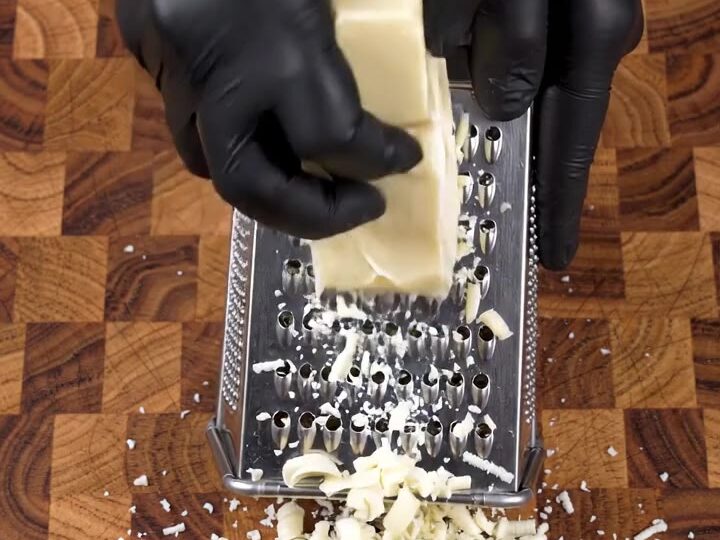
- Grate the cold butterGrate the cold butter on the large holes of a box grater, letting the fine curls fall onto a small plate. Keep them chilled until you are ready to scatter them over the top.Look for The butter forms fine, separate curls rather than clumps.Tip Chill the grated butter in the refrigerator for a few minutes if it softens too quickly.
- Brown the butterMelt the 6 tablespoons of butter in a medium saucepan over medium heat. Keep swirling until the milk solids turn golden brown and smell nutty, then remove from the heat and let it cool slightly.Look for Butter turns amber with brown specks and a nutty aroma.Tip Pour the butter into a bowl right away so it stops cooking from the hot pan.
The peaches are sliced evenly, the pecans are toasted and fragrant, and the brioche cubes feel dry and firm. The butter has been grated into fine curls and chilled. Before moving on, check that every component sits on the counter in its own bowl or plate, ready to be added in order.
The brown butter should be cooling in its saucepan, golden with brown flecks and a nutty aroma, but not burned or bitter. If any cube looks damp or soft, leave it out a little longer before assembling, because stale bread is what gives the cobbler its structure and keeps the custard from turning gummy in the middle of the skillet.
Assemble the custard layers
- Layer the peaches and briocheArrange the sliced peaches in an even layer in the bottom of the cast iron skillet. Scatter the brioche cubes over the fruit, then add the chopped toasted pecans.Look for Peach slices cover the bottom and the bread cubes sit loosely on top.Tip Press the peaches in lightly so their juices spread through the bread.
- Whisk the brown butter custardWhisk the browned butter with the brown sugar, eggs, milk, cream, vanilla and salt until smooth and glossy. Pour the custard slowly over the brioche and peaches, letting the bread soak it up.Look for The custard looks smooth and glossy, and the bread begins to darken as it soaks.Safe temperature 160°F (71°C) internal temperature (egg dishes)Tip Pour in stages and pause so every cube absorbs liquid before more is added.
- Top with butter and bakeScatter the grated cold butter over the top. Bake until the top turns deep golden and flaky and the juices bubble around the edges, about 45 minutes, until the custard is set in the center and reaches 160°F (71°C).Look for The top is deep golden and flaky and juices bubble at the edges.Safe temperature 160°F (71°C) internal temperature (egg dishes)Tip Check the center with an instant-read thermometer; tent loosely with foil if the top browns too fast.
The peaches cover the bottom of the skillet in a single layer, the brioche sits over them and the pecans are scattered throughout. The custard should look smooth, glossy and pale amber, with no lumps of sugar or egg visible.
Pour it slowly, pausing so the bread soaks up liquid before more goes in, and check that the top cubes are moistened rather than floating dry. Stop pouring once the bread looks evenly darkened and the liquid level is just below the top cubes, so it will not overflow when the skillet goes into the oven.
Bake until deep golden
- Rest and make the caramelLet the cobbler rest for about 15 minutes so the custard firms slightly. Meanwhile, warm the brown butter caramel gently until pourable.Look for The top feels set and the caramel flows smoothly when warm.Tip Warm the caramel in short bursts so it does not seize.
- Serve with ice creamSpoon the cobbler into bowls while warm. Top each portion with a scoop of vanilla ice cream, drizzle with brown butter caramel and finish with a few extra toasted pecans around the rim.Look for Ice cream begins to melt over the warm, golden bake.Tip Serve immediately while the ice cream and the warm bake still contrast nicely.
After about 45 minutes, the top should be deep golden and flaky, the juices should bubble around the edges, and the center should feel firm and moist when lightly pressed. Use an instant-read thermometer in the center and check that the custard has reached 160°F (71°C).
If the top darkens too quickly, cover loosely with foil and continue baking. The cobbler should smell buttery and caramelized, with a faint toastiness from the brown butter and pecans, before you move it to the counter to rest.
Common mistakes
Avoid crowding the pan or flipping too early before a crust forms, keep the burner at steady medium-high heat so aromatics never scorch, and season in balanced layers rather than only at the end.
How to tell it’s done
The dish is ready when the exterior shows even golden color, the center feels tender when pressed gently with a fork, and the sauce coats the back of a spoon glossy and fragrant.
- Egg dishes: 160°F (71°C) in the thickest part
Up next · Part 3 of 3
4 variations · storage & make-ahead · 5 answers · printable card
Tips, FAQ & printable recipe (Part 3)← Back to the ingredients (Part 1)