Desserts · Part 2 of 3: Instructions
Peach Brioche Cobbler with Brown Butter Custard and Pecans Step-by-step instructions
- Prep
- Cook
- Total
- Serves
- 6
Before you start
Gather all ingredients and equipment before you turn on the oven. Cube the brioche into 1-inch pieces and let it sit uncovered for 20 to 30 minutes so the surface dries slightly; this helps it absorb custard without collapsing. Wash and slice the peaches, removing the pits, and set them aside on a plate.
Toast the pecans in a dry pan until fragrant, let them cool, then chop them coarsely. Cut the cold butter into pieces, and set aside about 2 tablespoons to grate over the top before baking. Keep the eggs and milk at room temperature so the custard blends smoothly. Set the oven rack to the middle position and preheat to 350°F (175°C) only when you are ready to layer the skillet.
Ingredients at a glance (11)
- 8 oz brioche, cut into 1-inch cubes
- 3 ripe peaches, pitted and sliced
- 1/2 cup pecans, chopped and toasted
- 6 tbsp unsalted butter, cold, plus melted for the custard
- 3 large eggs
- 1 cup whole milk
- 1/2 cup granulated sugar, plus extra for the crumbs
- 1 tsp vanilla extract
- kosher salt, to taste
- vanilla ice cream, for serving
- store-bought or made ahead caramel sauce, for drizzling, to taste
Instructions
Prepare the fruit and bread
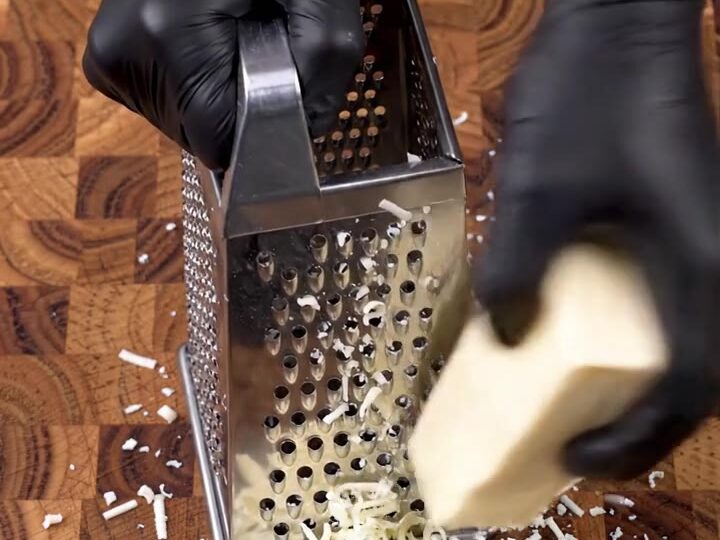
- Prepare the fruit, nuts and breadToast the chopped pecans in a dry pan over medium heat until fragrant, then set them aside. Slice the peaches and cube the brioche into even 1-inch pieces. Grate the cold butter on a box grater over the cutting board until you have fine shavings.Look for Pecans smell nutty and toasty, and the peaches are thinly sliced with no large chunks left.Tip Keep the grated butter cold until it goes into the custard, so the shavings stay easy to measure.
- Brown the butter for the custardMelt the remaining butter in a small saucepan over medium heat, swirling often, until it foams and turns golden brown with nutty specks. Pour it into the glass measuring pitcher and let it cool for a few minutes.Look for The butter turns amber and smells nutty, with brown specks settling at the bottom of the pan.Tip Pull the pan off the heat as soon as the color deepens, since brown butter can scorch quickly.
At the end of this phase, the brioche cubes are dry on the surface and the peaches are sliced into even pieces with no large chunks. The pecans should smell toasted and be cooled before you chop them, so they stay crisp in the finished cobbler. Check that all the fruit and nuts are in separate bowls and that the cutting board is clear.
You should be able to see the cubes and slices clearly. If the peaches look wet or the bread feels soft, let them sit a few minutes longer before layering the skillet. This preparation sets the foundation for an even bake and keeps the texture consistent across every serving.
Brown the butter and make custard
- Layer the skilletPreheat the oven to 350°F (175°C). Arrange the brioche cubes in an even layer in the cast iron skillet. Scatter the peach slices and chopped pecans over and between the bread pieces.Look for The bread covers the bottom of the skillet in one even layer, with fruit and nuts spread throughout.Tip Press the cubes down lightly so the custard can reach the center of the pan.
- Make and pour the custardWhisk the eggs, milk, sugar, vanilla and a pinch of salt into the warm brown butter in the pitcher until smooth and glossy. Pour the custard evenly over the fruit and bread, pressing gently so it soaks in.Look for The custard looks smooth and pale golden, and the bread begins to darken as it absorbs the liquid.Tip Pour in two stages so the bread absorbs the custard evenly rather than floating on top.
- Let the bread soakLet the skillet rest for about 10 minutes so the bread can absorb the custard. Scatter the grated butter shavings over the top, then add a sprinkle of sugar for the crust.Look for The bread looks moist and saturated, with no dry patches visible on the surface.Tip Rest the skillet on a heatproof surface so the bottom stays cool while the custard sets in.
At the end of this phase, the butter is golden brown with nutty specks, and the custard is smooth and glossy when whisked with eggs, milk, sugar, vanilla and a pinch of salt. The mixture should look uniform, with no streaks of egg white or clumps of sugar. Stop whisking once it looks even, and check that the butter has cooled enough not to scramble the eggs. Taste a small drop for balance; it should be sweet and buttery without any burnt flavor. If the butter smells bitter or the color is very dark, discard it and start again, because scorched butter will affect the flavor of the whole dessert.
Layer, soak and bake
- Bake until deep goldenBake the cobbler on the middle rack for about 35 to 40 minutes, until the brioche is deep golden and crisp at the edges, the peaches are tender and jammy, and the custard has set into a bubbling, caramelized crust. Cool for 10 minutes.Look for The top is deep golden, the edges crisp, and the custard bubbles lightly at the sides of the skillet.Safe temperature 160°F (71°C) internal temperature (egg dishes)Tip Rotate the skillet halfway through baking if your oven heats unevenly.
- Serve with ice cream and caramelSpoon the cobbler into a white baking dish or onto plates. Top each portion with a scoop of vanilla ice cream, drizzle with caramel sauce, and finish with extra toasted pecans and sugar crumbs around the plate.Look for Each serving is warm and glossy, with melting ice cream and caramel running into the fruit.Tip Serve while the cobbler is still warm so the ice cream melts into the bread.
At the end of this phase, the cobbler looks deep golden on top, with crisp brioche edges and custard bubbling gently at the sides of the skillet. The fruit should be tender and jammy when you press a spoon into it, and the custard should be set rather than wet. Check the center by gently pressing the surface; it should feel firm and springy. If the top is browning too quickly, tent it loosely with foil for the last few minutes. Let the skillet rest for 10 minutes before serving so the custard firms slightly and the slices hold their shape on the plate.
Common mistakes
The most common mistake is browning the butter too far. Once the milk solids turn dark brown and smell burnt, the flavor becomes bitter and will carry into the custard. Watch the pan closely from the moment it begins to foam, and remove it from the heat as soon as it turns golden. Another frequent error is pouring the custard too quickly, which leaves dry bread on top and pools of liquid underneath.
Pour in stages and press the bread gently so it absorbs evenly. Using overripe peaches can also cause a watery texture, so choose fruit that is ripe but still holds its shape when sliced. Finally, do not skip the rest before serving; cutting into the cobbler too early can make the custard run.
How to tell it’s done
The cobbler is done when the brioche is deep golden on top and crisp at the edges, the peaches are tender and jammy, and the custard has set into a bubbling, caramelized crust. Gently press the center with the back of a spoon: it should feel firm and springy, not loose. Look for a few bubbles around the sides of the skillet, which indicate that the custard has heated through.
Because this dish contains eggs, the custard must reach 160°F (71°C) to be cooked through and safe to eat. Use an instant-read thermometer inserted into the center of the custard near a piece of brioche, away from the skillet walls. If the center is still soft, return the skillet to the oven for another 5 minutes and check again.
- Egg dishes: 160°F (71°C) in the thickest part
Up next · Part 3 of 3
4 variations · storage & make-ahead · 5 answers · printable card
Tips, FAQ & printable recipe (Part 3)← Back to the ingredients (Part 1)