Desserts · Part 2 of 3: Instructions
Passionfruit Macadamia White Chocolate Cheesecake with Glossy Passionfruit Topping Step-by-step instructions
- Prep
- Cook
- Total
- Serves
- 12
Before you start
Gather all of the ingredients and equipment before you begin, so the cheesecake moves smoothly from one stage to the next. Set the cream cheese, eggs and heavy cream out on the counter for about an hour so they blend without lumps. Preheat the oven to 325°F (163°C) and position a rack in the lower third. Wrap the outside of the springform pan in two layers of heavy-duty aluminium foil to keep water from seeping in during the water bath. Melt the white chocolate gently in a bowl set over barely simmering water or in short bursts in the microwave, then let it cool to lukewarm so it does not scramble the eggs.
Ingredients at a glance (14)
- 1 1/2 cups graham cracker crumbs
- 6 tbsp unsalted butter, melted
- 2 tbsp granulated sugar
- 32 oz cream cheese, softened
- 3/4 cup granulated sugar
- 3 large eggs
- 1/2 cup heavy cream
- 4 oz white chocolate, melted and cooled
- 1 tsp vanilla extract
- 6 ripe passionfruit
- 1/4 cup granulated sugar
- 1 tsp cornstarch
- 1/2 cup macadamia nuts, chopped
- 2 oz white chocolate, grated
Instructions
Build the crust and filling
- Prepare the biscuit crustMix the graham cracker crumbs, melted butter and sugar until evenly moistened. Press the mixture firmly over the base and 1 inch up the sides of a 9-inch springform pan, then chill while you prepare the filling.Look for The crumbs hold together when pinched and look evenly damp with no dry patches.Tip Press the base with the bottom of a measuring cup for a firm, even layer that will not crumble when sliced.
- Halve and scoop the passionfruitCut the ripe passionfruit in half across the middle. Scoop out the yellow-orange pulp and seeds into a fine-mesh sieve set over a bowl, pressing gently to separate the pulp from the seeds.Look for The pulp is bright yellow-orange, fragrant and loose around the dark seeds.Tip Use fruit that feels heavy and has deeply wrinkled skin, which signals the most juice.
- Chop the macadamia nutsSet the macadamia nuts on a cutting board and chop them with a large chef's knife into irregular pieces. Spread the pieces out so they are ready for the garnish.Look for Pieces range from fine crumbs to larger chunks, with no whole nuts left.Tip Rock the knife in a steady motion and keep the pieces irregular for a rustic finish.
At the end of this phase the biscuit crust should be firm, evenly pressed and chilling in the pan, with no dry patches and no crumbs loose at the edges. The cream cheese filling should be smooth, thick and pale, without lumps and with the white chocolate fully blended in.
Check that the batter is glossy rather than grainy, and that the eggs have been mixed in on low speed so the filling is not overly aerated. Pour the filling over the chilled crust and smooth the top with a spatula, making sure the surface is level before it goes into the oven. A level, smooth top gives the glaze an even surface to sit on once the cheesecake is chilled and ready for serving.
Bake, cool and chill
- Beat the cream cheese fillingBeat the softened cream cheese and sugar in a large bowl until smooth. Add the eggs one at a time, mixing on low speed until just combined, then stir in the heavy cream, cooled melted white chocolate and vanilla.Look for The batter is smooth, thick and pale with no lumps of cream cheese.Safe temperature 160°F (71°C) internal temperature (egg dishes)Tip Beat on low speed after adding the eggs to avoid trapping too much air in the filling.
- Bake the cheesecakePour the filling over the chilled crust and smooth the top. Bake in the preheated oven at 325°F (163°C) until the edges are set and the centre has only a slight wobble, about 55 to 65 minutes.Look for The edges look set and matte, and the centre jiggles only slightly when the pan is nudged.Safe temperature 160°F (71°C) internal temperature (egg dishes)Tip Set the pan in a larger pan of hot water to bake gently and reduce cracks on top.
- Cool and chill the cheesecakeTurn off the oven and crack the door open. Let the cheesecake cool inside for 1 hour, then run a knife around the edge and refrigerate it uncovered for at least 4 hours, until firm.Look for The surface feels firm and the sides pull cleanly away from the pan.Tip Chilling overnight gives the cleanest slices and the firmest texture.
At the end of this phase the cheesecake should have set around the edges, with a centre that shows only a slight, gentle wobble when the pan is nudged. The surface should look matte and smooth with no deep cracks, and the kitchen should smell lightly of vanilla and baked cream cheese.
Cool the cheesecake in the oven with the door ajar for about an hour, then move it to the refrigerator uncovered. Before you add the topping, check that the cheesecake feels firm to a gentle touch and that the sides release cleanly from the pan when you run a knife around the edge. A fully chilled cheesecake will hold its shape under the passionfruit and give clean, precise slices.
Top, garnish and slice
- Make the passionfruit toppingStir the passionfruit pulp, sugar and cornstarch in a small saucepan. Simmer over medium heat for 2 to 3 minutes until glossy and slightly thickened, then let it cool for 10 minutes.Look for The sauce turns glossy and coats the back of a spoon lightly.Tip Let the topping cool before spooning it on so it does not melt the top layer.
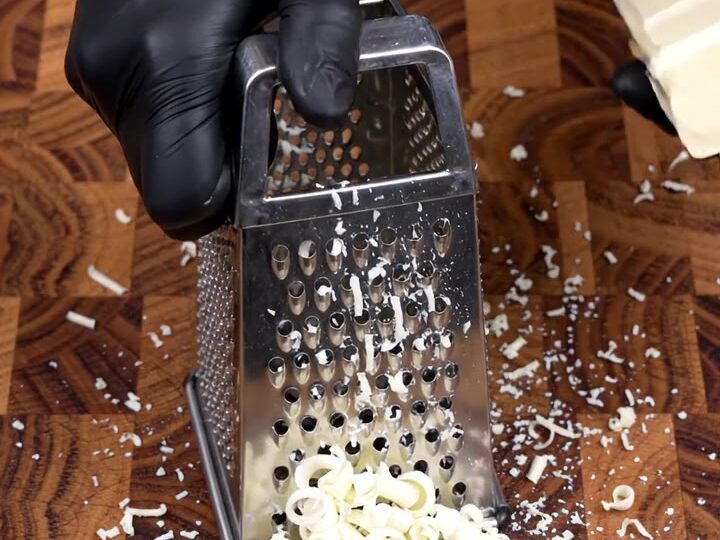
- Top with passionfruit and white chocolateSpoon the passionfruit pulp and sauce over the chilled cheesecake in a swirling pattern. Scatter the chopped macadamia nuts over the top and sprinkle with the grated white chocolate.Look for The topping pools in a glossy swirl with nuts and white chocolate shavings across the surface.Tip Grate the white chocolate just before serving so the shavings stay crisp and neat.
- Slice and serve the cheesecakeDip a sharp knife in hot water and wipe it dry before each cut. Slice the cheesecake into 12 wedges, releasing the springform sides first, and serve on individual plates.Look for Clean slices reveal smooth white layers under the golden topping.Tip Wipe the knife between each cut to keep the topping and crust neat on every wedge.
At the end of this phase the passionfruit topping should be glossy, lightly thickened and cool to the touch, with its seeds distributed through the pulp. Spoon it over the chilled cheesecake in a swirling pattern, and scatter the chopped macadamia nuts and grated white chocolate on top so the garnish is spread evenly.
Before slicing, check that the topping is set and that the cheesecake has stayed chilled, since warm topping will melt the surface. Dip a sharp knife in hot water and wipe it dry before each cut, so the wedges show crisp layers and a neat golden glaze. Serve the wedges on individual plates immediately, or keep them chilled until ready to eat.
Common mistakes
The most frequent problem with this cheesecake is cracking, which usually comes from baking at too high a temperature or from cooling it too quickly. Keep the oven at a steady 325°F (163°C) and never open the door during the first hour of baking, since a sudden drop in temperature causes the surface to split.
Another common error is lumpy filling, caused by cold cream cheese or by beating the eggs too fast, which traps excess air. Soften the cream cheese fully and mix on low speed once the eggs are added. Melted white chocolate that is too hot can scramble the eggs and produce grainy streaks, so let it cool to lukewarm before combining.
How to tell it’s done
The cheesecake is done when the edges look set and matte and the centre still has a gentle, slight wobble when the pan is nudged, which is the sign that the eggs are cooked through without over-baking. Its internal temperature at the centre should reach 160°F (71°C) for the eggs to be fully cooked. Remove the cheesecake from the oven at that point, because it continues to firm up as it cools. After chilling for at least four hours, the cheesecake should feel firm and hold a clean edge when sliced. The surface should look smooth and the crust should stay intact when you cut through it.
- Egg dishes: 160°F (71°C) in the thickest part
Up next · Part 3 of 3
4 variations · storage & make-ahead · 5 answers · printable card
Tips, FAQ & printable recipe (Part 3)← Back to the ingredients (Part 1)