Dinner · Part 2 of 3: Instructions
Parmesan Crusted Salmon with Crispy Golden Topping Step-by-step instructions
- Prep
- Cook
- Total
- Serves
- 2
Before you start
Before beginning, ensure the salmon is completely thawed if using frozen fillets, then pat the surface thoroughly dry with paper towels to ensure the topping adheres properly. Preheat your oven to 400°F (200°C) and prepare your baking sheet by lining it with parchment paper.
Having all your ingredients measured and ready in small bowls will make the assembly process move quickly and efficiently, allowing you to focus on getting the crust perfectly distributed across the top of each individual fillet before they head into the heat.
Ingredients at a glance (3)
- 2 fillets salmon fillets, about 6 oz each
- 1/2 cup panko breadcrumbs
- 1/4 cup parmesan cheese, freshly grated
Instructions
Crust Preparation
- Prepare the CrustCombine the panko breadcrumbs and freshly grated parmesan cheese in a small mixing bowl. Stir the mixture thoroughly until the ingredients are evenly combined, creating a light, sandy texture that will crisp up beautifully in the oven.Look for The mixture should look like coarse, dry sand.Tip Ensure the cheese is finely grated to help it melt and bind with the panko.
The mixture should look like coarse, dry sand. Ensure the parmesan is finely grated so every panko crumb is lightly coated, which is the secret to achieving that deep golden color and satisfying crunch once the salmon finishes baking in the oven.
Assembly
- Crust the SalmonPlace the salmon fillets onto a parchment-lined sheet pan. Gently press the panko-parmesan mixture onto the top of each fillet, ensuring an even layer covers the surface. Do not pack it too tightly, as a slightly loose crust will crisp more effectively.Look for The crust should sit evenly on top of the fish without falling off the sides.Tip Pat the salmon dry with a paper towel before applying the crust for better adhesion.
Each salmon fillet should be neatly arranged on the parchment-lined sheet pan. The crust should be piled high and distributed evenly across the top surface, creating a uniform layer that will brown consistently without falling into the pan or burning at the edges.
Baking
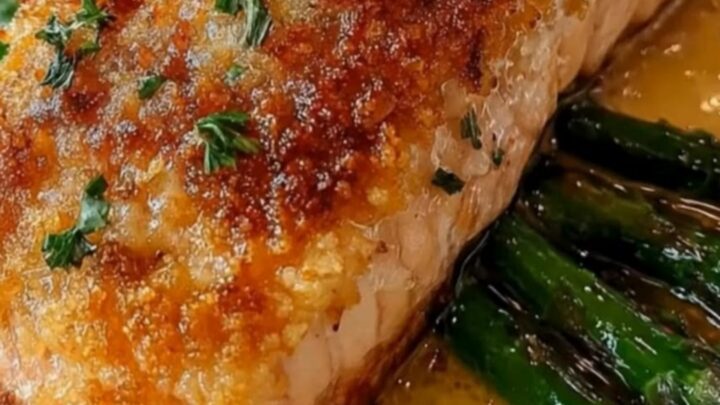
- Bake to PerfectionTransfer the sheet pan to a preheated oven at 400°F (200°C). Bake the salmon for approximately 12 to 15 minutes. The fish is done when it reaches an internal temperature of 145°F (63°C) and flakes easily with a fork. Remove from the oven and let the salmon rest for 3 minutes before serving.Look for The crust should be golden brown and bubbly, and the fish should appear opaque.Safe temperature 145°F (63°C) internal temperature (fish)Tip Use an instant-read thermometer to check the thickest part of the fillet for accuracy.
The kitchen should smell faintly of toasted breadcrumbs and melted parmesan. The crust should appear vibrant and golden-brown. Check that the fish is opaque and reaches the correct internal temperature before removing it from the heat for the final resting period.
Common mistakes
A common mistake is packing the breadcrumb mixture too tightly onto the salmon, which can result in a dense, soggy crust that fails to crisp properly. Instead, sprinkle the mixture on gently to allow heat to circulate around the panko flakes.
Another frequent error is using an oven that has not fully preheated, which prevents the crust from browning before the fish overcooks.
Always verify your oven temperature with an external thermometer if possible to ensure the high heat required for the crunch is consistently maintained throughout the baking time.
How to tell it’s done
The salmon is perfectly cooked when the flesh is opaque and flakes easily when gently prodded with a fork. Using a meat thermometer is the most reliable method for checking doneness; insert it into the thickest part of the fillet to ensure it has reached an internal temperature of at least 145°F (63°C).
Allowing the fish to rest for three minutes after removing it from the oven is crucial, as this lets the juices redistribute throughout the fibers, resulting in a much more tender and flavorful finished product.
- Fish: 145°F (63°C) in the thickest part
Up next · Part 3 of 3
2 variations · storage & make-ahead · 3 answers · printable card
Tips, FAQ & printable recipe (Part 3)← Back to the ingredients (Part 1)