Dinner · Part 2 of 3: Instructions
Parmesan Crusted Chicken with Creamy Sauce Step-by-step instructions
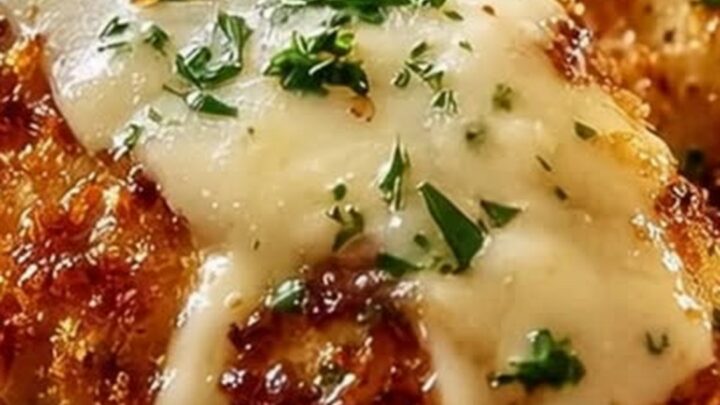
- Prep
- Cook
- Total
- Serves
- 4
Before you start
Before beginning, ensure all ingredients are measured and ready on your counter. Pat the chicken breasts completely dry with paper towels to ensure the Parmesan adheres properly. Prepare your coating station by setting out a shallow dish for the cheese and keep your tongs nearby for easy flipping during the cooking process.
Having everything prepped makes the cooking flow smoothly and helps maintain the correct temperature in the skillet for the best possible crust development, ensuring that the cheese browns evenly without burning.
Ingredients at a glance (2)
- 4 pieces boneless skinless chicken breast
- 1 cup grated parmesan cheese
Instructions
Coating the Chicken
- Prepare the ChickenPat the chicken breasts dry with paper towels to ensure the coating adheres well. Season the chicken lightly with salt and pepper if desired. Place the grated Parmesan cheese in a shallow dish, and press each chicken breast firmly into the cheese until it is thoroughly coated on all sides, creating a thick, even layer of Parmesan.Look for The chicken should be fully covered in a thick, uniform layer of grated Parmesan cheese.Tip Press the cheese firmly onto the meat to ensure it adheres properly during the searing process.
The chicken should be evenly coated in the grated Parmesan cheese. Ensure there are no bare spots on the meat, as a consistent layer is essential for achieving that uniform golden crust during the searing process. Check that the cheese is pressed firmly into the surface so each bite has an equal balance of flavor and texture, creating a robust crust that will hold up beautifully under the heat of the skillet.
Searing the Breasts
- Sear the ChickenPlace the coated chicken breasts into a preheated skillet over medium heat. Sear the chicken until the Parmesan crust turns deep golden brown and crispy, then carefully flip the breasts. Continue cooking until the internal temperature reaches 165°F (74°C). Ensure the heat is managed so the cheese browns without burning, providing a rich, savory crust that holds the juices inside the tender meat.Look for The crust should be golden brown, crispy, and fragrant, with the cheese melted into a cohesive layer.Safe temperature 165°F (74°C) internal temperature (poultry)Tip Avoid moving the chicken too much while it sears to allow the crust to form a solid, golden barrier.
At the end of this phase, the chicken must be golden brown on both sides. The crust should sound crisp when tapped with tongs. Check the internal temperature to ensure it has reached 165°F (74°C).
The chicken should feel firm to the touch but still springy, indicating it is fully cooked yet remains juicy inside. The Parmesan should be melted and browned, forming a delicious, savory barrier that seals in all the natural moisture of the chicken.
Resting and Serving
- Serve the DishOnce the chicken reaches 165°F (74°C), remove it from the skillet and transfer to a warm plate. Allow the chicken to rest for at least 5 minutes before slicing. This resting period is essential for the juices to redistribute throughout the meat, ensuring that every bite remains succulent and tender. Serve immediately while the crust is still warm and crisp, highlighting the contrast between the crunchy exterior and the juicy white meat.Look for The chicken should be firm to the touch and the crust should remain intact and golden upon serving.Safe temperature 165°F (74°C) internal temperature (poultry)Tip Use a sharp knife to slice the chicken to avoid disturbing the delicate, crispy Parmesan crust.
The chicken should rest for at least 5 minutes before being sliced. Check that the crust remains crisp and has not softened during the resting period. The meat should be tender and easy to slice, with the juices contained within the breast. Ensure the final presentation is warm and inviting, as the contrast between the hot, crispy Parmesan crust and the tender, juicy chicken is the hallmark of this simple yet elegant dinner dish.
Common mistakes
A common mistake is cooking the chicken over heat that is too high, which burns the Parmesan before the chicken is cooked through. Keep the heat at medium to allow the crust to develop slowly and evenly.
Another error is failing to rest the meat; let the chicken rest for at least 5 minutes before serving to ensure the juices redistribute throughout the breast, keeping each bite tender and perfectly moist. Avoid crowding the pan, as this can cause the chicken to steam rather than sear.
How to tell it’s done
The chicken is perfectly cooked when it reaches an internal temperature of 165°F (74°C). Use a meat thermometer inserted into the thickest part of the breast to confirm. At this point, the juices should run clear, and the crust should be firm, golden, and crispy.
The chicken should feel firm to the touch but still springy, indicating it is fully cooked yet remains juicy inside, providing the ideal balance of a crunchy exterior and a tender, succulent interior for a perfect meal.
- Poultry: 165°F (74°C) in the thickest part
Up next · Part 3 of 3
2 variations · storage & make-ahead · 3 answers · printable card
Tips, FAQ & printable recipe (Part 3)← Back to the ingredients (Part 1)