Dinner · Part 2 of 3: Instructions
Pan-Seared T-Bone Steak with Rosemary Garlic Butter Step-by-step instructions
- Prep
- Cook
- Total
- Serves
- 2
Before you start
Before turning on the stove, ensure the T-bone steak is prepared correctly. Remove the steak from the refrigerator and let it sit at room temperature for no more than 30 minutes. This takes the chill off the meat, allowing it to cook evenly throughout.
Pat the surface of the steak completely dry with paper towels; any moisture on the exterior will create steam and prevent a proper crust from forming. Measure out the butter, smash the garlic cloves, and set the fresh rosemary sprigs nearby.
Ingredients at a glance (4)
- 1 T-bone steak (about 1.5 lbs, 1.5 inches thick)
- 4 tbsp unsalted butter
- 4 garlic cloves, smashed
- 3 fresh rosemary sprigs
Instructions
Searing the Steak
- Prep the SteakPat the T-bone steak completely dry with paper towels. Let the steak sit at room temperature for no more than 30 minutes before cooking to ensure even heat distribution.Look for The steak surface should look matte and dry after patting.Tip Drying the meat is essential for achieving a deep, caramelized crust.
- Sear the First SideHeat a heavy cast-iron skillet over high heat until it is smoking hot. Carefully place the steak into the hot pan. Sear undisturbed for 2 to 3 minutes until a deep, golden-brown crust forms on the bottom.Look for A loud, intense sizzling sound should begin immediately.Tip Do not move the steak during this time to maximize surface contact.
By the end of this phase, the steak should have a deeply browned, caramelized crust on the first side. The kitchen will fill with a rich, savory aroma, and the skillet will sizzle loudly as the fat renders. The meat should release easily from the bottom of the cast-iron pan when lifted with tongs. If it sticks, let it sear for another thirty seconds before attempting to flip it.
Butter Basting and Aromatics
- Flip and Butter BasteFlip the steak using tongs. Immediately add the unsalted butter, smashed garlic cloves, and fresh rosemary sprigs to the skillet. Tilt the pan slightly and use a large metal spoon to continuously scoop the hot, foaming melted butter over the top of the steak for another 2 to 3 minutes.Look for The butter should foam vigorously and turn a light golden color.Tip Keep the garlic and herbs in the pooling butter to infuse it.
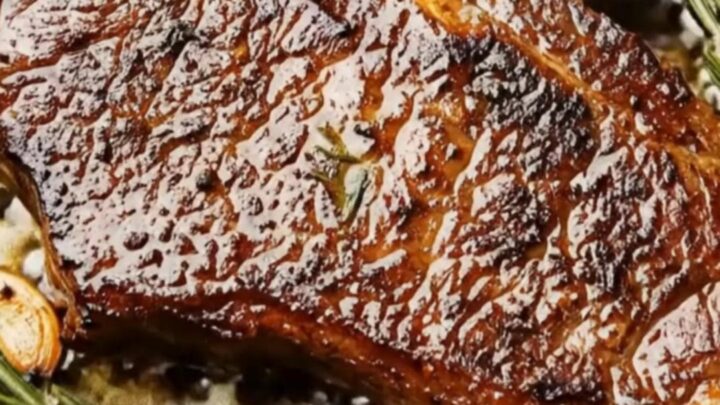
At this point, the butter should be completely melted, golden, and foaming vigorously in the pan. The smashed garlic and fresh rosemary sprigs will sizzle loudly, releasing a fragrant, herbal, and earthy perfume into the air. The steak will look glistening and deeply golden-brown as you continuously spoon the rich, hot butter over the top, ensuring even heat distribution and deep flavor infusion.
Resting the Meat
- Rest and ServeRemove the skillet from the heat. Transfer the steak to a warm plate or cutting board to rest for at least 3 minutes, allowing the juices to redistribute. Ensure the thickest part of the meat reaches an internal temperature of 145°F (63°C) for a safe, perfectly cooked steak before slicing.Look for The steak will feel slightly firm but yield to gentle pressure.Safe temperature 145°F (63°C) internal temperature (steaks, chops and roasts)Tip Pour the remaining warm pan juices over the steak after resting.
During this final phase, the steak rests quietly on a warm cutting board. The loud sizzling will have stopped, replaced by the gentle aroma of rested beef, garlic, and rosemary.
The juices, which were pushed to the center during cooking, will slowly redistribute throughout the steak. The internal temperature must reach a safe 145°F (63°C) followed by a three-minute rest to ensure a perfect, safe, and juicy result.
Common mistakes
One common mistake is moving the steak around too much once it hits the hot skillet. To get a beautiful, even crust, the meat needs continuous, undisturbed contact with the hot cast iron.
Another frequent error is using a pan that is not hot enough, which leads to gray, boiled-looking meat instead of a deep sear. Finally, never skip the resting period. Cutting into the steak immediately will cause all the delicious juices to run out onto the board, leaving you with dry meat.
How to tell it’s done
Determining the perfect doneness is best achieved using an instant-read meat thermometer inserted into the thickest part of the steak, away from the bone. For a safe and delicious medium-rare steak, remove the meat from the heat when it registers around 135°F to 140°F, as carryover cooking will raise the temperature during the rest.
The USDA recommends a minimum internal temperature of 145°F (63°C) for whole cuts of beef, followed by a mandatory three-minute rest period to guarantee food safety and optimal juiciness.
- Steaks, chops and roasts: 145°F (63°C) in the thickest part, then a 3-minute rest
Up next · Part 3 of 3
2 variations · storage & make-ahead · 3 answers · printable card
Tips, FAQ & printable recipe (Part 3)← Back to the ingredients (Part 1)