Dinner · Part 2 of 3: Instructions
Pan-Seared Sea Bass with Corn and Herb Butter in One Skillet Step-by-step instructions
- Prep
- Cook
- Total
- Serves
- 2
Before you start
Gather everything before the pan goes on the heat, because the fish cooks quickly and the butter needs constant attention. Take the sea bass fillets out of the refrigerator only as you are ready to cook, and never leave them at room temperature for longer than 30 minutes. Pat the skin dry with paper towels and season the flesh and skin with kosher salt and black pepper.
Husk the corn and slice the kernels from the cob over the board so they fall loose, keeping the whole cob for charring. Finely chop the parsley and cilantro, mince the garlic, and dice the red chili, seeding it if you want a milder heat. Grate the hard cheese on the fine side of the box grater and set the shavings aside.
Ingredients at a glance (11)
- 2 sea bass fillets, skin on (about 6 oz each)
- kosher salt, to taste
- black pepper, to taste
- 1 fresh corn cob
- 4 tbsp unsalted butter
- 3 cloves garlic, minced
- 2 tbsp fresh parsley, finely chopped
- 2 tbsp fresh cilantro, finely chopped
- 1 red chili pepper, seeded and finely diced
- hard cheese, finely grated, for serving (optional)
- lemon wedges, for serving
Instructions
Build the herb butter and sear
- Prepare the fish and cornPat the sea bass fillets dry with paper towels and season the flesh and skin with kosher salt and black pepper. Keep the fillets refrigerated until you are ready to cook. Stand the corn cob upright on the cutting board and slice the kernels off with a sharp knife, letting them fall loose.Look for Fillets feel dry to the touch and the kernels fall loose from the cob.Tip Dry skin gives the crispest sear, so blot it well before seasoning.
- Mince the herbs and aromaticsFinely chop the parsley and cilantro together. Mince the garlic and dice the red chili, seeding it first if you want less heat. Keep the herbs, garlic and chili in separate small piles so they are easy to add at the right moment.Look for Herbs are finely chopped and garlic is minced into fine bits.Tip Chop the herbs right before cooking so they stay bright green.
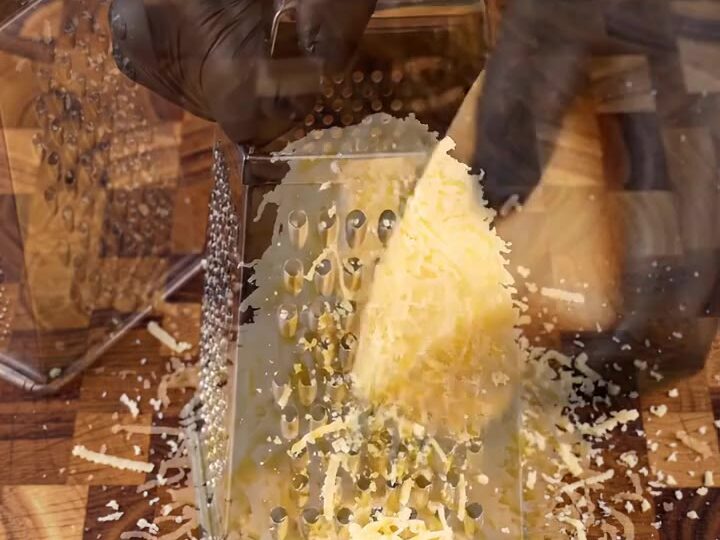
- Grate the cheeseGrate the hard cheese on the fine side of a box grater, letting the shavings collect on the cutting board. Set aside for serving. Keep the grated cheese close to the stove so it is ready when the fish comes out of the pan.Look for Fine, fluffy shavings gather on the board.Tip A fine grate melts into the dish more easily than coarse flakes.
At the end of this phase the butter should be foaming and smell of garlic and fresh herbs, and the fish should show crisp, golden edges on the skin side. Check that the skin releases easily from the pan when you gently lift one corner with a spatula; if it sticks, give it another minute.
Keep the heat steady and the garlic from browning, because dark garlic turns bitter. The corn should be turning golden and charred on several sides. Before going on, make sure the fillets are not overcrowded and the spoon is ready for basting, so the butter can coat the fish evenly and the skin keeps its crunch while the flesh cooks through.
Baste the fish and char the corn
- Make the green garlic butterHeat the cast iron skillet over medium heat and melt the butter until it foams. Stir in the garlic and half of the chopped herbs, then spoon the mixture into the butter so it turns into a bright green garlic butter. Lower the heat slightly to keep the garlic from browning.Look for Butter foams, and the garlic smells fragrant without turning dark.Tip Watch the garlic closely; dark garlic tastes bitter.
- Sear the fish skin side downLay the sea bass fillets skin side down in the sizzling herb butter, placing the whole corn cob alongside them in the pan. Press the fillets gently with a spatula for about 10 seconds so the skin does not curl, then let them cook undisturbed while you turn the corn to char on all sides.Look for Skin crackles and the corn shows dark, blistered spots.Tip Keep the heat steady so the skin crisps without burning.
- Baste until golden and opaqueSpoon the herb butter continuously over the fish, tilting the skillet slightly so the butter pools. Keep basting until the flesh turns opaque from the bottom up and the edges look golden. The fish is done when it reaches 145°F (63°C) at the thickest part.Look for Flesh turns opaque and the edges look golden, about 4 to 6 minutes.Safe temperature 145°F (63°C) internal temperature (fish)Tip Use a probe thermometer in the thickest part to confirm.
- Char the corn kernelsCut the charred corn cob from the pan and set it aside to cool slightly. Add the loose corn kernels to the skillet and toss them in the butter until they are lightly charred. Season the kernels with a pinch of salt.Look for Kernels turn golden with small charred spots.Tip Let the kernels sit still for a moment to char before tossing.
At the end of this phase the flesh should look opaque from the bottom up, and the edges should be a warm golden colour. Check the thickest part of the fillet with a thermometer; it should read 145°F (63°C). The loose corn kernels should be lightly charred with small dark spots and smell sweet and toasted.
Before you plate, lift one fillet gently to confirm the flesh flakes and no raw translucent centre remains. Taste a kernel to check the corn is tender but still has bite. If the fish is not yet opaque, keep basting for another minute rather than raising the heat, so the skin stays crisp.
Plate the fish and herbs
- Plate in the skilletLift the sea bass with tongs and place it in the skillet or on warm plates. Top with the charred corn kernels, the remaining chopped herbs and the red chili. Spoon the glossy garlic herb butter over the fish and finish with grated cheese and lemon wedges.Look for Fish is glossy with butter and the herbs are bright and fresh.Tip Serve immediately while the skin is still crisp.
- Serve hot with the butterServe the sea bass hot, with extra herb butter spooned over each fillet. Pass lemon wedges at the table so each person can squeeze over the fish. Keep the remaining corn and herbs on the board for garnish.Look for Plates arrive hot with crisp skin and a shiny finish.Tip Warm the plates briefly so the fish stays hot.
At the end of this phase the fish should be glossy with herb butter, the skin crisp and the herbs bright green. Check that the fillets are hot, the corn is spread evenly over them, and the red chili is distributed through the herbs. Before serving, confirm the cheese is grated and the lemon wedges are on the table. The fish should be served right away, while the skin is still crisp, because the moisture in the butter softens it over time. Lift each fillet carefully with tongs so the skin stays intact, and spoon the remaining butter over the top for a glossy finish.
Common mistakes
The most common mistake is putting cold, wet fish into butter that has not yet heated, which steams the skin instead of crisping it. Preheat the skillet until the butter foams before the fillets go in. Another error is overcrowding the pan: two fillets with the corn cob are enough for a 12-inch skillet, and too much fish drops the temperature and makes the skin soft. Do not let the garlic brown, since it turns bitter and spoils the green butter; lower the heat as soon as it smells fragrant. Avoid moving the fish too early, because the skin releases on its own once it is crisp.
How to tell it’s done
Sea bass is done when the flesh has turned opaque all the way through and flakes easily when pressed gently with a fork at the thickest part. The skin should be golden and crisp, and the edges of the fillet should look lightly browned. For a reliable check, insert an instant-read thermometer into the thickest section; it should register 145°F (63°C).
If the flesh still looks glassy near the centre, keep it in the butter for another minute and check again. Once it reaches that temperature, remove the fish from the skillet and serve at once so it stays moist and tender. Overcooking is the main risk with thin fillets, so start checking early.
- Fish: 145°F (63°C) in the thickest part
Up next · Part 3 of 3
4 variations · storage & make-ahead · 5 answers · printable card
Tips, FAQ & printable recipe (Part 3)← Back to the ingredients (Part 1)