Dinner · Part 2 of 3: Instructions
Pan-Seared Sea Bass with Chimichurri and Charred Corn in One Skillet Step-by-step instructions
- Prep
- Cook
- Total
- Serves
- 2
Before you start
Gather everything before you turn on the heat, because the fish cooks quickly once it goes into the pan. Pat the sea bass fillets dry on both sides and set them on a plate, then season the skin and flesh with kosher salt and black pepper. Chop the parsley, cilantro, red chili and garlic together on the wooden board and stir in the olive oil and red wine vinegar.
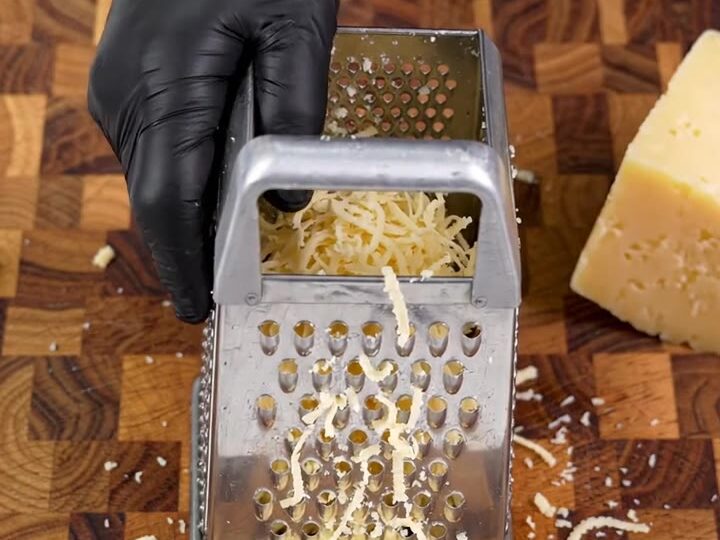
Grate the hard cheese on the box grater into a small bowl, and cut the corn kernels from the cob. Mince the second batch of garlic for the butter and measure the butter into a small dish. Place the metal tongs and a spoon near the stove so you can baste and flip without hesitation. A dry, organized workspace keeps the skin crisp and the timing relaxed.
Ingredients at a glance (13)
- 2 skin-on sea bass fillets, about 6 oz each
- 1/2 cup fresh flat-leaf parsley, finely chopped
- 1/4 cup fresh cilantro, finely chopped
- 1 red chili pepper, seeded and finely chopped
- 2 cloves garlic, finely chopped for the chimichurri
- 3 tbsp extra-virgin olive oil
- 1 tbsp red wine vinegar
- 1 cup fresh corn kernels, cut from the cob
- 3 tbsp unsalted butter
- 2 cloves garlic, minced
- 3/4 tsp kosher salt, plus more to taste
- 1/4 tsp black pepper
- finely grated hard grating cheese, for serving
Instructions
Chimichurri and prep ready
- Make the chimichurri baseFinely chop the parsley, cilantro, red chili and garlic together on the wooden board until fine and evenly mixed. Stir in the olive oil and red wine vinegar, then season lightly and set aside while you prepare the rest.Look for The herbs look finely chopped and glossy with oil, a loose bright green mixture.Tip Chop the herbs and chili together so the flavors mingle before the oil and vinegar are added.
- Grate the cheese and cut the cornGrate the hard cheese over the board with the box grater to make fine shreds, and set them aside for serving. Cut the corn kernels from the cob with the chef's knife and keep them ready in a small bowl.Look for Fine, fluffy cheese shreds collect on the board and kernels fall loose from the cob.Tip Hold the cob upright over a bowl and cut downward in strips for clean kernels.
- Season the fishPat the sea bass fillets dry with paper towels. Season the flesh and skin with the kosher salt and black pepper just before cooking, so the skin stays dry and crisp in the pan.Look for The skin feels dry to the touch and the seasoning clings evenly to the surface.Tip Dry skin sears faster and crisper, so pat it thoroughly before seasoning.
The chimichurri is finely chopped, glossy with olive oil and bright green, and it sits in a small bowl. The cheese is finely grated, the corn kernels are loose in a bowl, and the sea bass fillets are dry and seasoned on a plate. Before you move on, check that the skillet is set and the garlic is minced, because once the fish goes in there is no time to stop and chop. Everything should be within reach of the stove, so the sear can proceed without pause and the butter can foam without burning.
Corn and garlic butter in the pan
- Scatter the corn in the skilletSet the cast iron skillet over medium-high heat. Add the corn kernels first and scatter them across the pan in an even layer so they can blister and caramelize at the edges.Look for The skillet is hot and the kernels begin to sizzle lightly when they touch the iron.Tip Spread the kernels in one layer so they blister rather than steam.
- Melt the butter and garlicAdd the butter to the pan and let it melt into a foaming, bubbling pool. Stir in the minced garlic and a pinch of the seasoning so the garlic softens in the butter without browning too quickly.Look for The butter foams and bubbles, and the garlic smells fragrant.Tip Keep the heat at medium-high so the butter foams, but lower it if the garlic starts to darken.
- Sear the fish skin-side downLay the sea bass fillets skin-side down directly onto the corn and foaming butter. Press lightly with the tongs for a few seconds so the skin makes full contact with the pan, then baste the fish repeatedly with the garlic butter using a spoon.Look for The skin turns crisp and golden, and the flesh turns opaque from the edges inward.Safe temperature 145°F (63°C) internal temperature (fish)Tip Baste continuously so the top of the fish cooks through as the skin crisps.
The corn kernels are scattered in an even layer and beginning to sizzle, and the butter has melted into a foaming, bubbling pool with a fragrant garlic smell. The kernels should start to turn lightly golden at the edges before you add the fish.
If the butter darkens too quickly, lower the heat slightly, because brown butter that burns will taste bitter. Check that the pan is hot but not smoking, and that the corn is spread out rather than piled up, so the kernels blister and the fish has direct contact with the hot iron.
Seared and finished sea bass
- Flip and finish the fishOnce the skin is crisp and golden, flip the fillets with the tongs and cook briefly until the flesh is opaque all the way through. Make sure the thickest part reaches 145°F (63°C) before you move on.Look for The flesh is opaque and flakes easily at the thickest point.Safe temperature 145°F (63°C) internal temperature (fish)Tip Check the thickest part of the fillet; it should look opaque and flake easily.
- Spoon the chimichurri and serveSpoon the chimichurri generously over the fish so it turns bright green. Serve straight from the skillet with the charred corn scattered around the fillets and the grated cheese sprinkled over the top.Look for The chimichurri turns bright green on the warm fish and the corn is charred at the edges.Tip Spoon the sauce just before serving so the herbs stay bright and fresh.
The skin is crisp, golden and dry, and the flesh has turned opaque from the edges inward. Flip the fillets with the tongs and cook until the thickest part reaches 145°F (63°C) and flakes easily. Before serving, look for green chimichurri spooned generously over the top and charred corn scattered around the fish. The corn should look sweet and blistered, and the skin should still crackle when touched with the tongs. Serve from the skillet immediately so the crispness holds.
Common mistakes
The most common mistake is putting damp fish into the pan, which steams the skin instead of crisping it. Pat the fillets dry and season them just before cooking. Another error is cooking over low heat, which lets the butter and corn stew rather than sear.
Keep the heat medium-high once the butter is foaming, and baste steadily so the top of the fish cooks through. Do not move the fillets too early; wait until the skin releases easily from the pan, then flip. Finally, avoid adding the chimichurri too early, because the fresh herbs lose their bright green color and crisp flavor when they sit in the hot pan.
How to tell it’s done
Sea bass is done when the flesh is opaque all the way through and flakes easily when pressed gently with a fork or the tip of a knife. Check the thickest part of the fillet, which should reach 145°F (63°C) on an instant-read thermometer. The skin should be golden and crisp rather than pale or rubbery.
The corn should be blistered and caramelized at the edges. If the flesh still looks translucent in the center, return the fillets to the pan for another minute, basting as before, and check again. Pull the fish from the heat as soon as it reaches the safe temperature to keep it moist and tender.
- Fish: 145°F (63°C) in the thickest part
Up next · Part 3 of 3
4 variations · storage & make-ahead · 5 answers · printable card
Tips, FAQ & printable recipe (Part 3)← Back to the ingredients (Part 1)