Appetizers · Part 2 of 3: Instructions
Oven-Baked BBQ Meatballs with Sticky Glaze Step-by-step instructions
- Prep
- Cook
- Total
- Serves
- 6
Before you start
Before starting, gather all the ingredients and equipment to ensure a smooth cooking process. Line a large rimmed baking sheet with parchment paper to prevent the meatballs from sticking and to make cleanup effortless.
If using frozen pre-seasoned meatballs, ensure they are completely thawed in the refrigerator beforehand. Measure out the barbecue glaze into a small bowl and set your pastry brush nearby so everything is ready to go. Having your tools organized beforehand makes the assembly quick and efficient.
Ingredients at a glance (2)
- 24 seasoned meatballs (store-bought or made ahead)
- 1 cup barbecue glaze
Instructions
Preparation and Arranging
- Preheat and PreparePreheat the oven to 400°F (200°C). Line a large rimmed baking sheet with parchment paper to prevent sticking and ensure easy cleanup.Look for The oven is fully preheated and the baking sheet is lined.Tip Using parchment paper makes cleanup incredibly easy and prevents the sweet glaze from burning on the pan.
- Arrange the MeatballsArrange the pre-seasoned meatballs on the prepared baking sheet, spacing them about one inch apart to allow the hot air to circulate evenly around each one.Look for All meatballs are arranged uniformly on the baking sheet.Tip Proper spacing ensures even cooking and helps the glaze caramelize instead of steaming.
At the end of this phase, the oven is fully preheated and the baking sheet is lined. The pre-seasoned meatballs are arranged in neat, even rows on the parchment paper, spaced slightly apart. They are cold but ready for the glaze, holding their shape perfectly.
Applying the Glaze
- Apply the GlazeUse a pastry brush to generously coat the top and sides of each meatball with the rich barbecue glaze, ensuring they are completely covered.Look for Every meatball is thoroughly and evenly coated with the barbecue glaze.Tip Use a high-quality, thick barbecue glaze so it clings to the meat instead of running off.
At the end of this phase, every single meatball is thoroughly and evenly coated with the rich, thick barbecue glaze. The glaze clings beautifully to the seasoned meat without running off onto the baking sheet, creating a glossy, uniform appearance before baking.
Baking and Caramelizing
- Bake and CaramelizeSlide the baking sheet into the preheated oven. Bake for 15 to 20 minutes, until the barbecue glaze is bubbling, sticky, and slightly caramelized. Verify that the internal temperature of the meatballs reaches 160°F (71°C) before removing them from the oven.Look for The glaze is glossy, bubbling, and clinging tightly to the meatballs.Safe temperature 160°F (71°C) internal temperature (ground meat)Tip Let the meatballs rest for 5 minutes after baking to allow the juices to redistribute and the glaze to set.
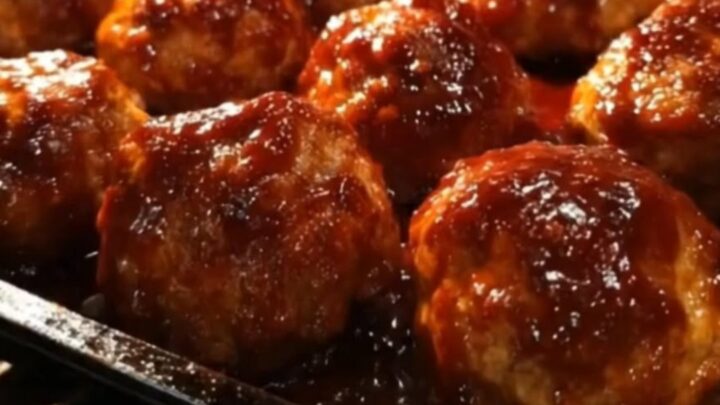
At the end of the final bake, the barbecue glaze has transformed into a thick, bubbling, and glistening lacquer that clings tightly to each meatball.
The edges of the glaze are slightly caramelized and darkened, and the kitchen is filled with a rich, smoky, and sweet aroma. The meatballs are now fully cooked and ready to rest.
Common mistakes
One common mistake is using a barbecue sauce that is too thin, which will run off the meatballs and pool on the baking sheet, potentially burning. Another error is baking the meatballs at too low a temperature, which prevents the glaze from caramelizing and becoming sticky.
Finally, avoid skipping the resting period, as letting the meatballs rest for a few minutes allows the glaze to set and the juices to redistribute. Overcrowding the baking sheet is also a mistake, as it steams the meatballs instead of letting them caramelize.
How to tell it’s done
The meatballs are perfectly done when the exterior glaze is sticky, bubbling, and slightly caramelized.
To guarantee safety and optimal juiciness, insert an instant-read thermometer into the center of the largest meatball; it must register an internal temperature of 160°F (71°C). The interior should be tender and hot throughout, with the glaze clinging firmly to the surface.
- Ground meat: 160°F (71°C) in the thickest part
Up next · Part 3 of 3
2 variations · storage & make-ahead · 3 answers · printable card
Tips, FAQ & printable recipe (Part 3)← Back to the ingredients (Part 1)