Dinner · Part 2 of 3: Instructions
Oven-Baked BBQ Beef Brisket with Smoky Glaze Step-by-step instructions
- Prep
- Cook
- Total
- Serves
- 8
Before you start
Before beginning, ensure the brisket is removed from the refrigerator at least 30 minutes before cooking to help it reach a more uniform temperature. Preheat your oven to 300°F (150°C) well in advance so that it is fully heated when you are ready to roast.
Gather all your equipment, including a sharp chef's knife for slicing, a sturdy roasting pan, and a high-quality meat thermometer.
Having your barbecue sauce and fresh thyme within easy reach will make the glazing and plating process much smoother once the meat is out of the oven. A clean, spacious workspace is essential for handling such a large cut of meat safely.
Ingredients at a glance (3)
- 4 lb beef brisket, trimmed
- 1 cup barbecue sauce
- fresh thyme sprigs, for serving
Instructions
Searing for Flavor
- Sear the brisketPlace the beef brisket in a hot pan over medium-high heat. Sear the meat on all sides until a deep, dark brown crust forms, which helps lock in the juices and creates the foundation for the bark.Look for The meat should be deeply browned and caramelized on all sides.Tip Ensure the pan is sufficiently hot before adding the meat for the best sear.
The meat should be browned deeply on all sides, creating a dark, flavorful crust. Listen for the sound of vigorous sizzling as the fat renders and the exterior proteins caramelize. Ensure the pan is hot enough that the meat releases easily when you attempt to turn it, signaling that the sear is complete and the surface is properly developed.
Roasting and Glazing
- Bake and glazeTransfer the seared brisket to a roasting pan. Roast in a preheated oven at 300°F (150°C) until the meat is tender and reaches an internal temperature of 145°F (63°C). Let the meat rest at least 3 minutes before slicing. Periodically brush the brisket with the barbecue sauce to build up a thick, flavorful, and smoky glaze.Look for The sauce should become thick, sticky, and deeply caramelized on the surface.Safe temperature 145°F (63°C) internal temperature (steaks, chops and roasts)Tip Keep the oven door closed as much as possible to maintain a consistent temperature.
The brisket should be roasting steadily at 300°F (150°C), with the glaze bubbling and thickening on the surface. During the periodic basting, look for the sauce to cling to the meat, creating a glossy, dark layer. The aroma should be rich and smoky, filling the kitchen as the connective tissues soften and the beef becomes increasingly tender.
Resting and Slicing
- Rest and serveRemove the brisket from the oven and let it rest for at least 30 minutes before slicing. This allows the juices to redistribute throughout the meat. Slice against the grain and garnish with fresh thyme.Look for The meat should be firm enough to slice cleanly but tender enough to fall apart easily.Tip Always slice against the grain to ensure the most tender bite possible.
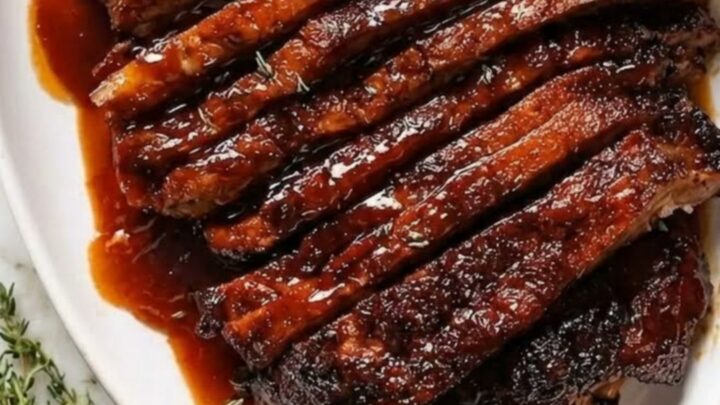
The meat should have rested for at least 30 minutes, resulting in a firm but yielding texture. When sliced, the interior should be moist and tender. The fanned slices should show a clear distinction between the dark, caramelized bark and the juicy, cooked meat, making for a visually appealing presentation on your serving platter.
Common mistakes
A common mistake is slicing the brisket too soon after it comes out of the oven. Skipping the rest period will cause the flavorful juices to run out onto the cutting board, leaving the meat dry. Another error is failing to slice against the grain.
Look for the direction of the muscle fibers and cut perpendicular to them to shorten the fibers, which makes each bite significantly more tender. Finally, avoid using an oven temperature that is too high, as this can toughen the meat before the connective tissues have had enough time to properly break down.
How to tell it’s done
The brisket is done when it reaches an internal temperature of 145°F (63°C). At this point, the meat should be exceptionally tender and easy to slice. Use a meat thermometer inserted into the thickest part of the brisket to verify the temperature.
The surface should be dark, sticky, and well-caramelized from the multiple layers of barbecue sauce. Remember that the meat must rest for at least 30 minutes after reaching this temperature to ensure the fibers relax and the juices redistribute, resulting in the most succulent slices.
- Steaks, chops and roasts: 145°F (63°C) in the thickest part, then a 3-minute rest
Up next · Part 3 of 3
2 variations · storage & make-ahead · 3 answers · printable card
Tips, FAQ & printable recipe (Part 3)← Back to the ingredients (Part 1)