Dinner · Part 2 of 3: Instructions
One-Skillet Whole Vegetable Tomato Tagliatelle Step-by-step instructions
- Prep
- Cook
- Total
- Serves
- 4
Before you start
Before starting, gather all ingredients and equipment. No need to chop anything—the vegetables stay whole. Have the olive oil, hot water, spices, pasta, and boiling water within reach.
The cheese should be shredded and parsley chopped. Set a lid that fits the skillet, and have a masher and tongs ready. The prep is minimal, so the cooking moves quickly.
Ingredients at a glance (14)
- 3 tbsp extra virgin olive oil
- 1 large beefsteak tomato
- 1 whole green zucchini
- 1 whole eggplant
- 2 whole peeled onions
- 1/2 cup hot water
- 1 tsp sweet paprika
- 1 tsp salt
- 1/2 tsp ground cumin
- 1/2 tsp freshly cracked black pepper
- 10 oz tagliatelle pasta nests
- 1 cup boiling water
- 1 cup shredded Turkish kashar cheese
- 1/4 cup freshly chopped flat parsley
Instructions
Steam and Soften
- Soften the Whole VegetablesHeat the olive oil in a wide skillet over medium heat. Place the whole tomato, zucchini, eggplant, and onions in the skillet. Pour in the hot water, cover, and cook for 12 minutes, until the vegetables are fork-tender and their skins loosen.Look for The vegetables should be soft enough that a fork pierces through with little resistance.Tip Keep the heat at medium to avoid scorching the oil; adjust if needed.
- Peel the SkinsUsing tongs, lift each vegetable from the skillet and peel away the skins, which should slip off easily. Discard the skins and return the peeled vegetables to the skillet.Look for The skins come off in large pieces without tugging.Tip If any skin is stubborn, use a paring knife to help lift it.
After 12 minutes, the vegetables should be visibly softened, with the tomato skin starting to split. The liquid should have mostly evaporated, leaving a moist but not watery base. The onions should be translucent and tender. Pierce a zucchini with a fork—it should slide in easily. The aroma is sweet and vegetal.
Crush and Simmer
- Season and Crush into SauceSprinkle the paprika, salt, cumin, and black pepper over the vegetables. Using a stainless masher, crush everything together until you have a rustic, chunky sauce. Simmer for 2-3 minutes to meld the flavors.Look for The mixture becomes a thick, aromatic sauce with small vegetable pieces.Tip Do not over-mash; leave some texture for a hearty sauce.
- Add Pasta and WaterNestle the tagliatelle nests into the simmering sauce. Pour in the boiling water. Cover and simmer gently, tossing occasionally with tongs, until the pasta is tender and has absorbed most of the liquid, about 8-10 minutes.Look for The pasta is al dente and coated in a thick, glossy sauce.Tip If the sauce becomes too dry before the pasta is done, add a splash of hot water.
The sauce should be thick and chunky, with the spices fragrant and well distributed. The pasta nests should be submerged in the sauce and absorb the liquid as they cook.
The sauce will bubble gently. The smell is warm and savory, with a hint of paprika and cumin. The pasta should be tender but still firm to the bite.
Melt and Serve
- Top with Cheese and ParsleyScatter the shredded kashar cheese and chopped parsley over the pasta. Cover the skillet and let it sit off the heat for 2 minutes, allowing the cheese to melt into gooey ribbons.Look for The cheese melts and turns golden in spots, and the parsley brightens the dish.Tip For a deeper golden top, place the skillet under a broiler for a minute, but watch closely.
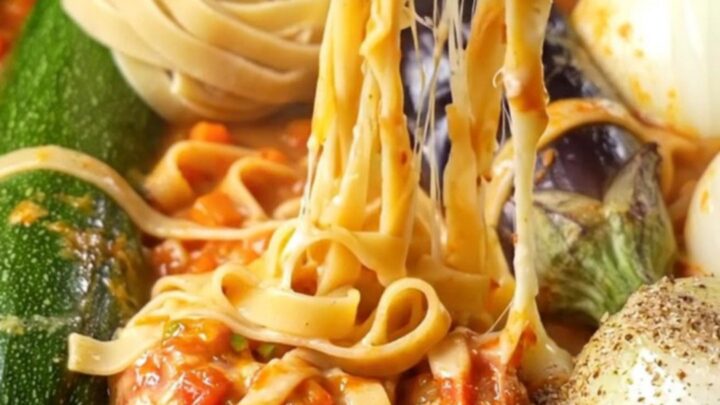
- Serve ImmediatelyLift a creamy, stringy forkful of tagliatelle and serve directly from the skillet. Make sure each portion gets plenty of the vegetable sauce and melted cheese.Look for The pasta is glossy, the cheese stretches, and the aroma is rich and savory.Tip Serve with extra parsley or black pepper on the side if desired.
The cheese should be fully melted, forming golden pools and strings. The parsley adds fresh green flecks. When you lift a forkful, the cheese stretches and the pasta is coated in a glossy sauce. The skillet should be bubbling at the edges. The dish looks inviting, with a golden top and aromatic steam rising.
Common mistakes
A common mistake is using too high heat, which can scorch the vegetables before they soften. Keep the heat at medium and check occasionally.
Another issue is overcooking the pasta, making it mushy; start checking for doneness a minute or two before the suggested time. Also, avoid skipping the peeling step—the skins can be tough and detract from the sauce's silkiness.
How to tell it’s done
The dish is done when the tagliatelle is al dente and the sauce has thickened to a gravy-like consistency that coats the pasta. The cheese should be fully melted and stretchy when lifted.
The vegetables should be completely soft and crushed into a rustic sauce with no large chunks. Taste a strand of pasta to ensure it's cooked through but still has a slight bite.
Up next · Part 3 of 3
4 variations · storage & make-ahead · 5 answers · printable card
Tips, FAQ & printable recipe (Part 3)← Back to the ingredients (Part 1)