Dinner · Part 2 of 3: Instructions
One-Skillet Christmas Cranberry Orange Chicken Step-by-step instructions
- Prep
- Cook
- Total
- Serves
- 4
Before you start
Before turning on the heat, gather and prepare all your ingredients to ensure a smooth cooking process. Pat the seasoned chicken breasts dry with paper towels; removing surface moisture is essential for achieving a deep, golden-brown sear.
Measure out the fresh cranberries and rinse them, discarding any soft or bruised berries. Squeeze the fresh orange juice and slice an extra orange into beautiful orange wheels for the final garnish. Chop the fresh parsley and set it aside so it is ready to sprinkle over the finished dish.
Ingredients at a glance (7)
- 4 boneless, skinless seasoned chicken breasts
- 2 tbsp cooking oil
- 1 1/2 cups fresh cranberries
- 1/2 cup orange juice
- 4 sprigs fresh thyme
- 1 orange, sliced into orange wheels
- 2 tbsp fresh parsley, chopped
Instructions
Searing the Chicken to Golden Perfection
- Heat the SkilletHeat the cooking oil in a large cast-iron skillet over medium-high heat until it shimmers. Carefully place the seasoned chicken breasts in the hot skillet, ensuring they do not overlap.Look for The oil should shimmer and sizzle immediately when the chicken is added.Tip Preheating the skillet thoroughly is essential for achieving a deep, caramelized crust.
- Sear the Chicken BreastsSear the seasoned chicken breasts for 5 to 6 minutes on the first side without moving them, allowing a deep golden-brown crust to develop. Flip the chicken and sear for another 4 to 5 minutes. Transfer the chicken to a warm plate and cover loosely with foil.Look for The chicken should release easily from the pan when flipped.Tip Do not crowd the skillet; cook in batches if necessary to prevent steaming.
At the end of this phase, the chicken breasts should feature a beautiful, deeply caramelized, golden-brown crust on both sides. The skillet will be filled with a rich, sizzling aroma, and you will notice caramelized browned bits stuck to the bottom of the pan. The chicken will not be fully cooked through yet, which is exactly what you want, as it will finish cooking in the glaze later.
Simmering the Cranberry Orange Glaze
- Prepare the Cranberry Orange BaseReduce the skillet heat to medium. Add the fresh cranberries, orange juice, and fresh thyme sprigs directly to the pan. Use a wooden spoon to scrape up the browned bits from the bottom of the skillet as the liquid simmers and bubbles.Look for The liquid should begin to bubble and steam actively as it deglazes the pan.Tip Scraping up the browned bits incorporates rich flavor directly into the glaze.
- Simmer and Reduce the GlazeSimmer the mixture for 5 to 7 minutes, stirring occasionally. Watch for the cranberries to swell and burst, releasing their juices. The sauce will naturally thicken and reduce into a glossy, vibrant red glaze that coats the back of your spoon.Look for The cranberries should pop and the sauce should become thick and glossy.Tip Press down gently on a few cranberries with your spoon to speed up the bursting process.
By the end of this phase, the cranberries will have softened, swelled, and burst open, releasing their deep red juices into the skillet. The orange juice will have reduced significantly, combining with the cranberry juices and pan drippings to form a thick, bubbly, and glossy ruby-red glaze. The sharp scent of tart cranberries and sweet citrus, mingled with earthy thyme, should fill your kitchen.
Glazing, Finishing, and Garnishing
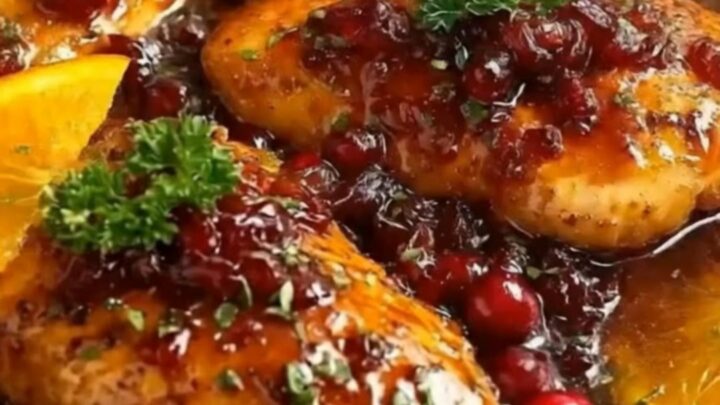
- Glaze and Garnish the DishReturn the chicken and any resting juices to the skillet. Spoon the bubbling cranberry glaze over the chicken. Simmer for 2 to 3 minutes until heated through and the chicken reaches an internal temperature of 165°F (74°C). Garnish with orange wheels and fresh parsley.Look for The glaze should cling tightly to the chicken, and the chicken must reach 165°F (74°C).Safe temperature 165°F (74°C) internal temperature (poultry)Tip Spoon extra glaze over the chicken right before serving for a stunning glossy finish.
At this final checkpoint, the chicken is returned to the skillet and thoroughly coated in the luxurious, bubbling glaze. The sauce should cling beautifully to the chicken breasts, and the meat must reach an internal temperature of 165 degrees Fahrenheit (74 degrees Celsius).
The skillet is garnished with fresh orange wheels and a sprinkle of bright green parsley, presenting a spectacular contrast of colors with gentle steam rising.
Common mistakes
One common mistake is overcrowding the skillet when searing the chicken. If the chicken pieces are packed too tightly, they will steam in their own moisture rather than sear, preventing that delicious golden crust from forming. Work in batches if your skillet is not large enough to fit all pieces comfortably with space around them.
Another error is rushing the cranberry reduction. Let the cranberries cook until they actually burst and release their natural pectin; otherwise, your sauce will remain thin, watery, and overly acidic instead of turning into a rich, glossy glaze.
How to tell it’s done
To ensure the chicken is perfectly cooked and safe to consume, always use a digital meat thermometer. Insert the probe into the thickest part of the chicken breast. The chicken is perfectly done when it registers exactly 165 degrees Fahrenheit (74 degrees Celsius).
At this temperature, the meat remains incredibly juicy, tender, and moist. Avoid overcooking the chicken beyond this point, as lean breast meat can dry out quickly once it passes the safe temperature threshold.
- Poultry: 165°F (74°C) in the thickest part
Up next · Part 3 of 3
2 variations · storage & make-ahead · 3 answers · printable card
Tips, FAQ & printable recipe (Part 3)← Back to the ingredients (Part 1)