Dinner · Part 2 of 3: Instructions
One-Skillet Cheesy Beef Penne for Easy Weeknight Dinners Step-by-step instructions
- Prep
- Cook
- Total
- Serves
- 4
Before you start
Before you begin, ensure all ingredients are measured and ready. Grate the cheddar and mozzarella cheeses ahead of time to make the assembly process seamless. Chop the fresh parsley and set it aside for the final garnish.
Having your pasta cooked and drained while the beef is finishing will help keep the timing tight, ensuring that the cheese sauce remains creamy and does not break or separate during the final mixing phase.
Ingredients at a glance (5)
- 1 lb ground beef
- 1 lb penne pasta
- 2 cups cheddar cheese, shredded
- 1 cup mozzarella, shredded
- fresh parsley, chopped for serving
Instructions
Browning the Beef
- Brown the BeefHeat a large stainless steel skillet over medium-high heat. Add the ground beef and cook, breaking it apart with a spoon until it is fully browned and no pink remains. Ensure the internal temperature reaches 160°F (71°C) to guarantee safety.Look for The meat should be deeply browned and sizzling with no visible pink color.Safe temperature 160°F (71°C) internal temperature (ground meat)Tip Avoid overcrowding the pan to ensure the meat browns evenly rather than steaming.
The ground beef should be deeply browned and aromatic, with all moisture evaporated from the pan. You should see a good amount of rendered fat at the bottom of the skillet, which will serve as the base for the sauce.
Ensure the meat is cooked through and check the temperature with a probe thermometer to reach 160°F (71°C) before proceeding to add the pasta.
Creating the Sauce
- Prepare the Pasta and SauceCook the penne pasta separately until al dente, then drain. Add the cooked pasta to the skillet with the browned beef. Incorporate the shredded cheddar cheese into the mixture, stirring constantly until the cheese melts and coats the pasta in a creamy, orange sauce.Look for The sauce should appear smooth, glossy, and fully emulsified with the pasta.Tip Add a splash of pasta water if the sauce appears too thick or dry.
The pasta and cheddar should be combined until the mixture is thick, glossy, and uniform in color. The sauce should cling to the penne, creating a rich coating that is not too runny. If the mixture seems too tight, add a small amount of warm water or broth to loosen it, but be careful not to make it watery or lose the creamy, cheesy texture.
Melting and Finishing
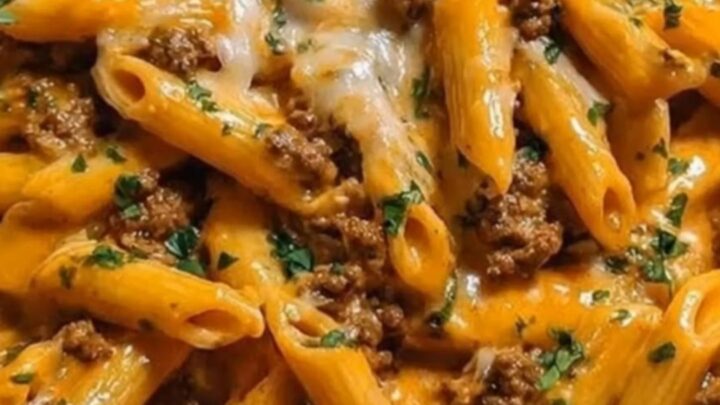
- Melt and GarnishTop the pasta mixture with the shredded mozzarella. Cover the skillet briefly until the mozzarella is melted and bubbly. Sprinkle with fresh chopped parsley before serving immediately while hot to maintain the best texture and cheese pull.Look for The mozzarella layer should be completely melted and slightly elastic when lifted.Tip Keep the heat low during the melting phase to prevent the bottom from burning.
The final layer of mozzarella should be completely melted and soft to the touch. The parsley should be vibrant and evenly distributed over the top.
When you lift a portion with a spoon, you should see the characteristic cheese pull that signifies the dish is perfectly prepared and ready to serve while it remains hot and fresh from the skillet.
Common mistakes
A common mistake is overcooking the pasta, which leads to a mushy texture once it is stirred into the hot sauce. Always aim for al dente so it maintains its bite.
Another error is using too high a heat when adding the cheese; high temperatures can cause the proteins in the cheese to seize, resulting in a grainy or oily sauce instead of a silky, smooth one.
How to tell it’s done
The dish is done when the beef has reached an internal temperature of 160°F (71°C) and the mozzarella topping is fully melted and bubbling. The pasta should be tender but hold its shape well, and the sauce should have a uniform, creamy consistency that coats every piece of penne without pooling at the bottom of the skillet.
- Ground meat: 160°F (71°C) in the thickest part
Up next · Part 3 of 3
2 variations · storage & make-ahead · 4 answers · printable card
Tips, FAQ & printable recipe (Part 3)← Back to the ingredients (Part 1)