Dinner · Part 2 of 3: Instructions
One-Pot Slow Cooker Turmeric Ginger Chicken Step-by-step instructions
- Prep
- Cook
- Total
- Serves
- 4
Before you start
Before beginning, ensure that all ingredients are prepped and ready to go. Slice your onions into thin, uniform strips and cut the carrots into consistent coins to promote even cooking throughout the braise.
Grate the fresh ginger finely to ensure it distributes evenly throughout the sauce, rather than leaving large, fibrous chunks. If you are using a slow cooker with a ceramic insert, ensure it is clean and dry before adding the chicken. Having everything measured and chopped beforehand makes the assembly process fast and efficient.
Ingredients at a glance (7)
- 4 lbs boneless skinless chicken thighs
- 1 large onion, sliced
- 2 medium carrots, sliced into coins
- 1 tbsp ground turmeric
- 1 tbsp fresh ginger, grated
- 1 cup full-fat coconut milk
- 1/2 cup chicken broth
Instructions
Preparation and Layering
- Layer the IngredientsArrange the boneless skinless chicken thighs in the base of the slow cooker, ensuring they are tiled edge to edge to fill the bottom evenly. Layer the sliced onions and carrot coins directly over the chicken to allow them to soften during the cooking process.Look for The chicken should cover the bottom of the slow cooker insert completely.Tip Using thighs ensures the meat stays succulent throughout the long, slow braise.
At the end of this phase, the chicken should be arranged in a single, even layer at the bottom of the slow cooker. The onions and carrots should be distributed uniformly over the top, creating a stable base for the aromatics and liquids. Check that the chicken thighs are skinless to prevent excess grease from pooling in the sauce. The slow cooker insert should look full but not overflowing, providing enough space for the liquid to circulate once added.
Seasoning and Initial Cooking
- Season and Add LiquidsSprinkle the ground turmeric and grated ginger evenly over the vegetables and chicken. Pour the coconut milk and chicken broth over the top of the ingredients. Cover the slow cooker and set to low heat for 4 hours.Look for The liquid should partially submerge the chicken and vegetables.Tip Do not stir the mixture, as the layers help the flavors meld effectively.
Once the turmeric, ginger, coconut milk, and broth are added, the slow cooker should be covered securely. At this stage, the colors will be vibrant and the aromatics should be clearly visible on top of the vegetables. Ensure the lid is tight to maintain a consistent internal temperature. The cooking time of four hours on low heat is essential for building the flavor profile, so avoid the temptation to stir the ingredients or check the progress prematurely.
Final Braise and Serving
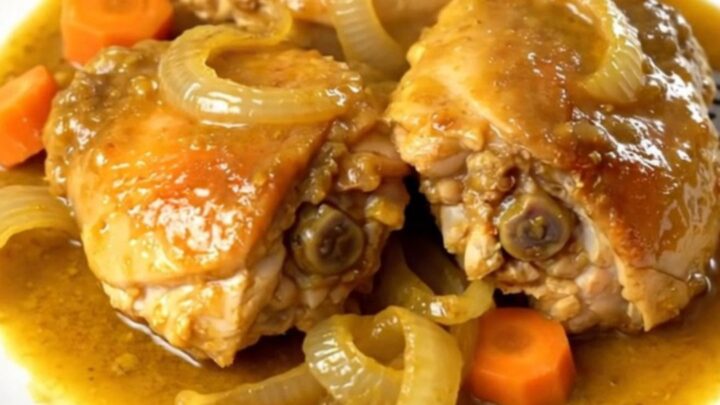
- Final Braise and ServeContinue cooking until the chicken is tender and fully cooked through. Check that the internal temperature of the chicken reaches 165°F (74°C). Allow the dish to rest for 5 minutes before serving to let the sauce thicken and flavors settle.Look for The sauce should be golden and slightly thickened with tender vegetables.Safe temperature 165°F (74°C) internal temperature (poultry)Tip Ensure the chicken is cooked thoroughly before serving to maintain food safety.
The dish is finished when the chicken is fork-tender and the sauce has reduced into a thick, golden gravy. The vegetables should be soft and translucent, having absorbed the savory juices from the chicken and the creaminess of the coconut milk.
Check the internal temperature one last time to confirm safety. The final result should smell fragrant and earthy, with a rich, velvety consistency that makes it ready for immediate serving. Let it rest briefly to perfect the texture.
Common mistakes
A common mistake is overcrowding the slow cooker with too many additional ingredients, which can lead to uneven cooking and a watery sauce. Stick to the recommended quantities to maintain the right balance of liquid and solids.
Another error is failing to ensure the chicken is fully submerged or covered by the vegetables and liquid, which can cause the top layer of meat to become tough. Avoid lifting the lid frequently during the cooking process, as this releases heat and moisture, significantly increasing the total time required for the chicken to finish cooking.
How to tell it’s done
The chicken is considered done when it is tender enough to be easily pierced with a fork and the internal temperature reaches 165°F (74°C). When checking for doneness, insert a meat thermometer into the thickest part of the largest thigh, ensuring the probe does not touch any bone.
The sauce should be thickened and golden, with the vegetables softened but not completely falling apart. A five-minute rest period allows the liquid to settle and the sauce to coat the chicken more effectively before serving.
- Poultry: 165°F (74°C) in the thickest part
Up next · Part 3 of 3
2 variations · storage & make-ahead · 3 answers · printable card
Tips, FAQ & printable recipe (Part 3)← Back to the ingredients (Part 1)