Dinner · Part 2 of 3: Instructions
One-Pot French Onion Rigatoni Step-by-step instructions
- Prep
- Cook
- Total
- Serves
- 4
Before you start
Before you begin, ensure all ingredients are measured and ready, as the process requires your full attention. Slice the yellow onions into thin, uniform strips to ensure they caramelize evenly. Shred the Gruyère cheese using a box grater so it melts quickly and smoothly when added to the hot pasta.
Have your beef bone broth, heavy cream, and other ingredients pre-measured and placed within easy reach of the stove. Proper preparation allows you to focus on managing the heat and monitoring the texture of the onions and pasta.
Ingredients at a glance (10)
- 700 grams yellow onions, thinly sliced
- 50 grams butter
- 1 tbsp fresh thyme leaves
- 30 milliliters dry sherry vinegar
- 400 grams rigatoni
- 800 milliliters beef bone broth
- 120 milliliters heavy cream
- 180 grams Gruyère cheese, shredded
- toasted garlic baguette croutons, for serving
- fresh chives, for serving
Instructions
Onion Caramelization
- Caramelize the OnionsPlace the butter in a large pot over medium heat. Once melted, add the thinly sliced yellow onions. Cook the onions, stirring occasionally, until they turn a deep, golden mahogany color, which should take about 20 minutes. Stir in the fresh thyme leaves and the dry sherry vinegar, scraping up any browned bits from the bottom of the pot to incorporate the flavor.Look for The onions should be very dark, soft, and fragrant.Tip Do not rush the onions; deep caramelization is key to the soup-like flavor.
The onions will transform from opaque and white to translucent, then gradually turn golden brown, and finally reach a deep, rich mahogany color. The kitchen will fill with a sweet, toasted aroma. Ensure the onions are soft throughout and there is no liquid remaining in the pot before proceeding, as this indicates the sugars have properly concentrated and the flavor is fully developed.
Pasta Simmering
- Simmer the PastaPour the beef bone broth into the pot with the caramelized onions. Bring the liquid to a simmer at 98°C, then add the uncooked rigatoni. Cook the pasta directly in the broth for 12 minutes, or until it reaches an al dente texture and most of the liquid has been absorbed by the pasta.Look for The pasta should be tender yet firm to the bite.Tip Stir frequently to ensure the pasta does not stick to the bottom of the pot.
The pasta will gradually soften as it absorbs the beef bone broth. The liquid will reduce and thicken slightly as the starch from the rigatoni is released. Check the pasta after 10 minutes to gauge how much liquid remains and ensure the pasta is not sticking to the bottom. The mixture should sound like a gentle simmer, with the broth bubbling up around the pasta pieces.
Cream and Cheese Integration
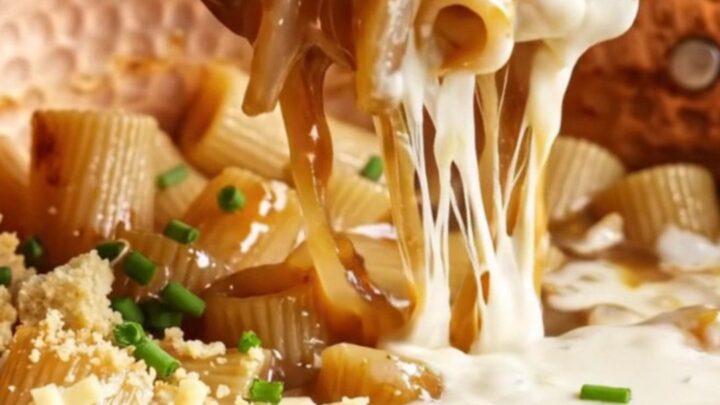
- Finish with Cream and CheeseReduce the heat to low and stir in the heavy cream and shredded Gruyère cheese. Continue stirring gently until the cheese has completely melted into a smooth, thick sauce that coats the rigatoni. Remove from the heat immediately. Serve in bowls, topped with toasted garlic baguette croutons and freshly chopped chives for added texture and flavor.Look for The sauce should be glossy, thick, and stretch when lifted.Tip Add the cheese gradually to ensure a smooth, velvety consistency.
The final stage involves creating a smooth, luxurious sauce. As you stir in the cream and Gruyère, the mixture will transition from a loose broth-based state to a rich, creamy consistency.
The cheese should melt completely without clumping. The finished dish will look glossy and feel substantial, with the ingredients perfectly bound together in a cohesive, aromatic sauce that is ready to be served immediately.
Common mistakes
A common mistake is rushing the onion caramelization; if the heat is too high, the onions will burn rather than caramelize, resulting in a bitter flavor. Another error is failing to deglaze the pot properly with the sherry vinegar, which leaves behind valuable flavor.
Finally, adding the cheese while the heat is too high can cause the dairy to separate or become grainy; always reduce the heat to low or remove the pot from the burner entirely before stirring in the cream and cheese.
How to tell it’s done
The dish is finished when the pasta is cooked to an al dente texture, meaning it is tender but still retains a slight bite. The sauce should be thick, glossy, and pull away from the sides of the pot when stirred.
The onions should be meltingly soft and dark mahogany in color. The Gruyère must be fully incorporated, creating a cohesive, velvety coating that stretches slightly when the pasta is lifted with a spoon or tongs.
Up next · Part 3 of 3
2 variations · storage & make-ahead · 3 answers · printable card
Tips, FAQ & printable recipe (Part 3)← Back to the ingredients (Part 1)