Dinner · Part 2 of 3: Instructions
One-Pan Turkish Meatball Stew (Sulu Köfte) — Comforting Weeknight Dinner Step-by-step instructions
- Prep
- Cook
- Total
- Serves
- 4
Before you start
Before you start, gather all your ingredients and equipment. Grate the onion and mince the garlic, then set them aside. Peel and slice the carrots into rounds, and peel and cube the potatoes into bite-sized pieces.
Chop the parsley for garnish. Measure out the spices, breadcrumbs, and tomato paste. Have your skillet and lid ready. This prep will take about 10 minutes and ensures a smooth cooking process.
Ingredients at a glance (13)
- 1 lb ground beef (80% lean)
- 1 medium onion, grated
- 1 clove garlic, minced
- 2 tbsp plain breadcrumbs
- 1/2 tsp ground cumin
- 1/4 tsp black pepper, freshly ground
- 1 tsp salt, divided
- 2 tbsp olive oil
- 1 1/2 tbsp tomato paste
- 2 cups warm water
- 2 medium carrots, peeled and cut into rounds
- 2 medium potatoes, peeled and cubed
- 2 tbsp fresh parsley, chopped
Instructions
Prepare and Sear the Meatballs
- Mix and Shape the MeatballsIn a large bowl, combine the ground beef, grated onion, minced garlic, breadcrumbs, ground cumin, black pepper, and 1/2 teaspoon of the salt. Use your hands to mix until just combined—do not overwork. Roll the mixture into bite-sized meatballs, about 1 inch in diameter, and set them on a plate.Look for The mixture should be moist but hold together when rolled.Tip Wet your palms lightly to prevent sticking while rolling.
- Sear the MeatballsHeat the olive oil in a deep skillet over medium heat. Add the meatballs in a single layer and cook, shaking the pan occasionally, for about 4 minutes, until they are browned on all sides. They do not need to be cooked through at this point.Look for The meatballs should be deeply browned and fragrant.Tip Shake the pan gently to turn the meatballs without breaking them.
At this stage, the meatballs should be evenly browned on all sides, with a deep golden crust. The kitchen will smell of toasted cumin and beef. The mixture should have held together well, and the meatballs should look plump and appetizing. If any have cracked, don't worry—they'll still cook beautifully. This step sets the flavor foundation for the whole dish.
Simmer the Stew
- Build the BrothIn a small bowl, whisk the tomato paste into the warm water until smooth. Add the remaining 1/2 teaspoon of salt to the broth. Pour the mixture over the meatballs in the skillet.Look for The broth should be a rich, brick-red color.Tip Use warm water to help the tomato paste dissolve quickly.
- Add Vegetables and SimmerAdd the carrot rounds and potato cubes to the skillet, nestling them around the meatballs. Bring the liquid to a gentle simmer, then cover the skillet with a lid. Reduce the heat to medium-low and let it simmer for 20 minutes, or until the vegetables are tender and the meatballs are cooked through.Look for The broth will thicken slightly and the vegetables will soften.Safe temperature 160°F (71°C) internal temperature (ground meat)Tip Do not stir too vigorously; the meatballs are delicate.
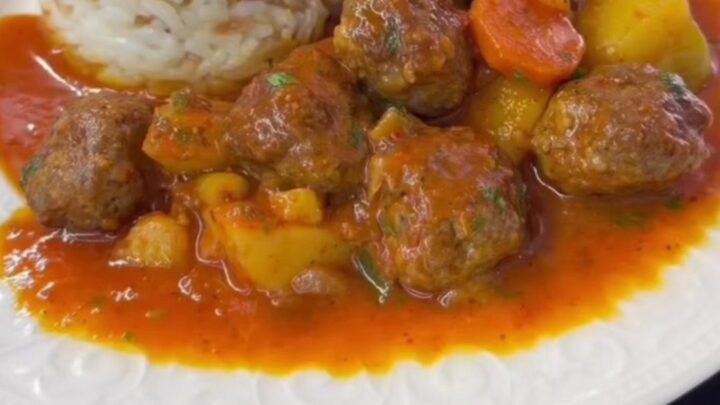
The broth should be bubbling gently, with a rich red color from the tomato paste. The meatballs and vegetables will be swimming in the liquid, which will gradually thicken as the potatoes release their starch.
The aroma will be deeply savory with a hint of sweetness from the carrots. You'll see the vegetables softening around the edges. This is the heart of the dish—patience here pays off.
Finish and Serve
- Finish and ServeOnce the meatballs are cooked through and the vegetables are tender, remove the skillet from the heat. Taste the broth and adjust seasoning if needed. Ladle the stew into deep bowls and garnish with fresh parsley. Serve hot.Look for The stew should be bubbling and fragrant, with tender meatballs.Tip For a thicker broth, simmer uncovered for the last 5 minutes.
The stew should look rustic and inviting: tender meatballs, soft carrots and potatoes, and a glossy, flavorful broth. The parsley adds a fresh, green contrast. The meatballs should be cooked through, and the vegetables easily pierced with a fork. The broth should coat the back of a spoon. Serve piping hot, with bread for dipping.
Common mistakes
One common mistake is overworking the meatball mixture, which makes the meatballs dense and tough. Mix just until the ingredients are combined. Another is overcrowding the skillet during searing—if the pan is too full, the meatballs will steam instead of brown.
Sear in batches if necessary, or ensure they are in a single layer with space between them. Also, avoid stirring the stew vigorously while it simmers; the meatballs are delicate and can break apart. Use a gentle shake or a light stir with a wooden spoon.
How to tell it’s done
The stew is done when the meatballs are cooked through to an internal temperature of 160°F (71°C), and the potatoes and carrots are tender when pierced with a fork. The broth should be slightly thickened and deeply flavored.
To check the meatballs, insert an instant-read thermometer into the center of one; it should read 160°F (71°C). If you don't have a thermometer, cut one open—the meat should be brown throughout with no pink. The vegetables should offer no resistance when pierced.
- Ground meat: 160°F (71°C) in the thickest part
Up next · Part 3 of 3
4 variations · storage & make-ahead · 5 answers · printable card
Tips, FAQ & printable recipe (Part 3)← Back to the ingredients (Part 1)