Breakfast · Part 2 of 3: Instructions
One-Pan Turkish Kıymalı Menemen with Crusty Bread Step-by-step instructions
- Prep
- Cook
- Total
- Serves
- 4
Before you start
Before you start, gather all your ingredients and equipment. Grate the tomatoes using a box grater set over a bowl—this will catch all the juices. Slice the green peppers into thin rings. Have the ground beef, butter, olive oil, salt, and pul biber within reach. Crack the eggs into a small bowl, but keep them separate.
Set the crusty bread on a cutting board, ready to tear. Make sure your pan is large enough to hold everything comfortably—a 10-inch sauté pan works well. Have a wooden spoon and a serving spoon ready. This recipe moves quickly, so having everything prepped will make the process smooth and enjoyable.
Ingredients at a glance (9)
- 200 g ground beef
- 2 tbsp butter
- 1 tbsp olive oil
- 4 green peppers (sivri biber), sliced
- 4 large grated tomatoes
- 1/2 tsp salt
- 1 tsp pul biber (Turkish red pepper flakes)
- 3 large eggs
- crusty Turkish village bread, for serving
Instructions
Phase 1: Build the Base
- Brown the Beef and PeppersHeat a large copper or stainless steel sauté pan over medium-high heat. Add the butter and olive oil, and let the butter melt until foamy. Add the ground beef and cook, breaking it up with a wooden spoon, until browned and caramelized, about 5-7 minutes. Add the sliced green peppers and cook, stirring occasionally, until tender and fragrant, about 4-5 minutes.Look for The beef is browned and the peppers are soft but not mushy.Safe temperature 160°F (71°C) internal temperature (ground meat)Tip Don't crowd the pan—brown the beef in a single layer for better caramelization.
- Simmer the Tomato SauceAdd the grated tomatoes, salt, and pul biber to the pan. Stir to combine. Bring to a simmer, then reduce the heat to medium-low. Let the mixture bubble gently, stirring occasionally, until the tomatoes have reduced into a thick, jammy sauce, about 8 minutes. The sauce should be glossy and slightly darkened.Look for The sauce is thick enough to coat the back of a spoon and has a deep red color.Tip Grate the tomatoes on the large holes of a box grater; the skins will stay behind in your hand.
The beef should be deeply browned, with crispy edges and a rich, meaty aroma. The peppers will have softened and turned slightly translucent, releasing their sweet scent. The butter and olive oil will have combined into a glossy, golden coating on the meat and peppers. The pan should look dry, not greasy, and the bottom should have a fond—those browned bits that will flavor the sauce. This is the foundation of the dish, so take your time and let the beef caramelize properly.
Phase 2: Simmer the Sauce
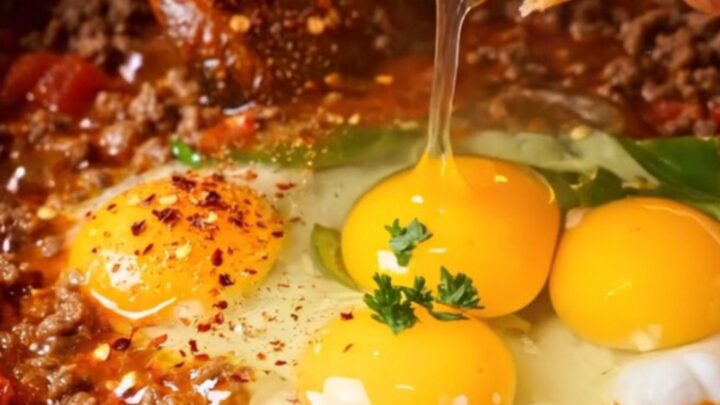
- Add the Eggs and Swirl WhitesCrack the eggs directly into the bubbling tomato mixture, spacing them evenly. Using a wooden spoon, gently swirl the whites into the sauce, being careful to keep the yolks whole and partially runny. Cook for 2-3 minutes, until the whites are set but the yolks are still glossy and soft.Look for The egg whites are opaque and set, while the yolks remain bright and soft.Safe temperature 160°F (71°C) internal temperature (egg dishes)Tip For creamier curds, stir the whites in a figure-eight motion without breaking the yolks.
The tomato sauce should be thick, dark red, and bubbling lazily. The raw tomato smell will have mellowed into a sweet, savory aroma with a hint of heat from the pul biber. The sauce should coat the back of a spoon and leave a trail when you drag a finger through it. The peppers will be fully tender, and the beef will be evenly distributed. The pan will have a glossy sheen from the reduced sauce, and the edges might start to caramelize slightly—this is where the flavor concentrates.
Phase 3: Finish with Eggs
- Serve with Crusty BreadRemove the pan from the heat. Tear a thick piece of crusty village bread and dip it directly into the sizzling pan, scooping up a hot, savory mouthful of menemen. Serve the remaining menemen hot from the pan, with extra bread on the side for dipping.Look for The bread soaks up the rich sauce and eggs, and the pan is still bubbling slightly.Tip Bring the pan to the table straight from the stove—it keeps the eggs warm and the bread dipping experience authentic.
The egg whites should be set and opaque, curdling gently into the sauce, while the yolks remain glossy and bright orange. The dish should look vibrant and inviting, with the sauce bubbling around the eggs.
The aroma is rich and comforting, with notes of butter, tomato, and a subtle spice. The bread should be ready to tear, and the pan should be brought to the table immediately. The eggs should jiggle slightly when the pan is shaken, indicating they are soft and creamy, not overcooked.
Common mistakes
One common mistake is rushing the tomato sauce. If you don't simmer it long enough, the sauce will be watery and the eggs will swim in it instead of setting into creamy curds. Be patient—let it reduce for the full eight minutes. Another mistake is overcooking the eggs.
If you leave them in the pan too long, the yolks will harden and the dish will lose its luscious texture. Keep an eye on them and remove the pan from the heat as soon as the whites are set. Also, avoid using lean ground beef; a little fat adds flavor and keeps the dish moist. Finally, don't skip the pul biber—it's essential for the authentic Turkish character.
How to tell it’s done
The menemen is done when the sauce has thickened to a jammy consistency and the eggs are cooked to your liking. For food safety, if you prefer your eggs fully set, cook them until the yolks are firm and the whites are completely opaque, reaching an internal temperature of 160°F (71°C).
If you like them soft and runny, the whites should be set but the yolks still glossy and liquid—this is the traditional way to serve menemen. The beef should be cooked through, with no pink remaining, and the internal temperature of the meat should reach 160°F (71°C). The dish should be bubbling gently when you pull it off the heat.
- Ground meat: 160°F (71°C) in the thickest part
- Egg dishes: 160°F (71°C) in the thickest part
Up next · Part 3 of 3
4 variations · storage & make-ahead · 5 answers · printable card
Tips, FAQ & printable recipe (Part 3)← Back to the ingredients (Part 1)