Dinner · Part 2 of 3: Instructions
One-Pan Stewed Vegetable Pasta with Melted Cheese Pull Step-by-step instructions
- Prep
- Cook
- Total
- Serves
- 4
Before you start
Before starting, gather all ingredients and equipment. Fill a large pot with water for the pasta and bring it to a boil. Have the skillet and lid ready, along with tongs, a potato masher, and a colander.
Prepare the fresh basil by tearing the leaves into small pieces. Measure out the spices and cheese so they're ready to add at the right times.
Ingredients at a glance (13)
- 1 large beefsteak tomato
- 1 whole green zucchini
- 1 small eggplant
- 2 peeled onions
- 3 tbsp olive oil
- 1/2 cup water
- 1 tsp paprika
- 1 tsp salt
- 1/2 tsp ground cumin
- 1/2 tsp black pepper
- Fresh basil leaves, torn (to taste)
- 1 1/2 cups shredded Turkish kashar mozzarella cheese
- 12 oz pasta ribbons (such as pappardelle or fettuccine)
Instructions
Steam and Peel
- Steam the VegetablesPlace the whole beefsteak tomato, whole green zucchini, small eggplant, and peeled onions in a large skillet with 3 tbsp olive oil and 1/2 cup water. Cover with a lid and steam over medium heat for 10 minutes, until the vegetables are tender and their skins begin to loosen.Look for The vegetables should be fork-tender and the skins will wrinkle and peel away easily.Tip Do not overcrowd the skillet; if needed, arrange the vegetables in a single layer for even steaming.
- Peel the SkinsUncover the skillet and let the vegetables cool slightly. Using tongs, carefully peel away the skins from the tomato, zucchini, eggplant, and onions. Discard the skins.Look for The skins should come off in large pieces, leaving the tender flesh intact.Tip If the skins are stubborn, use a paring knife to help lift them, but be gentle to keep the vegetables whole.
- Mash the VegetablesAdd 1 tsp paprika, 1 tsp salt, 1/2 tsp ground cumin, and 1/2 tsp black pepper to the skillet. Using a potato masher, mash the vegetables into a rich, rustic puree, leaving some chunks for texture.Look for The mixture should look like a chunky sauce, with no large pieces remaining.Tip Mash to your preferred consistency—smooth or chunky. For a smoother sauce, mash longer.
After this phase, the vegetables should be fork-tender, and the skins will have loosened and wrinkled. The skillet will contain the vegetables and a small amount of liquid. The aroma will be sweet and earthy from the steamed vegetables. Check that the skins peel off easily; if not, steam for a few more minutes.
Flavor and Melt
- Add Basil and CheeseStir in fresh torn basil leaves. Sprinkle the shredded Turkish kashar mozzarella cheese evenly over the surface. Cover the skillet with a lid and cook for 2 minutes, until the cheese melts into gooey ribbons.Look for The cheese should be fully melted and stretchy, with a golden, bubbly surface.Tip Resist stirring the cheese in; let it melt and form a blanket over the sauce for the best pull.
- Cook the PastaMeanwhile, bring a large pot of salted water to a boil. Cook the pasta ribbons according to package instructions until al dente. Reserve 1/2 cup of pasta water, then drain the pasta.Look for The pasta should be tender but still firm to the bite.Safe temperature 160°F (71°C) internal temperature (egg dishes)Tip Reserve some pasta water to loosen the sauce if it becomes too thick when tossing.
The sauce will be a rich, chunky puree with a vibrant red-orange color. The spices will have bloomed, filling the kitchen with a warm, savory scent.
When you lift the lid, the cheese should be fully melted, bubbly, and stretchy, with a golden, slightly browned surface. The basil will have wilted into the sauce, adding a fresh herbal note.
Toss and Serve
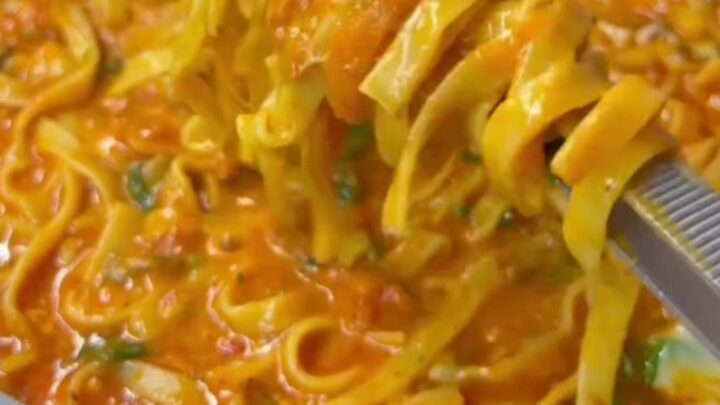
- Combine and ServeAdd the cooked pasta to the skillet with the vegetable-cheese mixture. Toss gently to coat the pasta with the sauce, letting the cheese stretch into ribbons. If the sauce is too thick, add a splash of the reserved pasta water. Serve immediately, lifting a forkful to show the cheese pull.Look for The pasta should be evenly coated with the glossy red-orange sauce and strands of melted cheese.Tip For the best cheese pull, serve right away while the cheese is still hot and stretchy.
The pasta should be evenly coated with the sauce, and the cheese should be stretched into long ribbons. The dish will look glossy and inviting, with the sauce clinging to every noodle. The aroma is a blend of roasted vegetables, melted cheese, and fresh basil. Serve immediately to enjoy the full cheese pull.
Common mistakes
One common mistake is overcooking the vegetables, which can make them mushy and watery. Keep the steaming time to about 10 minutes, and check for doneness by piercing with a fork.
Another issue is not letting the cheese melt properly—make sure the lid is on and the heat is medium-low so the cheese melts slowly without burning. Also, avoid over-mashing the vegetables; leave some chunks for a more interesting texture.
How to tell it’s done
The dish is done when the vegetables are tender and their skins peel away easily, the sauce has thickened slightly, and the cheese is fully melted and stretchy.
The pasta should be al dente—tender but with a slight bite. When you lift a forkful, the cheese should pull into long, stringy ribbons, and the sauce should cling to the pasta, creating a glossy, appetizing finish.
- Egg dishes: 160°F (71°C) in the thickest part
Up next · Part 3 of 3
4 variations · storage & make-ahead · 5 answers · printable card
Tips, FAQ & printable recipe (Part 3)← Back to the ingredients (Part 1)