Dinner · Part 2 of 3: Instructions
One-Pan Skillet Lasagna with Homemade Bolognese Step-by-step instructions
- Prep
- Cook
- Total
- Serves
- 4
Before you start
Before starting, gather all ingredients and equipment. Chop the onion and mince the garlic. Measure the tomato paste, crushed tomatoes, oregano, salt, and pepper. Shred the mozzarella if not pre-shredded, and chop the parsley.
Have the lasagna sheets ready. Heat the skillet over medium-high heat before adding the beef. Keep a lid for the skillet nearby, as it will be needed to cover the dish while the pasta cooks and the cheese melts.
Ingredients at a glance (11)
- 10 oz ground beef
- 1/2 cup finely chopped onion
- 2 cloves garlic, minced
- 2 tbsp tomato paste
- 1 can (28 oz) crushed tomatoes
- 1 tsp dried oregano
- 1/2 tsp salt
- 1/4 tsp black pepper
- 5 uncooked dry lasagna pasta sheets
- 1 1/2 cups shredded whole-milk mozzarella cheese
- 2 tbsp chopped fresh parsley
Instructions
Browning and Simmering
- Brown the Beef and Build the SauceHeat a large skillet over medium-high heat. Add the ground beef and cook, breaking it up with a wooden spoon, until browned and no longer pink, about 5 minutes. Add the onion and garlic, and cook until softened, about 2 minutes. Stir in the tomato paste, crushed tomatoes, oregano, salt, and pepper. Bring the sauce to a simmer.Look for The sauce is thick and bubbling, and the beef is fully browned.Safe temperature 160°F (71°C) internal temperature (ground meat)Tip Break the beef into small crumbles for even browning.
- Simmer the BologneseReduce the heat to medium-low and let the sauce simmer gently for 5 minutes, stirring occasionally, until slightly thickened and the flavors meld. The sauce should coat the back of a spoon.Look for The sauce has darkened and thickened slightly.Tip Simmering deepens the tomato flavor without drying out the sauce.
The beef is browned and the sauce is bubbling and fragrant. The tomato paste has deepened the color, and the onions are soft. The sauce should coat the back of a spoon, with a rich, savory aroma. This is the flavor foundation of the dish.
Cooking the Pasta
- Add the Lasagna SheetsGently slide the uncooked lasagna sheets into the simmering sauce, one at a time, pressing them down with a spatula to fully submerge them in the liquid. Make sure the sheets are separated and lying flat.Look for The sheets are fully covered by the sauce.Tip If the sauce is too thick, add a splash of water to help the pasta cook.
- Cover and Cook the PastaCover the skillet tightly with a glass lid. Cook over medium-low heat for 12 minutes, or until the pasta sheets are tender and cooked through. Do not lift the lid too often, as the steam helps cook the pasta.Look for The pasta is tender when pierced with a fork.Tip Keep the heat low to avoid burning the bottom.
The skillet is covered, and steam is gently escaping. After 12 minutes, the pasta is tender and the sauce has thickened, clinging to the sheets. The kitchen smells of simmering tomatoes and herbs, and the sauce has a glossy sheen.
Melting the Cheese
- Top with Mozzarella and ParsleyOnce the pasta is tender, remove the lid. Sprinkle the shredded mozzarella evenly over the entire surface of the skillet. Scatter the chopped parsley on top of the cheese.Look for The cheese covers the pasta completely.Tip For even melting, spread the cheese in an even layer.
- Melt the CheeseCover the skillet again and cook for 3 minutes, or until the mozzarella is completely melted and gooey. The cheese should be bubbling around the edges.Look for The cheese is fully melted and starts to bubble.Tip Do not overcook, or the cheese may become rubbery.
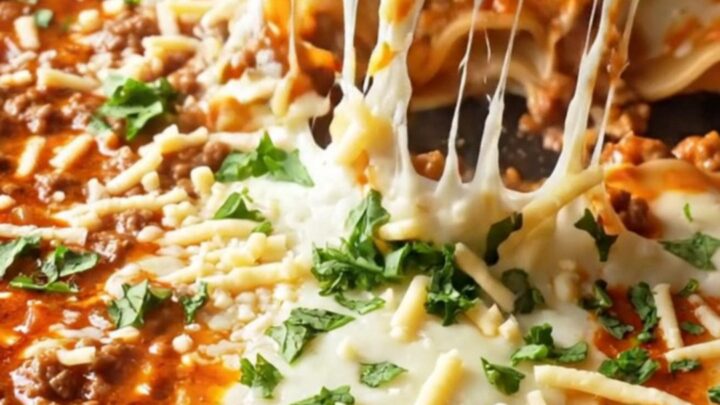
- Serve the Skillet LasagnaLift a cheesy slice with a spatula, making sure to get the strings of melted cheese. Serve hot directly from the skillet, scooping out portions onto plates.Look for The cheese pulls in long strings as you lift.Tip Use a wide spatula to keep the slice intact.
The mozzarella has melted into a smooth, bubbly layer, with golden spots where it meets the hot skillet. The parsley adds fresh green flecks. When lifted, the cheese stretches in long strings, and the sauce is thick and cohesive.
Common mistakes
One common mistake is adding the lasagna sheets without pressing them into the sauce, leaving them exposed and dry. Make sure each sheet is fully submerged. Another issue is lifting the lid too often during the 12-minute cook, which releases steam and slows cooking.
Also, avoid boiling the sauce too vigorously, as it can break or burn the bottom. Finally, do not skip the final 3-minute covered melt for the cheese — it ensures a perfectly gooey topping.
How to tell it’s done
The lasagna is done when the pasta sheets are tender and cooked through, and the cheese is completely melted and bubbling.
To test the pasta, pierce it with a fork — it should slide in easily with no resistance. The sauce should be thick and clinging to the pasta, not watery.
The cheese should be gooey and stretchy, and the edges of the skillet may have slightly caramelized sauce. If using a food thermometer, the ground beef should reach an internal temperature of 160°F (71°C) to ensure it is fully cooked.
- Ground meat: 160°F (71°C) in the thickest part
Up next · Part 3 of 3
4 variations · storage & make-ahead · 5 answers · printable card
Tips, FAQ & printable recipe (Part 3)← Back to the ingredients (Part 1)