Dinner · Part 2 of 3: Instructions
One-Pan Shell Pasta with Blistered Tomatoes and Beef Step-by-step instructions
- Prep
- Cook
- Total
- Serves
- 4
Before you start
Before starting, cook the shell pasta in salted boiling water until al dente. Drain and set aside, reserving a cup of pasta water just in case. Prepare the tomatoes by washing and cutting them in half through the equator. Finely dice the carrots and mince the garlic. Measure out the peas, salt, and oregano. Have all ingredients within reach, as the cooking moves quickly once the tomatoes hit the pan.
Ingredients at a glance (12)
- 4 ripe red tomatoes
- 3 tbsp extra virgin olive oil
- 300 g lean ground beef
- 1 cup sweet green peas
- 1 cup finely diced carrots
- 3 cloves garlic, minced
- 1 tsp salt
- 1 tsp dried oregano
- 250 g conchiglie shell pasta, cooked al dente
- Extra virgin olive oil, for drizzling, to taste
- Cracked black pepper, to taste
- Freshly grated aged pecorino cheese, for serving
Instructions
Sizzle and Sear
- Blister the TomatoesHeat the olive oil in a large non-stick sauté pan over medium-high heat. Place the tomatoes cut-side down in the hot oil and let them sizzle undisturbed until the skins blister and char slightly, about 3 to 4 minutes.Look for The tomatoes should be deeply browned on the cut side and the skins starting to wrinkle and blister.Tip Resist moving the tomatoes too soon; letting them sear creates a rich, concentrated flavor.
- Add the Beef and VegetablesAdd the ground beef around the tomatoes, breaking it up with a spoon. Stir in the peas, carrots, garlic, salt, and oregano. Cook, stirring occasionally, until the beef is browned and cooked through, about 5 to 7 minutes.Look for The beef should be evenly browned with no pink remaining, and the vegetables softened but still bright.Safe temperature 160°F (71°C) internal temperature (ground meat)Tip Use a spoon to break the beef into small crumbles so it blends evenly with the sauce.
The tomatoes should be sizzling loudly in the hot oil, with blistered, charred spots on the cut side. The kitchen will smell of warm olive oil and sweet tomato. The beef, once added, should brown quickly, releasing its juices and turning from pink to a rich brown.
The peas and carrots will brighten in color, and the garlic will become fragrant. At this point, the pan should be bubbling gently, and the beef should be fully cooked through before moving to the next phase.
Fold and Coat
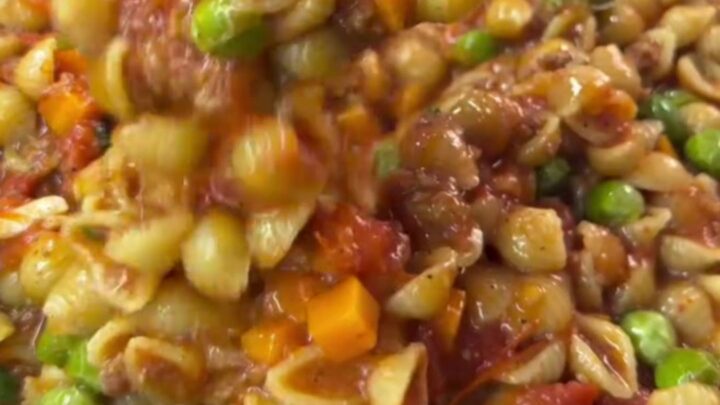
- Fold in the PastaPour the cooked shell pasta into the pan with the tomato-meat ragù. Gently fold with a silicone spoon so the hollow shells capture the peas and sauce. Cook for 2 to 3 minutes, allowing the pasta to absorb some of the sauce and heat through.Look for The shells should be coated in the sauce, with peas and small bits of carrot nestled inside the hollows.Tip Fold gently to avoid breaking the shells; the pasta should stay intact.
When the pasta is folded in, the shells should be glossy with the tomato-meat sauce, with small pieces of carrot and peas nestled in the hollows. The pan should be steaming, and the sauce should cling to the pasta rather than pooling at the bottom.
The shells should be tender but still have a slight bite. The overall look is rustic and hearty, with the red sauce and green peas creating a colorful contrast.
Finish and Shine
- Finish and ServeLadle the pasta into warm bowls. Drizzle with extra virgin olive oil, crack black pepper over the top, and finish with freshly grated aged pecorino cheese. Serve immediately.Look for The pasta should be glossy with olive oil, with visible flakes of pecorino and a dusting of black pepper.Tip Warm the bowls beforehand to keep the dish hot from the first bite to the last.
After the final drizzle of olive oil, the pasta should glisten, and the black pepper should be visibly scattered over the top. The pecorino will melt slightly on contact, creating a creamy, savory finish. The bowls should be hot, and the dish should look inviting, with steam rising and the aroma of cheese and herbs. The texture should be moist, not dry, with each shell holding a bit of sauce.
Common mistakes
A common mistake is overcrowding the pan when searing the tomatoes, which lowers the heat and causes them to steam instead of blister. Give them space and let them cook undisturbed.
Another pitfall is overcooking the pasta before adding it to the pan; it will continue to absorb sauce, so cook it just until al dente. Finally, don’t skip the final drizzle of olive oil and pecorino—they brighten the dish and add a fresh, savory finish.
How to tell it’s done
The dish is done when the ground beef is fully cooked through, reaching an internal temperature of 160°F (71°C), and the pasta is heated through and coated in the sauce. The tomatoes should be soft and slightly collapsed, with blistered skins.
The sauce should be thick enough to cling to the shells, not watery. Taste and adjust salt if needed. The final dish should be piping hot, with the fragrance of oregano and garlic.
- Ground meat: 160°F (71°C) in the thickest part
Up next · Part 3 of 3
4 variations · storage & make-ahead · 5 answers · printable card
Tips, FAQ & printable recipe (Part 3)← Back to the ingredients (Part 1)