Dinner · Part 2 of 3: Instructions
One-Pan Roasted Vegetable Shell Pasta Step-by-step instructions
- Prep
- Cook
- Total
- Serves
- 4
Before you start
Before starting, set out all the ingredients and equipment. Wash and halve the eggplant lengthwise, halve and seed the red peppers, quarter the onion, and measure the cherry tomatoes. Have the olive oil and sea salt nearby.
Fill a large pot with water and bring it to a boil for the pasta. Keep a measuring cup ready to reserve pasta water. The skillet and lid should be clean and ready. This prep takes about 15 minutes and ensures the cooking process goes smoothly.
Ingredients at a glance (9)
- 1 medium eggplant, halved lengthwise
- 2 red bell peppers, halved and seeded
- 2 cups cherry tomatoes (about 12 oz)
- 1 medium yellow onion, quartered
- 1/4 cup extra-virgin olive oil
- 1 tsp sea salt, plus more to taste
- 10 oz pipe rigate pasta (or other short tubular pasta)
- 1 cup shredded mozzarella cheese (about 4 oz)
- 1/4 cup fresh parsley leaves, chopped
Instructions
Caramelize and soften the vegetables
- Caramelize the vegetablesPlace the halved eggplant, red peppers, tomatoes, and onion in a large skillet. Drizzle with olive oil and sprinkle with sea salt. Toss gently to coat everything evenly. Arrange the vegetables in a snug, even layer, cut sides down where possible. Set the skillet over medium heat and cover with a lid. Cook for 15 to 20 minutes, stirring once halfway, until the vegetables are deeply caramelized and meltingly tender. The tomatoes should burst and release their juices, creating a saucy base.Look for The vegetables are soft and browned at the edges; the tomatoes have collapsed into a chunky sauce.Tip Do not rush this step: the slow caramelization builds the sauce's sweetness and depth.
- Simmer covered until tenderAfter the initial caramelization, reduce the heat to low and keep the lid on. Let the vegetables simmer gently for another 5 to 10 minutes, until they are completely soft and easily pierced with a fork. The steam trapped under the lid helps the vegetables become meltingly tender without drying out. Stir occasionally to prevent sticking. The mixture should look like a chunky, jammy sauce with glossy oil.Look for The vegetables have collapsed into a thick, saucy mixture with visible caramelized bits.Tip If the skillet looks dry, add a splash of water or pasta cooking water to loosen the sauce.
At the end of this phase, the vegetables should be deeply browned at the edges, soft enough to pierce with a fork, and the tomatoes should have burst into a chunky sauce. The oil should be glossy and the aroma rich and sweet.
Stir gently to ensure nothing sticks, and adjust the heat if the vegetables are browning too quickly. The mixture should look like a thick, jammy base ready for the pasta.
Cook the pasta and combine
- Cook the pastaWhile the vegetables simmer, bring a large pot of salted water to a rolling boil. Add the pipe rigate and cook according to the package directions until al dente, usually about 9 to 11 minutes. Reserve about 1 cup of pasta cooking water before draining. Drain the pasta in a colander and set aside. Do not rinse the pasta; the starch helps the sauce cling.Look for The pasta is tender but still has a slight bite in the center.Tip Reserve more pasta water than you think you need; it is the secret to a silky sauce.
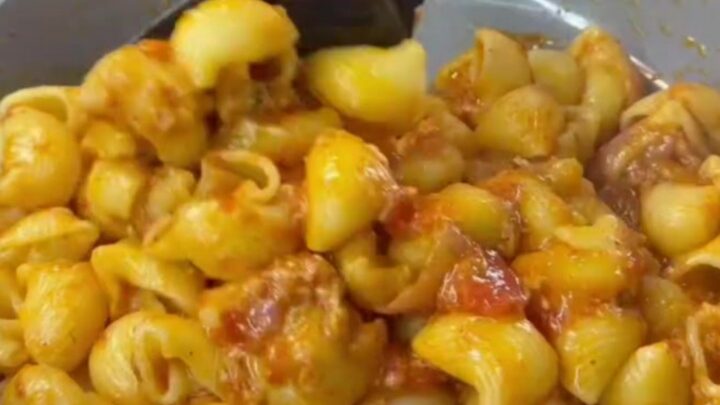
- Combine pasta and vegetablesAdd the drained pipe rigate to the skillet with the caramelized vegetables. Toss everything together over medium heat, using a wooden spoon to coat every shell with the vegetable sauce. If the mixture seems dry, add a splash of the reserved pasta water, a few tablespoons at a time, until the sauce flows easily. Cook for 2 to 3 minutes, stirring constantly, so the pasta absorbs some of the sauce and becomes glossy.Look for The pasta shells are coated in a thick, chunky sauce with no dry spots.Tip Taste and adjust seasoning with more salt or a drizzle of olive oil before adding the cheese.
- Melt in the cheeseSprinkle the shredded mozzarella over the pasta and vegetable mixture. Stir gently for 1 to 2 minutes, until the cheese melts into the sauce and forms long, stretchy strands. The cheese should coat the pasta and vegetables, making them extra creamy and rich. Remove the skillet from the heat as soon as the cheese is fully melted and gooey.Look for The cheese is fully melted and pulls into webs when you lift the spoon.Tip For extra browning, place the skillet under the broiler for 1 minute after melting the cheese.
The pasta should be al dente, with a slight bite. When combined with the vegetables, the sauce should coat every shell evenly. The cheese should melt into a creamy, stretchy layer that pulls into webs. The skillet should look glossy and cohesive, with no dry pasta or watery sauce. Taste and adjust seasoning before serving.
Finish and serve
- Garnish and serveSprinkle the chopped fresh parsley over the top of the pasta. Serve immediately, lifting a heaping spoonful to show off the stretchy cheese and glossy shells. Divide among warm bowls and enjoy while the cheese is still molten.Look for The parsley adds a bright green contrast, and the cheese stretches when lifted.Tip Serve straight from the skillet for a rustic, one-pan presentation.
The parsley adds a fresh, green finish. The cheese should be molten and stretchy, and the pasta should be piping hot. Lift a heaping spoonful to see the cheese webs and glossy shells. Serve immediately in warm bowls, with extra parsley on the side if desired. The dish should look rustic and inviting, with caramelized bits of vegetable throughout.
Common mistakes
A common mistake is overcrowding the skillet, which steams the vegetables instead of caramelizing them. Make sure the vegetables fit in a single snug layer. Another pitfall is undercooking the vegetables; they need to be meltingly tender, not just softened.
Do not skip the covered simmering step—it is essential for the sauce's silky texture. Also, avoid overcooking the pasta; al dente is best because it will continue to cook slightly in the sauce. Finally, add pasta water gradually to achieve the right sauce consistency.
How to tell it’s done
The dish is done when the vegetables are completely soft and caramelized, the pasta is al dente, and the cheese is fully melted and stretchy. The sauce should coat the pasta without being watery; if it looks dry, add a splash of pasta water.
The cheese should pull into long strands when you lift a spoonful. Taste for seasoning and add more salt if needed. Serve immediately while the cheese is still molten for the best texture and flavor.
Up next · Part 3 of 3
4 variations · storage & make-ahead · 5 answers · printable card
Tips, FAQ & printable recipe (Part 3)← Back to the ingredients (Part 1)