Dinner · Part 3 of 3: Tips & recipe card
One-Pan Roasted Tomato Pepper Pasta Tips, FAQ & printable recipe
- Prep
- Cook
- Total
- Serves
- 4
Tips for success
For the best texture, use a potato masher to crush the roasted vegetables while they are still hot. This releases their juices and makes a rustic sauce.
If you prefer a smoother sauce, you can blend the vegetables in a food processor before adding the pasta, but the chunky version is more authentic to the video.
To make the dish even more flavorful, use a good quality extra virgin olive oil and don't skimp on the salt. The salt helps draw out moisture from the tomatoes during roasting.
Taste the sauce before adding the pasta and adjust the seasoning. The mozzarella adds saltiness, so you may need less salt if using a salty cheese.
Variations
- Spicy Arrabbiata: Add 1/2 teaspoon red pepper flakes with the oregano for a spicy kick. Or stir in a chopped fresh chili with the garlic before roasting. The heat balances the sweetness of the peppers.
- Herb Garden: Replace the dried oregano with 1 tablespoon fresh thyme leaves or a mix of fresh basil and oregano. Add the fresh herbs after smashing the vegetables so they keep their brightness.
- Protein Boost: Add 1 cup of cooked shredded chicken, Italian sausage, or chickpeas after smashing the vegetables. Simmer with the pasta to warm through. Adjust seasoning as needed.
- Vegan Version: Omit the mozzarella and instead stir in 1/4 cup nutritional yeast or a dollop of vegan cream cheese after the pasta is cooked. Use a plant-based milk to loosen the sauce if needed.
Storage and make-ahead
- Fridge
- Store leftovers in an airtight container in the refrigerator for up to 3 days. The pasta will absorb sauce, so add a splash of water when reheating.
- Freezer
- The cooked pasta can be frozen for up to 2 months. Let cool completely, then transfer to a freezer-safe container.
- Reheat
- Reheat gently in a skillet over medium-low heat, stirring often, until warmed through. Add a splash of water or broth to loosen the sauce if needed.
Store leftovers in an airtight container in the refrigerator for up to 3 days. The pasta will continue to absorb sauce as it sits, so you may need to add a splash of water or broth when reheating. Reheat gently in a skillet over medium-low heat, stirring occasionally, until warmed through.
The roasted vegetable sauce can be made up to 2 days ahead. Roast and smash the vegetables, then let cool and refrigerate. When ready to cook, reheat the sauce in a skillet, add the pasta and boiling water, and proceed with the recipe. The pasta is best cooked fresh.
Serving ideas
Serve this pasta as a main course with a simple green salad and crusty bread to soak up any extra sauce.
The dish is rich and satisfying on its own, but a side of sautéed greens or a crisp salad adds freshness. A glass of medium-bodied red wine, like a Chianti, pairs nicely with the roasted tomato flavor.
For a more substantial meal, top each serving with a sprinkle of red pepper flakes for heat or a dollop of ricotta for extra creaminess.
The pasta is also delicious with a drizzle of balsamic glaze or a few fresh basil leaves. Leftovers can be turned into a baked pasta dish by topping with breadcrumbs and baking until golden.
Frequently asked questions
Can this recipe be made with gluten-free pasta?
Why does the sauce sometimes turn out watery?
Can this be made ahead and reheated?
What type of mozzarella works best?
Is it necessary to roast the vegetables on a baking sheet?
One-Pan Roasted Tomato Pepper Pasta
Ingredients
- 2 lb ripe plum tomatoes, whole
- 2 sweet red peppers, stemmed and seeded
- 1 yellow onion, sliced
- 4 cloves garlic, peeled
- 1/4 cup extra virgin olive oil
- 1 tsp kosher salt, plus more to taste
- 1 tsp dried oregano
- 2 cups boiling water, divided
- 12 oz dry conchiglie (shell) pasta
- 1 1/2 cups shredded mozzarella cheese
- 1/4 cup chopped fresh parsley, for serving
- Freshly ground black pepper, for serving
Instructions
- Heat the oven to 425°F (220°C). In a large oven-safe skillet or Dutch oven, combine the whole plum tomatoes, red peppers, sliced onion, and garlic cloves. Drizzle with the olive oil, sprinkle with the salt and oregano, and toss to coat everything evenly. Arrange the vegetables in a single layer, cut-side down if any tomatoes are very large. Roast for 20 to 25 minutes, until the tomato skins are blistered and charred in spots and the peppers are softened and sweet.
- Remove the skillet from the oven and set it on a heatproof surface. Using a potato masher, crush the roasted tomatoes, peppers, onions, and garlic right in the pan until you have a chunky, saucy mixture. Stir in 1/2 cup of the boiling water to loosen the sauce and scrape up any browned bits from the bottom of the pan. The sauce should be thick but pourable; add another 1/4 cup of water if needed.
- Place the skillet over medium-high heat. Add the dry conchiglie pasta and the remaining 1 1/2 cups boiling water. Stir well to combine, making sure the pasta is mostly submerged in the sauce. Bring the mixture to a simmer, then reduce the heat to medium-low. Cover the skillet with a lid or foil and cook, stirring occasionally, for 12 to 15 minutes, until the pasta is al dente and has absorbed most of the liquid.
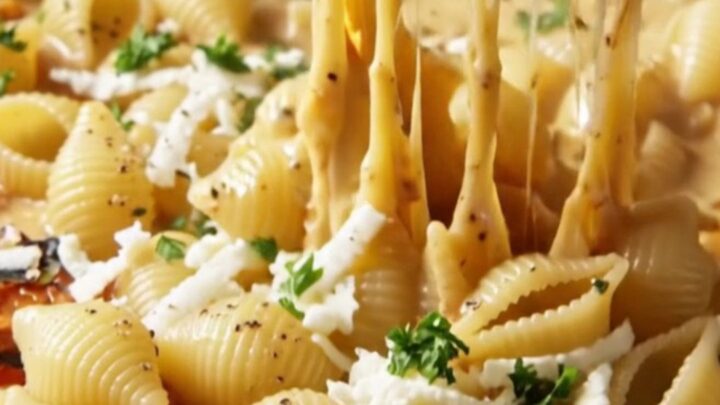
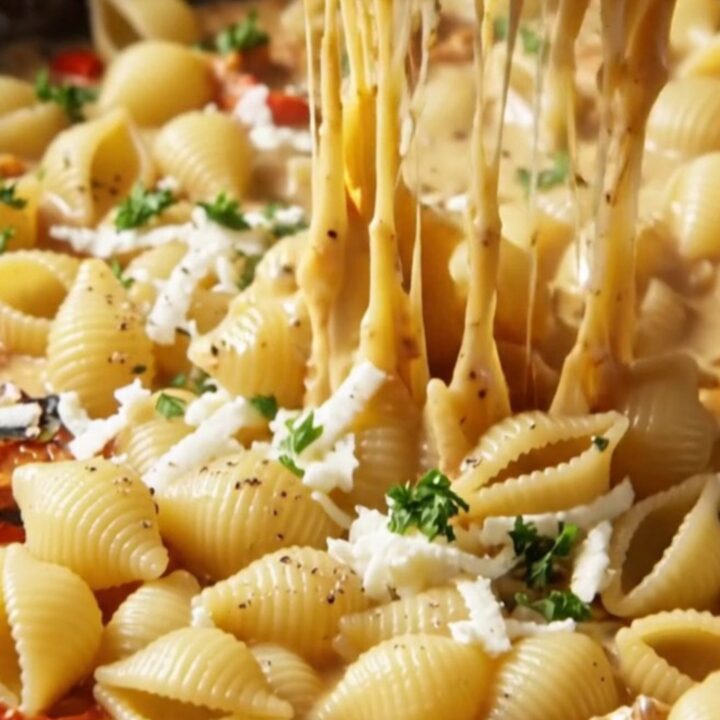
- Once the pasta is cooked, remove the skillet from the heat. Sprinkle the shredded mozzarella over the pasta and gently fold it in with a wooden spoon until the cheese is melted and creamy. The sauce will become glossy and slightly stringy. If the mixture seems too thick, stir in a tablespoon or two of hot water to loosen it to a creamy consistency.
- Spoon the pasta into warm bowls. Top each serving with a generous sprinkle of chopped fresh parsley and a few turns of freshly ground black pepper. Serve immediately while the cheese is still stretchy and the sauce is piping hot.
Estimated nutrition per serving
- Calories
- 520
- Protein
- 18 g
- Carbohydrates
- 72 g
- Fat
- 18 g
Next recipe
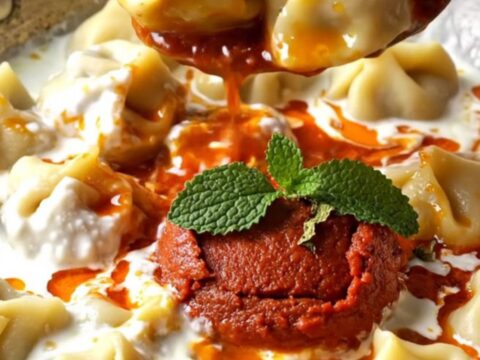
Tiny Turkish Mantı Dumplings with Garlic Yogurt and Sizzling Red Butter
See the recipe → →This recipe is based on a short cooking video and is published under the pen name Clara Weller. It was checked before publication, but errors can slip through. Nutrition, when shown, is an estimate. Read more in our editorial policy and on our food safety page.
More recipes to try
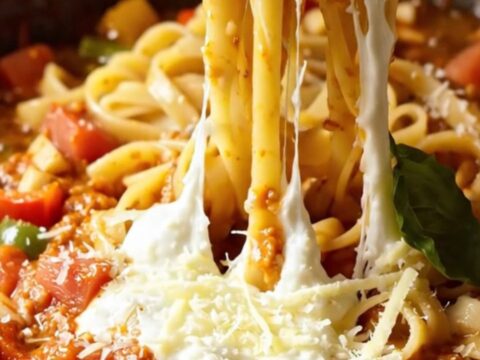
One-Pan Pasta with Roasted Tomatoes and Peppers
Total time: 30 min
Ultra-Crispy Buttermilk Chicken Tenders
Total time: 30 min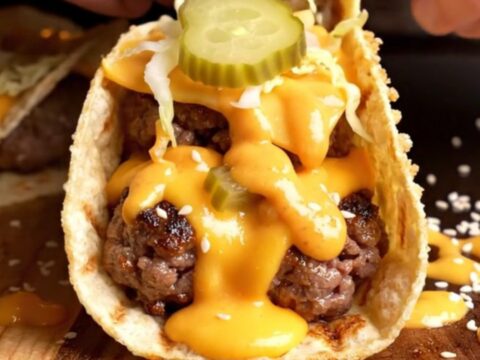
Crispy Smash Burger Tacos Ready in 10 Minutes
Total time: 10 min
Caramelized Onion and Garlic Butter Spaghetti: 20-Minute Dinner
Total time: 30 min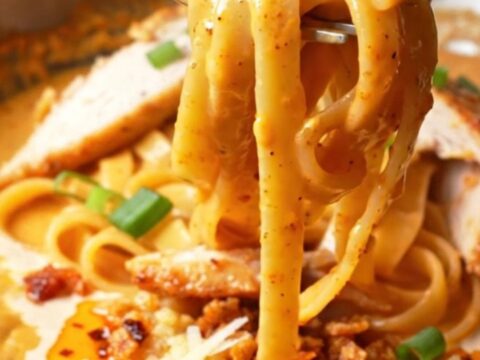
Spicy Chili Crisp Chicken Alfredo: One Pan, 30 Minutes
Total time: 30 min