Dinner · Part 2 of 3: Instructions
One-Pan Penne Pasta with Seared Steak and Bell Peppers Step-by-step instructions
- Prep
- Cook
- Total
- Serves
- 4
Before you start
Before beginning, organize all components to ensure a seamless cooking process. Slice the sirloin steak into uniform cubes, approximately one inch in size, to guarantee they sear evenly. Wash and slice the red bell peppers into thin, consistent strips.
Measure the marinara sauce and have it ready near the stove. Bring a large pot of water to a boil for the pasta. Having all ingredients prepped and within reach is crucial for managing the high-heat searing step effectively.
Ingredients at a glance (4)
- 1 lb sirloin steak, cut into bite-sized cubes
- 12 oz penne pasta
- 2 large red bell peppers, sliced into strips
- 1 cup marinara sauce
Instructions
Searing the protein
- Sear the steakAdd the steak cubes in a single layer to a hot skillet. Sear the meat until deeply browned on all sides. Once the steak reaches an internal temperature of 145°F (63°C), remove it from the pan and let it rest on a plate for at least 3 minutes.Look for The steak should develop a deep, dark brown crust and sizzle audibly when hitting the hot pan.Safe temperature 145°F (63°C) internal temperature (steaks, chops and roasts)Tip Avoid overcrowding the pan to ensure the steak browns properly rather than steaming.
The steak should be deeply browned and fragrant. When removing the meat, check that it is fully seared on the outside, which indicates the Maillard reaction has occurred, providing the foundational savory notes for the rest of the recipe.
Ensure the pan remains hot for the subsequent cooking steps.
Sautéing and boiling
- Cook peppers and pastaIn the same skillet, add the red bell pepper strips. Sauté until the peppers are tender and slightly charred. Meanwhile, boil the penne in a separate pot of water until al dente. Drain the pasta, reserving a small amount of starchy water, and add the noodles directly to the skillet with the peppers.Look for The bell peppers should soften significantly and take on a bright, glossy appearance.Tip Adding a splash of pasta water helps the sauce emulsify with the starch from the noodles.
The peppers should appear vibrant and slightly softened, with visible charred edges. The pasta must be cooked to an al dente state before being transferred. Ensure the pasta is well-drained but not completely dry, as the remaining moisture helps integrate the sauce during the final assembly phase.
Final glaze and assembly
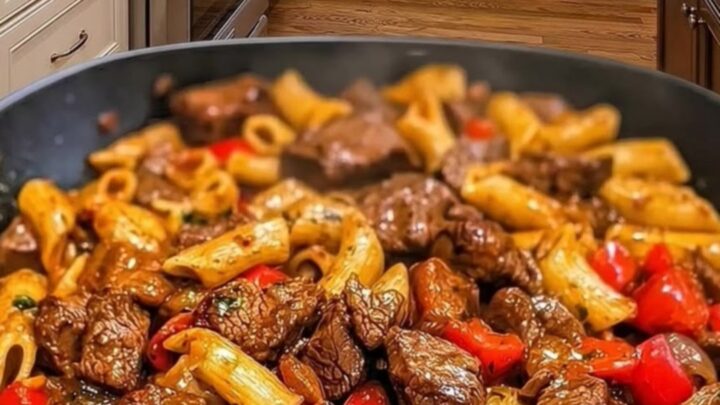
- Glaze and combinePour the marinara sauce into the skillet with the peppers and cooked pasta. Toss everything together over medium heat until the sauce is hot and clings to the noodles. Fold the rested steak cubes back into the pan, ensuring they are coated in the sauce. Serve immediately while hot.Look for The pasta should be evenly coated in a thick, vibrant red tomato glaze that glistens under the light.Tip Adjust the consistency of the glaze by adding more pasta water if the sauce appears too thick.
The final dish should be glossy and well-combined, with the sauce clinging to every strand of penne and piece of steak. The aroma should be savory and tomato-forward. Check that the sauce has achieved a uniform consistency and that all elements are thoroughly heated through before serving.
Common mistakes
A common mistake is overcrowding the skillet during the searing phase, which causes the steak to steam in its own juices rather than developing a flavorful crust. Always work in batches if the skillet is not large enough.
Another error is overcooking the peppers; they should remain slightly crisp to provide textural contrast against the soft pasta. Finally, failing to reserve a little pasta water can result in a dry sauce, as the starch is necessary to bind the marinara to the noodles.
How to tell it’s done
The steak is done when it is browned on the outside and reaches an internal temperature of 145°F (63°C). At this stage, the meat should be firm but still retain a tender interior.
The pasta should be cooked to al dente, meaning it offers a slight resistance to the bite, ensuring it maintains its structure when tossed with the sauce. Once these levels are achieved, the final assembly will yield a cohesive, restaurant-quality meal.
- Steaks, chops and roasts: 145°F (63°C) in the thickest part, then a 3-minute rest
Up next · Part 3 of 3
2 variations · storage & make-ahead · 3 answers · printable card
Tips, FAQ & printable recipe (Part 3)← Back to the ingredients (Part 1)