Dinner · Part 2 of 3: Instructions
One-Pan Pasta with Roasted Tomatoes and Peppers Step-by-step instructions
- Prep
- Cook
- Total
- Serves
- 4
Before you start
Before starting, dice the plum tomatoes and bell peppers into roughly 1/2-inch pieces. Crush the garlic cloves and set them aside. Grate the parmesan and shred the mozzarella so they are ready to add at the end.
Bring a large pot of salted water to a boil for the pasta. Have the oregano, salt, and pepper measured and within reach. Keep a cup of starchy pasta water reserved before draining, as it will be used to loosen the sauce.
Ingredients at a glance (12)
- 4 ripe plum tomatoes, diced
- 2 sweet bell peppers, diced
- 3 cloves garlic, crushed
- 3 tbsp extra virgin olive oil
- 1 tsp dried oregano
- 1/2 tsp salt
- 1/4 tsp black pepper
- 1/2 cup starchy pasta water
- 12 oz tagliatelle pasta
- 8 oz fresh mozzarella, shredded
- 1/2 cup grated parmesan cheese
- 1/4 cup fresh basil leaves, torn
Instructions
Sauté and Crush
- Sauté the VegetablesHeat the olive oil in a large skillet or sauté pan over medium-high heat. Add the diced plum tomatoes, sweet bell peppers, and crushed garlic. Sprinkle with dried oregano, salt, and black pepper. Cook for 5–7 minutes, stirring occasionally, until the vegetables soften and begin to caramelize at the edges.Look for The tomatoes release their juices and the peppers become tender; the garlic is fragrant but not browned.Tip Use a wide pan so the vegetables get direct contact with the heat for better caramelization.
- Crush the SauceOnce the vegetables are softened, use a wooden spoon to crush them right in the pan. Press down firmly to break up the tomatoes and peppers, releasing their sweet juices. Continue crushing until you have a chunky, rustic sauce.Look for The mixture looks like a thick, chunky sauce with visible pieces of pepper and tomato.Tip Don't over-crush; leave some texture for a more interesting bite.
- Add Pasta WaterStir in the starchy pasta water to loosen the sauce. Bring it to a gentle simmer and let it cook for 2 minutes, allowing the flavors to meld and the sauce to thicken slightly.Look for The sauce bubbles gently and has a silky, slightly thickened consistency.Tip Reserve extra pasta water before draining; you can add more if the sauce seems dry.
By the end of this phase, the tomatoes and peppers should be soft and starting to caramelize, with a sweet, roasted aroma. The garlic is fragrant but not browned. The crushed mixture should look like a chunky sauce with released juices.
The pan should have a small amount of glossy liquid at the bottom. The sauce should taste sweet and savory, with a hint of oregano. If it looks dry, add a splash of water or pasta water to keep it saucy.
Combine and Melt
- Boil the PastaWhile the sauce simmers, bring a large pot of salted water to a boil. Add the tagliatelle and cook until al dente according to package directions. Reserve about 1 cup of pasta water, then drain the pasta.Look for The pasta is tender but still has a slight bite in the center.Tip Cook the pasta 1 minute less than the package suggests; it will finish cooking in the sauce.
- Combine Pasta and SauceAdd the drained tagliatelle to the skillet with the sauce. Use tongs to toss the pasta thoroughly, coating every strand with the tomato-pepper mixture.Look for The pasta is evenly coated with a glossy, reddish-orange sauce.Tip Keep the heat on medium-low so the sauce doesn't splatter.
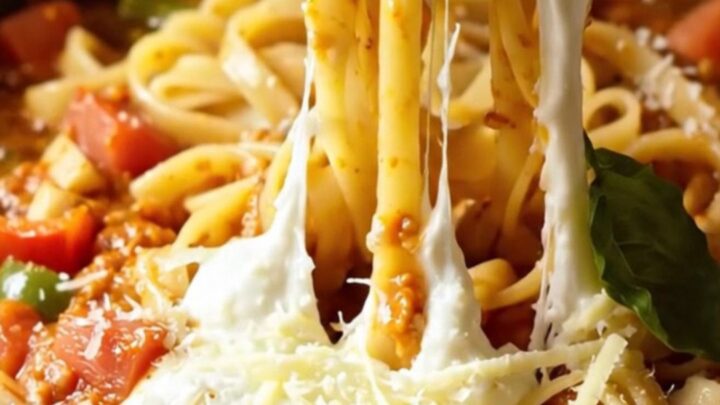
- Melt the CheesesSprinkle the shredded mozzarella and grated parmesan over the pasta. Continue tossing with tongs until the cheeses melt and become stretchy and creamy, creating a luscious, cohesive sauce.Look for The cheese pulls into long, elastic strands as you toss; the sauce turns creamy and clings to the pasta.Tip If the sauce looks tight, add a splash of reserved pasta water to loosen it.
The pasta should be evenly coated with the sauce, and the cheese should be fully melted, creating long, stretchy strands when lifted. The sauce should be creamy and cling to the pasta, not pool at the bottom. The overall color should be a vibrant orange-red, with visible bits of pepper. The aroma is rich and cheesy, with a hint of tomato sweetness. The pasta should be al dente, and the sauce should have a silky, glossy sheen.
Finish and Serve
- Finish with BasilRemove the skillet from the heat. Scatter the torn fresh basil leaves over the pasta and give it one final gentle toss to distribute the basil.Look for The basil brightens the dish with its fresh, aromatic scent.Tip Add basil at the very end to keep its color and flavor vibrant.
- Serve ImmediatelyTwirl a generous portion of the pasta onto plates or into bowls using tongs or a fork. Make sure each serving gets plenty of the creamy sauce and melted cheese. Serve hot, with extra parmesan on the side if desired.Look for Each plate shows glossy, cheese-coated pasta with visible bits of tomato and pepper.Tip Use a large fork to twirl the pasta for a neat, tall serving.
The basil should be bright green and fragrant, adding a fresh contrast to the rich sauce. The pasta should look glossy and inviting, with cheese stretching from every forkful. The texture should be creamy and cohesive, with each strand coated. The dish should be served immediately, as the cheese will set as it cools. The final taste is a balance of sweet roasted vegetables, savory cheese, and aromatic basil.
Common mistakes
One common mistake is overcooking the vegetables, which can turn them mushy and dull their sweetness. Cook them just until they soften and start to caramelize. Another is adding the cheese too early or over high heat, which can cause it to seize and become stringy rather than creamy.
Always melt the cheese over low heat, tossing constantly. Skipping the pasta water is a mistake—it's the key to a silky sauce. Finally, don't rinse the pasta after draining; the starch helps the sauce adhere.
How to tell it’s done
The dish is done when the pasta is al dente—tender but still firm to the bite—and the sauce has thickened and coats each strand. The mozzarella should be fully melted and stretchy, and the parmesan should be incorporated into a creamy, glossy sauce.
The vegetables should be soft and caramelized, with a sweet, concentrated flavor. If the sauce seems too thick, add a splash of pasta water to reach the desired consistency. Taste and adjust seasoning with salt and pepper.
Up next · Part 3 of 3
4 variations · storage & make-ahead · 5 answers · printable card
Tips, FAQ & printable recipe (Part 3)← Back to the ingredients (Part 1)