Dinner · Part 2 of 3: Instructions
One-Pan Herb-Crusted Roasted Pork Loin Dinner Step-by-step instructions
- Prep
- Cook
- Total
- Serves
- 4
Before you start
Before beginning, ensure the pork loin is removed from the refrigerator about 20 to 30 minutes prior to cooking to take the chill off, which helps it cook more evenly. Wash and dry all the vegetables thoroughly. Slice the carrots and zucchini into uniform rounds, and halve the baby potatoes.
Finely chop the fresh rosemary, leaving a few sprigs whole for garnish, so everything is ready to go. Having all your ingredients prepped and arranged beforehand ensures a smooth and stress-free cooking process.
Ingredients at a glance (5)
- 2 lb pork loin roast
- 1/4 cup fresh rosemary, chopped, plus extra sprigs for garnish
- 1 lb baby potatoes, halved
- 3 carrots, sliced
- 2 zucchini, sliced
Instructions
Seasoning and Pan Prep
- Prepare and Season the PorkPreheat the oven to 400°F (204°C). Pat the pork loin dry with paper towels. Finely chop the fresh rosemary. Press the chopped rosemary firmly onto all sides of the pork loin to create a thick, fragrant herb crust that will seal in the juices during roasting.Look for The pork loin should be completely coated in rosemary.Tip Drying the meat first helps the herbs stick better.
- Arrange the VegetablesIn a large roasting pan, arrange the halved baby potatoes, sliced carrots, and sliced zucchini around the outer edges. Leave an open space in the center of the roasting pan to place the seasoned pork loin, ensuring the vegetables are in a single layer.Look for The vegetables should be evenly distributed around the pan.Tip Cut the vegetables into uniform sizes so they cook evenly.
At the end of this phase, the pork loin should be thoroughly coated in a thick, fragrant layer of chopped rosemary. The baby potatoes, carrots, and zucchini should be arranged neatly around the outer edges of the roasting pan, leaving a clear space reserved in the center for the roast.
Everything should look clean, organized, and ready to absorb the natural juices that will release during the roasting process.
Roasting and Resting
- Roast the Pork and VegetablesPlace the herb-crusted pork loin in the center of the roasting pan. Transfer the pan to the preheated oven and roast for 45 to 55 minutes, or until a meat thermometer inserted into the thickest part of the pork registers 145°F (63°C). Remove the pork from the pan and let it rest for at least 3 minutes before slicing.Look for The pork crust should be golden brown.Safe temperature 145°F (63°C) internal temperature (steaks, chops and roasts)Tip Resting the meat is essential to keep the juices locked inside.
At this stage, the pork loin will have a deeply browned, aromatic rosemary crust, and the vegetables will be tender and caramelized at the edges. When a meat thermometer is inserted into the thickest part of the roast, it must read 145°F (63°C). The meat must rest for at least 3 minutes to allow the juices to redistribute throughout the roast, ensuring maximum juiciness when sliced.
Deglazing and Pan Sauce
- Simmer the Pan SauceWhile the pork rests, place the roasting pan with the vegetables and accumulated natural juices on the stovetop over medium heat. Let the savory juices bubble vigorously for 3 to 5 minutes, scraping up any browned bits from the bottom of the pan, until the liquid reduces slightly into a rich pan sauce.Look for The sauce should bubble vigorously and thicken slightly.Tip Use a wooden spoon to easily scrape up the flavorful browned bits.
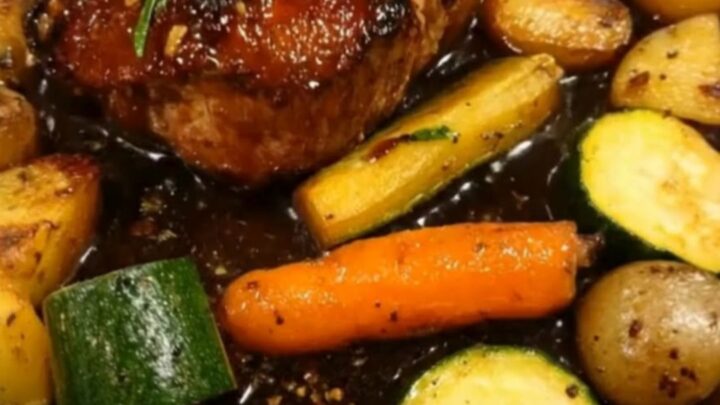
In this final phase, the pan sauce should bubble vigorously on the stovetop, turning a rich golden-brown color as it incorporates the natural pork juices and caramelized drippings. The sauce will thicken slightly and coat the vegetables, releasing a savory, herb-infused steam that signals it is ready to be served. The vegetables should look glistening and beautifully glazed by the natural reduction.
Common mistakes
The most common mistake when cooking pork loin is overcooking it out of fear of undercooked meat. Because pork loin is very lean, even a few extra minutes in the oven can turn it dry and tough. Always use a digital thermometer rather than relying solely on time.
Another mistake is crowding the vegetables too closely together; if they are piled on top of each other, they will steam instead of roast, preventing them from developing those delicious caramelized edges. Give them plenty of space to roast beautifully.
How to tell it’s done
To determine perfect doneness, insert a meat thermometer into the thickest part of the pork loin. The safe internal temperature for whole cut pork is 145°F (63°C). Once this temperature is reached, immediately transfer the roast to a cutting board and let it rest for at least 3 minutes.
During this resting period, the residual heat will finish cooking the meat, and the juices will settle back into the fibers, ensuring every slice is incredibly moist, tender, and flavorful.
- Steaks, chops and roasts: 145°F (63°C) in the thickest part, then a 3-minute rest
Up next · Part 3 of 3
2 variations · storage & make-ahead · 3 answers · printable card
Tips, FAQ & printable recipe (Part 3)← Back to the ingredients (Part 1)