Dinner · Part 2 of 3: Instructions
Crispy One-Pan Garlic Herb Roasted Chicken and Potatoes Step-by-step instructions
- Prep
- Cook
- Total
- Serves
- 4
Before you start
Before you begin cooking, organize your workspace and prepare all the ingredients. Wash and thoroughly dry the baby potatoes and carrots. Cut the potatoes in half and chop the carrots into even, bite-sized chunks. Peel and finely mince the garlic cloves.
Chop the fresh thyme leaves. Most importantly, remove the chicken thighs from their packaging and pat them completely dry with paper towels. Measure out the butter, melt it in a microwave-safe bowl, and preheat your oven to 400°F (200°C) so it is hot and ready.
Ingredients at a glance (6)
- 4 bone-in skin-on chicken thighs
- 1 lb baby potatoes, halved
- 3 carrots, peeled and cut into 1-inch chunks
- 1/2 cup unsalted butter, melted
- 4 garlic cloves, minced
- 1 tbsp fresh thyme leaves, chopped
Instructions
Preparation and Coating
- Prep the Oven and VegetablesPreheat oven to 400°F (200°C). Arrange the halved baby potatoes and carrot chunks in a single layer in a large 9x13-inch baking dish. Place the bone-in, skin-on chicken thighs among the vegetables, ensuring the chicken skin faces upward and is completely dry.Look for The chicken thighs should be nestled securely among the vegetables without overlapping.Tip Pat the chicken skin dry with paper towels to ensure maximum crispiness.
- Prepare and Apply Herb ButterIn a small bowl, whisk together the melted unsalted butter, minced garlic, and chopped fresh thyme leaves. Pour this garlic-herb mixture evenly over the chicken thighs and vegetables, using a spoon or brush to coat every surface thoroughly.Look for The butter should completely coat the chicken skin and vegetables, pooling slightly at the bottom of the pan.Tip Reserve a tablespoon of the herb butter to brush on halfway through cooking for extra gloss.
At the end of this initial phase, the chicken thighs and vegetables are beautifully arranged in a single layer within the baking dish. Every piece of chicken and vegetable is thoroughly coated in the glistening, aromatic garlic herb butter.
The fresh thyme leaves and minced garlic are evenly distributed, clinging to the chicken skin and pooling slightly around the potatoes. The oven is fully preheated, radiating a consistent heat that is ready to transform these raw ingredients into a golden masterpiece.
Roasting and Caramelization
- Roast the DishPlace the baking dish in the preheated oven and roast for 45 to 50 minutes. The butter will bubble and caramelize the vegetables, while the chicken skin turns a deep golden brown and gets incredibly crispy.Look for The pan should be bubbling actively, and the chicken skin should feel firm and crisp when tapped with a fork.Tip Rotate the baking dish halfway through cooking to ensure even browning.
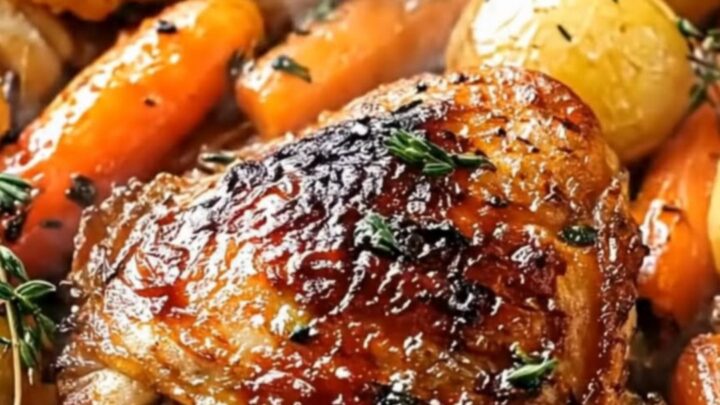
By the end of the roasting phase, your kitchen will be filled with the rich, savory aroma of garlic, roasted chicken, and toasted herbs. In the baking dish, you will see active bubbling as the butter and chicken fat caramelize the edges of the baby potatoes and carrots. The chicken skin has transformed into a deep golden-brown crust, visibly rendered and tight. The vegetables look glossy and tender, having absorbed the rich flavors of the pan juices.
Testing and Resting
- Verify Doneness and RestInsert a meat thermometer into the thickest part of the chicken thighs, avoiding the bone. Ensure it registers an internal temperature of at least 165°F (74°C). Remove the dish from the oven and let it rest for 5 minutes before serving to allow the juices to redistribute.Look for The chicken juices should run clear, and the internal temperature must reach 165°F (74°C).Safe temperature 165°F (74°C) internal temperature (poultry)Tip Let the dish rest uncovered so the rising steam does not soften the beautifully crisped chicken skin.
At this final stage, the chicken thighs have reached a safe internal temperature of 165°F (74°C), and the juices run clear. The chicken skin makes a distinct, dry crunching sound when gently scraped with a fork. After resting for five minutes outside the oven, the meat has reabsorbed its flavorful juices, making it incredibly tender. The potatoes and carrots are perfectly tender with caramelized, sweet edges, ready to be plated and enjoyed.
Common mistakes
One common mistake is overcrowding the roasting dish, which traps steam and prevents both the chicken skin and the vegetables from crisping up. Make sure there is a little space between the chicken thighs and the vegetables.
Another error is not drying the chicken skin thoroughly before roasting; wet skin leads to a rubbery texture. Finally, avoid using extremely thin baking sheets that can warp in the hot oven, leading to uneven heat distribution and burnt garlic butter.
How to tell it’s done
The chicken is officially done and safe to eat when a meat thermometer inserted into the thickest part of the thigh, without touching the bone, registers exactly 165°F (74°C). Beyond temperature, you can identify doneness by checking the juices, which should run completely clear when the meat is pierced.
The chicken skin must be a deep, golden brown and feel firm and brittle to the touch. The potatoes and carrots should be easily pierced with a fork, showing a creamy, tender center and caramelized edges.
- Poultry: 165°F (74°C) in the thickest part
Up next · Part 3 of 3
2 variations · storage & make-ahead · 3 answers · printable card
Tips, FAQ & printable recipe (Part 3)← Back to the ingredients (Part 1)