Dinner · Part 1 of 3: Ingredients
One-Pan Garlic Herb Chicken and Potatoes
- Prep
- Cook
- Total
- Serves
- 4
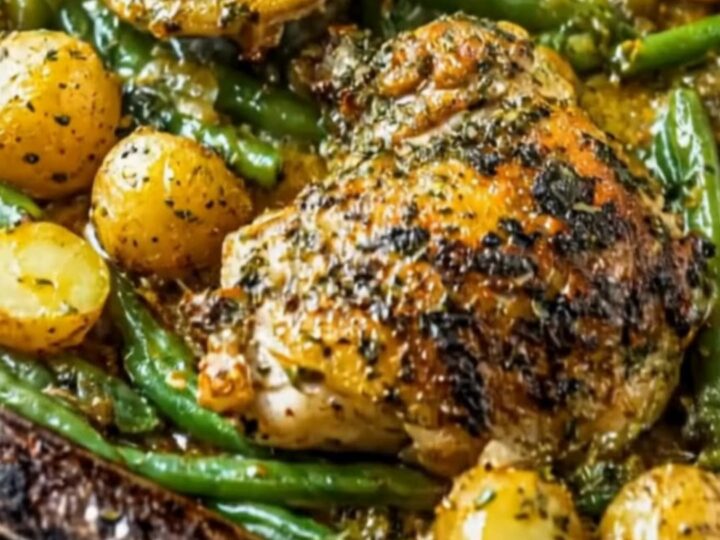
Few dinners match the satisfaction of a complete, hot meal cooked entirely on a single sheet pan. This garlic herb chicken and potatoes recipe delivers crispy, herb-crusted chicken skin and tender, golden potatoes with almost no cleanup. It is the ultimate solution for busy weeknights when time is short but cravings for a hearty, comforting dinner run high. You will love how simple it is.
Sheet pan meals are a favorite for a reason, and this recipe elevates the concept to restaurant-quality standards. By roasting bone-in, skin-on chicken thighs alongside baby potatoes and fresh green beans, the ingredients cook in harmony.
The chicken renders its natural fats onto the pan, infusing the potatoes and green beans with incredible savory depth. Combined with a robust garlic and herb oil, every element on the pan finishes with maximum flavor and the perfect texture. It is a complete dinner made simple.
Ingredients
- 4 bone-in skin-on chicken thighs
- 1 1/2 lb baby potatoes, halved
- 12 oz fresh green beans, trimmed
- 1/4 cup olive oil
- 4 cloves garlic, minced
- 2 tsp dried herbs
Why this recipe works
Roasting everything on one pan works beautifully because of the strategic transfer of heat and flavor. As the chicken thighs roast, the fat renders out and coats the baby potatoes and green beans.
This natural basting process prevents the vegetables from drying out while imparting a rich, savory flavor that oil alone cannot replicate. The high heat of the oven caramelizes the natural sugars in the potatoes, creating a crisp exterior and a fluffy interior.
Furthermore, the choice of bone-in, skin-on chicken thighs is essential for this cooking method. Chicken breasts easily dry out during the time it takes to roast potatoes, but thighs remain incredibly juicy and forgiving.
The skin acts as a natural barrier, locking in moisture while crisping up to a beautiful golden brown. This ensures that the chicken and vegetables finish cooking at the exact same time, yielding a perfectly synchronized meal.
Notes and substitutions
Selecting the right ingredients makes a significant difference in the final outcome. Opt for fresh, vibrant green beans and small baby potatoes, which do not require peeling and roast quickly when halved.
For the seasoning, dried herbs provide a concentrated flavor that stands up well to high roasting temperatures without burning. If substituting fresh herbs, increase the quantity threefold to achieve the same aromatic impact.
Equipment choice also plays a vital role in sheet pan success. A heavy-duty, rimmed baking sheet is highly recommended to prevent warping under high heat and to contain any flavorful juices. Avoid crowding the pan; if the chicken and vegetables are piled on top of one another, they will steam instead of roast, preventing the chicken skin from getting crisp and the potatoes from caramelizing properly.
- baby potatoes: Fingerling potatoes or regular Yukon Gold potatoes cut into 1-inch chunks work perfectly as a direct substitute.
- dried herbs: Substitute with an equal amount of finely chopped fresh herbs like rosemary, thyme, or oregano for a brighter, more aromatic flavor.
Equipment
- large rimmed sheet pan
- cutting board
- chef's knife
- small mixing bowl
- whisk
- meat thermometer
- tongs
Up next · Part 2 of 3
6 steps · 40 min of cooking · what to look for at each stage
Step-by-step instructions (Part 2)