Dinner · Part 2 of 3: Instructions
One-Pan Garden Vegetable Fettuccine with Melted Cheese Step-by-step instructions
- Prep
- Cook
- Total
- Serves
- 4
Before you start
Before you start, gather all your ingredients and equipment. Wash the vegetables thoroughly. Peel the onions and set them aside whole. Have your skillet, lid, tongs, potato masher, and wooden spoon ready.
Measure the olive oil, water, and spices. Bring a kettle of water to a boil so you have the 1 cup of boiling water ready when you add the pasta. Shred the cheese if you are using a block, and pick the basil leaves from the stems.
Ingredients at a glance (14)
- 1 large beefsteak tomato
- 1 whole green zucchini
- 1 small eggplant
- 2 peeled onions
- 3 tbsp olive oil
- 1/2 cup water
- 1 tsp paprika
- 1 tsp salt
- 1/2 tsp ground cumin
- 1/2 tsp black pepper
- 10 oz fettuccine pasta
- 1 cup boiling water
- Fresh basil leaves, torn, to taste
- 1 1/2 cups shredded Turkish kashar mozzarella cheese
Instructions
Steam and peel
- Steam the vegetablesPlace the whole tomato, zucchini, eggplant, and peeled onions in a large skillet. Add the olive oil and 1/2 cup water. Cover and bring to a simmer over medium heat. Cook for 10 minutes, until the vegetables are tender and their skins begin to loosen.Look for The vegetables are soft and the skins peel away easily with tongs.Tip Keep the heat medium so the water simmers gently without evaporating completely.
- Peel and mashUsing tongs, carefully lift each vegetable and peel off the skins. Return the peeled vegetables to the skillet. Add the paprika, salt, cumin, and black pepper. Mash everything with a potato masher until you have a rich, rustic puree.Look for The puree is thick, glossy, and reddish-orange.Tip Leave some texture for a more rustic sauce.
After 10 minutes, the vegetables should be fork-tender, and the skins will have started to wrinkle and peel away. The skillet will smell sweet and earthy, with a hint of olive oil.
Use tongs to test: the skin should slip off with little resistance. If the skins are stubborn, steam for 2 to 3 minutes more. The liquid should be mostly absorbed, leaving a small amount of concentrated broth.
Pasta in sauce
- Cook the pasta in the sauceAdd the fettuccine to the skillet, breaking it in half if needed. Pour in the boiling water. Stir constantly as the pasta cooks, allowing it to absorb the sauce and become al dente. Continue stirring until the liquid is mostly absorbed, about 8 to 10 minutes.Look for The pasta is tender but still firm to the bite, and the sauce clings to every strand.Tip Add a splash of hot water if the sauce gets too thick before the pasta is done.
- Add basil and cheeseTear the fresh basil leaves and stir them into the pasta. Sprinkle the shredded cheese evenly over the top. Cover the skillet and let it sit for 2 minutes, until the cheese melts into gooey ribbons.Look for The cheese is fully melted and stretches when lifted.Tip Covering traps the steam and helps the cheese melt quickly.
The pasta will have absorbed most of the liquid and turned a rich orange-red color from the sauce. It should be al dente, with a slight bite. The sauce will cling to the noodles, and the skillet will look glossy. The aroma is intensely savory and slightly sweet from the vegetables. Taste a strand to ensure it is cooked through, and add a splash of hot water if the sauce is too thick.
Melt and serve
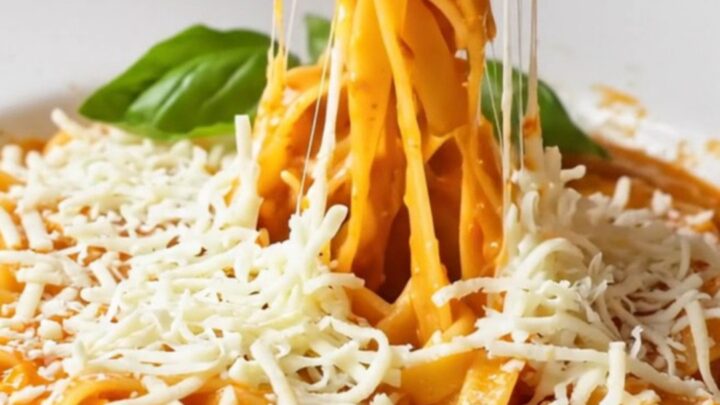
- Serve and enjoyLift a forkful of pasta, twirling it to catch the stringy cheese. Serve immediately while hot, with extra basil if desired.Look for The cheese pulls in long, glossy strands.Tip Serve straight from the skillet for the best texture.
After covering for 2 minutes, the cheese should be fully melted, creating a golden, gooey blanket over the pasta. When you lift a forkful, the cheese pulls into long, elastic ribbons. The basil leaves will have wilted slightly, releasing their fragrance. The dish is ready to serve immediately, with steam rising and the cheese stretchy and irresistible.
Common mistakes
A common mistake is overcooking the vegetables until they fall apart before you can peel them—keep the heat medium and check at 10 minutes. Another is adding the pasta before the sauce is smooth enough; make sure to mash the vegetables thoroughly so the sauce is cohesive.
Do not skip the constant stirring when the pasta is cooking, as it can stick to the bottom. And avoid using a dry cheese that won't melt smoothly—shred your own for the best result.
How to tell it’s done
The pasta is done when it is al dente—tender but still firm to the bite—and the sauce has thickened enough to coat the noodles without being soupy. The cheese should be fully melted and stretchy when you lift a forkful.
If you are unsure, taste a strand of pasta: it should be cooked through but not mushy. The sauce should be glossy and clinging to the pasta, with no excess liquid pooling at the bottom of the skillet.
Up next · Part 3 of 3
4 variations · storage & make-ahead · 5 answers · printable card
Tips, FAQ & printable recipe (Part 3)← Back to the ingredients (Part 1)