Dinner · Part 2 of 3: Instructions
One-Pan Fusilli with Vegetable Meat Ragù Step-by-step instructions
- Prep
- Cook
- Total
- Serves
- 4
Before you start
Before starting, bring a large pot of salted water to a boil for the fusilli. Have all your vegetables washed and halved, and measure out the olive oil, salt, and spices.
If using a fresh meatball, season it generously with salt, pepper, and any herbs you like. Prepare the mozzarella and parsley so they’re ready to add when the sauce is bubbling. Keep a ladle of pasta water nearby to loosen the sauce if needed.
Ingredients at a glance (12)
- 3 tbsp olive oil
- 3 whole ripe tomatoes
- 1 large seasoned beef meatball
- 2 whole zucchini, halved
- 2 whole eggplant, halved
- 1 tsp salt
- black pepper to taste
- sweet paprika to taste
- 100 g shredded mozzarella
- 2 tbsp fresh parsley, chopped
- 250 g fusilli pasta, freshly boiled al dente
- grated Parmesan, for serving
Instructions
Braise and Peel
- Braise the Vegetables and MeatballHeat the olive oil in a wide ceramic skillet over medium heat. Add the whole tomatoes, the large seasoned beef meatball, the zucchini halves, and the eggplant halves. Let them braise gently, turning occasionally, until the vegetables soften and the meatball is browned on all sides, about 10 minutes.Look for The vegetables start to blister and soften, and the meatball sizzles in the oil.Tip Keep the heat medium so the vegetables cook without burning.
- Peel the TomatoesUsing metal tongs, carefully peel the blistered skins from the steamed whole tomatoes. Season the tomatoes with the salt, black pepper, and a sprinkle of sweet paprika.Look for The tomato skins slip off easily, revealing soft, tender flesh.Tip Peel over the skillet to catch any juices.
After this phase, the vegetables should be softened and slightly blistered, and the meatball should be browned on the outside.
The tomatoes will have released their juices, and the pan will be fragrant with olive oil and herbs. The skins should peel off easily. The mixture should look juicy but not watery, with the meatball still intact.
Mash, Cheese, and Pasta
- Mash into a RagùUse a wooden potato masher to crush the soft tomatoes, roasted eggplant, and tender zucchini directly in the skillet. Crumble the juicy meatball into the mixture, breaking it into small pieces. Stir everything together to form a thick, rustic ragù.Look for The mixture becomes a chunky, saucy base with visible vegetable pieces and browned meat.Safe temperature 160°F (71°C) internal temperature (ground meat)Tip Mash to your preferred texture—leave some chunks for heartiness.
- Add Cheese and ParsleyScatter the shredded mozzarella and the chopped fresh parsley over the bubbling ragù. Stir gently until the cheese melts into the sauce and everything is well combined.Look for The cheese melts into glossy ribbons and the parsley brightens the sauce.Tip Stir continuously to prevent the cheese from clumping.
- Toss with FusilliAdd the freshly boiled al dente fusilli to the skillet. Use a spatula to toss the pasta with the ragù until every spiral is coated and glossy.Look for The pasta turns golden and saucy, with cheese clinging to each spiral.Tip If the sauce seems thick, add a splash of pasta water.
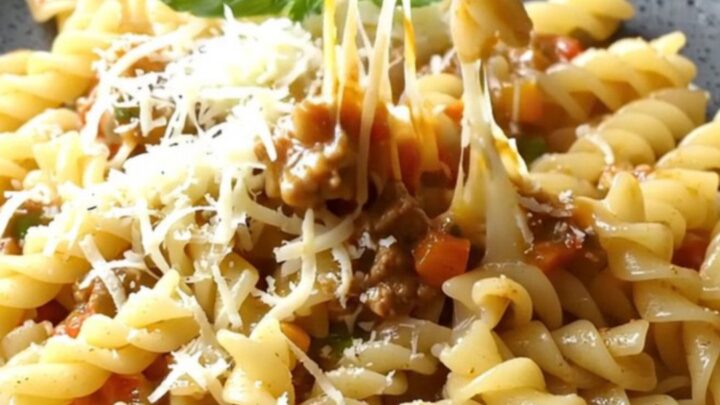
The ragù should be thick and chunky, with the meatball crumbled and mixed through. The mozzarella should be melted and stringy, and the parsley should be evenly distributed. When the fusilli is added, it should be glossy and well coated, with the sauce clinging to every spiral. The skillet should be bubbling gently.
Serve and Enjoy
- Plate and ServeScoop a large steaming portion of the fusilli onto a slate grey plate. Garnish with grated Parmesan and serve immediately while hot and bubbling.Look for The steam rises from the pasta, and the cheese melts invitingly.Tip Serve straight from the skillet for a rustic presentation.
The final dish should be steaming hot, with the cheese pulling in long strands as you scoop it. The pasta should be al dente, and the sauce should coat the plate without being runny. The aroma should be rich and savory, with a hint of sweet tomato and herbs. Serve immediately for the best texture.
Common mistakes
One common mistake is overcooking the vegetables until they turn to mush—you want them tender but still holding some shape. Another is adding the pasta before the sauce has thickened; give it time to reduce.
Avoid using low-quality mozzarella that doesn’t melt smoothly; choose a good whole-milk variety. And don’t skip the parsley—it adds freshness that balances the richness.
How to tell it’s done
The ragù is done when the vegetables are completely soft and the meatball has reached an internal temperature of 160°F (71°C). The sauce should be thick and chunky, not watery, and the cheese should be fully melted and glossy.
The pasta should be al dente and well coated, with no dry spots. Taste for seasoning and adjust with salt and pepper before serving.
- Ground meat: 160°F (71°C) in the thickest part
- Steaks, chops and roasts: 145°F (63°C) in the thickest part, then a 3-minute rest
Up next · Part 3 of 3
4 variations · storage & make-ahead · 5 answers · printable card
Tips, FAQ & printable recipe (Part 3)← Back to the ingredients (Part 1)