Dinner · Part 2 of 3: Instructions
One-Pan French Onion Rigatoni with Blistered Gruyere Crust Step-by-step instructions
- Prep
- Cook
- Total
- Serves
- 4
Before you start
Before starting, set out the butter and cream so they come to room temperature. Grate the cheeses and keep them in a bowl. Slice the onions into thin, even crescents and strip the thyme leaves.
Bring a large pot of salted water to a boil for the pasta. Have a cast iron skillet ready. The prep takes about 15 minutes, and the caramelizing takes about 20 minutes, so plan accordingly.
Ingredients at a glance (8)
- 3 large Vidalia onions, sliced into crescents
- 2 tbsp fresh thyme leaves, plus more for serving
- 8 oz aged Swiss Gruyere, shredded
- 4 oz provolone, shredded
- 12 oz rigatoni pasta
- 4 tbsp unsalted butter
- 1 cup heavy cream
- Cracked black pepper, for serving
Instructions
Prep and Pasta
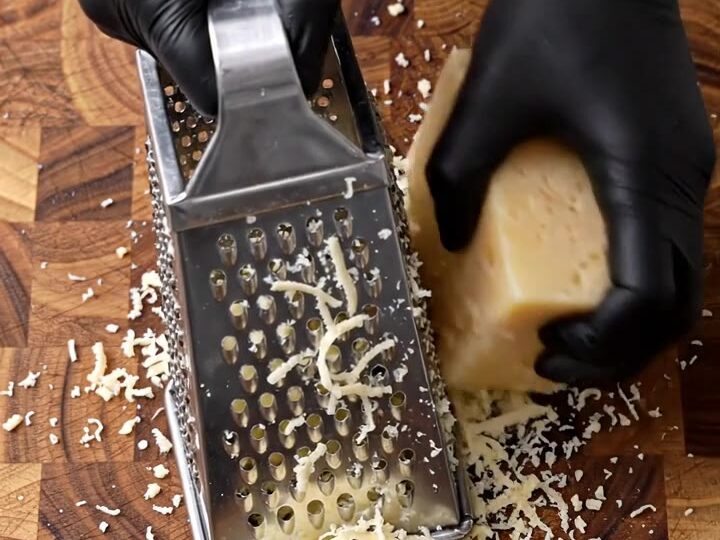
- Prep the onions and cheeseSlice the Vidalia onions into uniform crescents, about 1/4-inch thick. Strip the fresh thyme leaves from the stems and set aside. Grate the aged Gruyere and provolone on the large holes of a box grater into a single pile of shredded cheese.Look for Onions are even crescents; cheese is freshly grated and fluffy.Tip Grating cold cheese straight from the fridge makes it shred more easily.
- Cook the rigatoniBring a large pot of salted water to a boil. Add the rigatoni and cook until al dente according to package directions. Drain well and set aside.Look for Pasta is tender but still firm to the bite.Tip Reserve a cup of pasta water in case the sauce needs loosening later.
The onions are sliced into even crescents, the thyme is stripped, and the cheeses are freshly grated.
The rigatoni is cooked al dente and drained. The kitchen smells of butter and onion as the skillet heats. Everything is ready to go into the pan.
Caramelize and Sauce
- Caramelize the onionsMelt the butter in a large cast iron skillet over medium heat. Add the sliced onions and cook, stirring occasionally, until deeply golden and caramelized, about 20 minutes.Look for Onions are soft, jammy, and browned at the edges.Tip Do not rush this step; low and slow brings out the sweetness.
- Make the cream saucePour the heavy cream into the skillet with the caramelized onions. Stir to combine and let the cream bubble gently for 2 to 3 minutes until slightly thickened.Look for The sauce coats the back of a spoon.Tip Scrape up any browned bits from the bottom of the skillet.
- Fold in the pasta and thymeAdd the drained rigatoni and half of the fresh thyme leaves to the skillet. Fold gently until every piece of pasta is coated with the creamy onion sauce.Look for Pasta is evenly coated and glossy.Tip Fold rather than stir to keep the pasta intact.
The onions are deeply golden and jammy, having released their sugars into the brown butter. The cream has been added and is gently bubbling, thickening into a silky sauce. The pasta is folded in and coated, with thyme leaves scattered throughout.
Broil and Serve
- Top with cheeseSprinkle the shredded Gruyere and provolone evenly over the pasta, covering the entire surface in a thick, even layer.Look for The cheese completely blankets the pasta.Tip Go all the way to the edges for a crispy rim.
- Broil until blisteredPlace the skillet under the broiler and cook until the cheese is melted, golden, and blistered in spots, about 3 to 5 minutes.Look for The top is bubbling, browned, and blistered.Tip Watch closely; broilers vary and the cheese can burn quickly.
- Finish and serveScatter the remaining fresh thyme leaves and cracked black pepper over the blistered cheese. Pull up a portion with a spoon to show the long, cheesy stretch, then serve hot.Look for The cheese stretches as the spoon lifts.Tip Let the skillet rest for 5 minutes before serving to set the crust slightly.
The cheese is melted and blistered, with deep golden spots and a crisp edge. The thyme and pepper are scattered over the top. When a spoon is pulled up, the cheese stretches in long strands. The skillet is sizzling and ready to serve.
Common mistakes
One common mistake is rushing the caramelization; if the heat is too high, the onions will burn before they turn sweet. Another is using pre-shredded cheese, which can turn grainy.
Overcooking the pasta before adding it to the skillet will make it mushy after broiling. Finally, skipping the fresh thyme and pepper at the end leaves the dish flat; they add brightness and contrast.
How to tell it’s done
The dish is done when the cheese is melted, golden, and blistered in spots, and the edges are bubbling. The pasta underneath should be hot and coated with a creamy sauce.
There is no protein to check for temperature, but the internal temperature of the dish should be at least 165°F (74°C) if you want to be precise. Let the skillet rest for 5 minutes before serving so the cheese sets slightly.
Up next · Part 3 of 3
4 variations · storage & make-ahead · 5 answers · printable card
Tips, FAQ & printable recipe (Part 3)← Back to the ingredients (Part 1)