Dinner · Part 2 of 3: Instructions
One-Pan Eggplant & Tomato Orzo Risotto Step-by-step instructions
- Prep
- Cook
- Total
- Serves
- 4
Before you start
Before starting, halve the eggplants lengthwise and peel the red onions. Rinse the tomatoes and pat them dry. Measure out the olive oil, water, cumin, paprika, and salt. Have the orzo and vegetable broth ready, and bring the broth to a boil in a small pot or kettle. Chop the fresh dill and set it aside. A wide skillet with a lid, a potato masher, and a wooden spoon are the only tools needed.
Ingredients at a glance (12)
- 2 eggplants, halved lengthwise
- 2 ripe tomatoes
- 2 red onions, peeled
- 3 tbsp olive oil
- 1/2 cup water
- 1 tsp ground cumin
- 1 tsp paprika
- salt to taste
- 1 1/2 cups dry orzo pasta
- 2 cups boiling vegetable broth
- 1/4 cup fresh chopped dill
- 1 tbsp extra virgin olive oil, for drizzling
Instructions
Steam and mash
- Roast the vegetablesHalve the eggplants lengthwise. Place the eggplant halves, whole ripe tomatoes, and peeled red onions in a wide skillet. Drizzle with the olive oil and add the water. Cover the skillet and steam over medium heat for 10 minutes, until the eggplant is fork-tender. Remove the lid and let the vegetables cool slightly, then peel away any loose skins from the tomatoes and eggplant. Mash the vegetables with a potato masher directly in the skillet. Stir in the cumin, paprika, and salt to taste.Look for The vegetables are soft and easily pierced with a fork; the skins slip off easily.Tip Keep the skillet covered during steaming to trap moisture and speed up the softening.
- Toast the orzoAdd the dry orzo pasta directly to the skillet with the mashed vegetables. Stir constantly over medium heat for 2 minutes, allowing the orzo to toast in the residual oil and vegetable juices. The grains should turn lightly golden and smell nutty.Look for The orzo turns a pale golden color and releases a toasty aroma.Tip Stir continuously to prevent the orzo from burning on the bottom of the skillet.
After this phase, the skillet holds tender eggplant halves, soft tomatoes, and onions in a fragrant broth. The vegetables should be easily pierced with a fork, and the skins will have loosened.
When mashed, the mixture turns into a thick, rustic sauce with visible pieces of tomato and eggplant. The aroma is sweet and earthy from the vegetables and olive oil. Before moving on, ensure the mixture is well combined and seasoned.
Toast and simmer
- Simmer the risottoPour the boiling vegetable broth into the skillet. Stir to combine, then cover with a lid. Reduce the heat to low and simmer for 10 minutes, until the orzo absorbs most of the liquid and becomes tender and creamy. Stir occasionally to prevent sticking.Look for The orzo is plump and tender, and the sauce has thickened to a creamy consistency.Tip If the orzo is still firm after 10 minutes, add a splash of hot water and continue cooking for another 2–3 minutes.
The orzo is now toasted to a light golden color, and the skillet smells nutty and rich. After adding the broth and simmering, the orzo swells and becomes creamy, absorbing the liquid.
The sauce thickens and clings to the pasta, creating a risotto-like texture. The kitchen smells warm and savory, with hints of cumin and paprika. Check that the orzo is tender but still has a slight bite before finishing.
Finish with dill
- Finish and serveRemove the skillet from the heat. Fold in the fresh chopped dill and drizzle with the extra virgin olive oil. Scoop the warm orzo pilaf into bowls and serve immediately, with additional dill on top if desired.Look for The dill is bright green and fragrant, and the oil adds a glossy sheen.Tip Let the pilaf rest for a minute before serving so the flavors meld together.
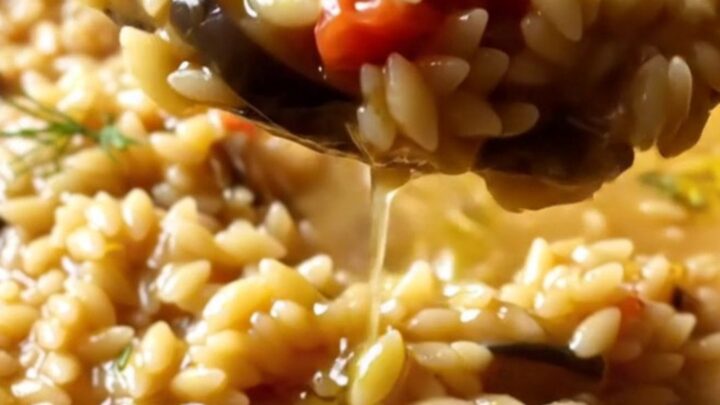
The dill is folded in, adding a bright green color and fresh, herbal aroma. The extra virgin olive oil gives the pilaf a glossy sheen and a fruity finish. The dish looks inviting, with creamy orzo and soft vegetable pieces throughout. The steam rises gently, carrying the scent of dill and olive oil. The pilaf is ready to serve, with a comforting, homey appearance that promises deep flavor.
Common mistakes
One common mistake is not steaming the vegetables long enough; they need to be fork-tender so they mash easily. Another is skipping the toasting step for the orzo, which adds essential nuttiness.
Overcooking the orzo can make it mushy, so check it at the 10-minute mark. Also, avoid lifting the lid too often during simmering, as that releases steam and slows cooking. Finally, season with salt carefully, as the broth may already be salty.
How to tell it’s done
The dish is done when the orzo is tender and has absorbed most of the broth, leaving a creamy, spoonable consistency. The eggplant should be completely soft and mashed into the sauce, with no large chunks.
The tomatoes should have broken down and melded into the mixture. Taste a few grains of orzo to ensure they are cooked through but still have a slight bite, like al dente pasta. The final pilaf should be glossy and aromatic.
Up next · Part 3 of 3
4 variations · storage & make-ahead · 5 answers · printable card
Tips, FAQ & printable recipe (Part 3)← Back to the ingredients (Part 1)