Dinner · Part 2 of 3: Instructions
One-Pan Eggplant Tomato Orzo Pilaf with Fresh Dill Step-by-step instructions
- Prep
- Cook
- Total
- Serves
- 4
Before you start
Before starting, prepare all the ingredients: halve the eggplants lengthwise, peel the onions, and have the tomatoes whole. Measure out the olive oil, water, cumin, paprika, salt, broth, and orzo. Chop the fresh dill and set it aside.
Have a large skillet with a lid ready, along with a potato masher and tongs. The broth should be hot before adding it to the skillet—heat it in a small saucepan or microwave while the vegetables steam.
Ingredients at a glance (12)
- 2 eggplants (about 1 lb each), halved lengthwise
- 2 ripe tomatoes, whole
- 2 red onions, peeled
- 3 tbsp extra-virgin olive oil
- 1/2 cup water
- 1 tsp ground cumin
- 1 tsp paprika
- 1 tsp salt
- 2 cups hot vegetable broth
- 1 cup orzo pasta
- 1/4 cup fresh dill, chopped
- 1 tbsp extra-virgin olive oil, for drizzling
Instructions
Steam and Mash
- Steam the vegetablesHalve the eggplants lengthwise. Place them cut side up in a large skillet with the whole tomatoes and peeled red onions. Drizzle with 3 tablespoons olive oil and add 1/2 cup water. Cover and steam over medium heat for 10 minutes, until the eggplant is fork-tender.Look for The eggplant should be easily pierced with a fork, and the tomatoes will have softened and released some juice.Tip Keep the heat at a gentle simmer so the vegetables steam without scorching the bottom.
- Peel and mashCarefully remove the lid, tilting it away from you to let steam escape. Use tongs to transfer the tomatoes and onions to a cutting board. Slip off the loose tomato skins and onion skins, then return them to the skillet. Add the cumin, paprika, and salt, and mash everything with a potato masher until chunky but cohesive.Look for The mixture should look like a rough, chunky sauce with no large tomato pieces.Tip Don't over-mash; leaving some texture gives the pilaf a rustic feel.
After 10 minutes of steaming, the eggplant should be fork-tender, the tomatoes soft and collapsed, and the onions translucent. The skillet will have a fragrant, sweet aroma.
When you lift the lid, the vegetables will be sitting in a small amount of liquid. After mashing, the mixture should be chunky but cohesive, seasoned with cumin, paprika, and salt. It will look like a rustic vegetable sauce, ready for the orzo.
Simmer the Orzo
- Add broth and orzoPour in the 2 cups hot vegetable broth and stir in the orzo. Bring to a simmer, then reduce the heat to low. Cover and cook for 10 minutes, stirring occasionally, until the orzo is tender and has absorbed most of the liquid.Look for The orzo should be al dente and the sauce thickened, coating the back of a spoon.Tip Stir once or twice during cooking to prevent sticking, but avoid over-stirring which can break the orzo.
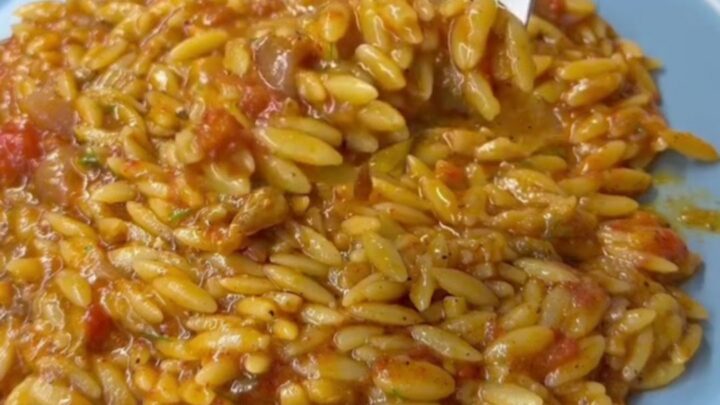
During the 10-minute simmer, the orzo will absorb the broth and swell. The liquid will reduce from a soupy consistency to a thick, creamy sauce. The kitchen will smell warmly of cumin and paprika. When you stir, the orzo should be tender but not falling apart, and the mixture should hold together on a spoon. The color will deepen to a rich orange-brown from the tomatoes and spices.
Finish and Serve
- Finish with dill and olive oilRemove the skillet from the heat. Fold in the chopped fresh dill and drizzle with the remaining olive oil. Taste and adjust seasoning with salt if needed. Serve warm, spooned into bowls.Look for The dill should be bright green and fragrant, and the pilaf glistens with olive oil.Tip For the best flavor, add the dill just before serving so it stays fresh.
After folding in the dill and drizzling with olive oil, the pilaf should look vibrant and glossy. The dill will be bright green, and the olive oil will add a fruity sheen. The texture should be creamy and thick, similar to a risotto. A spoonful should hold its shape slightly. The aroma is fresh and herbal, balanced by the savory vegetables. Serve immediately while warm.
Common mistakes
One common mistake is overcooking the orzo, which can turn it mushy. Keep an eye on the time and check for doneness a minute or two early. Another pitfall is not covering the skillet tightly during steaming—if steam escapes, the vegetables may not soften enough.
Use a heavy lid and keep the heat at a steady simmer. Also, avoid lifting the lid too often, as that releases steam. Finally, don't skip the fresh dill; it provides a necessary contrast to the rich, savory base.
How to tell it’s done
The pilaf is done when the orzo is tender but still has a slight bite, and the liquid has been absorbed to create a creamy, spoonable consistency. The vegetables should be completely soft and easily mashed, with no large chunks.
The dish will look glossy and thick, and the aroma of dill and olive oil should be prominent. Taste a spoonful to check for seasoning, adding more salt if needed.
Up next · Part 3 of 3
4 variations · storage & make-ahead · 5 answers · printable card
Tips, FAQ & printable recipe (Part 3)← Back to the ingredients (Part 1)