Dinner · Part 2 of 3: Instructions
One-Pan Creamy Garlic Chicken Skillet Step-by-step instructions
- Prep
- Cook
- Total
- Serves
- 4
Before you start
Before beginning, ensure all ingredients are measured and ready to go near the stove. Pat the chicken breast fillets completely dry with paper towels to ensure a superior sear in the hot skillet. Mince the fresh garlic cloves finely and chop the fresh parsley.
Keep the heavy cream nearby so it can be poured into the skillet immediately after the garlic is sautéed, preventing the garlic from scorching. Having everything prepared beforehand ensures a smooth, stress-free cooking process.
Ingredients at a glance (4)
- 4 boneless, skinless chicken breast fillets
- 4 cloves garlic, minced
- 1 cup heavy cream
- 2 tbsp fresh parsley, chopped
Instructions
Searing the Chicken Breasts
- Sear the ChickenHeat a heavy cast-iron skillet over medium-high heat. Carefully place the chicken fillets into the hot pan and sear them for about 5 to 6 minutes on each side. The chicken must reach a safe internal temperature of 165°F (74°C) when measured with a meat thermometer in the thickest part. Once fully cooked, transfer the chicken to a clean plate and set aside.Look for The chicken should develop a deep golden-brown crust on both sides and release easily from the pan.Safe temperature 165°F (74°C) internal temperature (poultry)Tip Do not crowd the skillet; if the fillets are large, sear them in batches to ensure a proper golden crust.
By the end of this phase, the chicken breasts should be deeply browned and golden on both sides, with a firm texture. The skillet will have caramelized brown bits stuck to the bottom, and the kitchen will smell of rich, seared poultry.
A meat thermometer inserted into the thickest part of the chicken must register 165°F (74°C) before the meat is removed from the heat.
Creating the Garlic Cream Sauce
- Sauté the Garlic and Build the SauceReduce the skillet heat to medium. Add the minced garlic directly into the sizzling pan juices left behind by the chicken. Stir constantly for about 30 seconds until the garlic becomes highly fragrant but not browned. Pour in the heavy cream, scraping up the browned bits from the bottom of the skillet with a wooden spoon to incorporate all the rich flavors. Bring the cream to a gentle simmer, stirring continuously as it begins to bubble and thicken.Look for The cream should turn a light golden color as it blends with the pan drippings and starts to bubble gently.Tip Keep the heat moderate so the garlic does not burn, which would make the sauce bitter.
At the end of this phase, the sauce will have transformed into a smooth, light golden liquid. The minced garlic should be soft and fragrant, without any dark brown or burnt pieces. The heavy cream will be bubbling gently and starting to thicken slightly, having lifted all the flavorful browned bits from the bottom of the cast-iron skillet.
Combining and Finishing
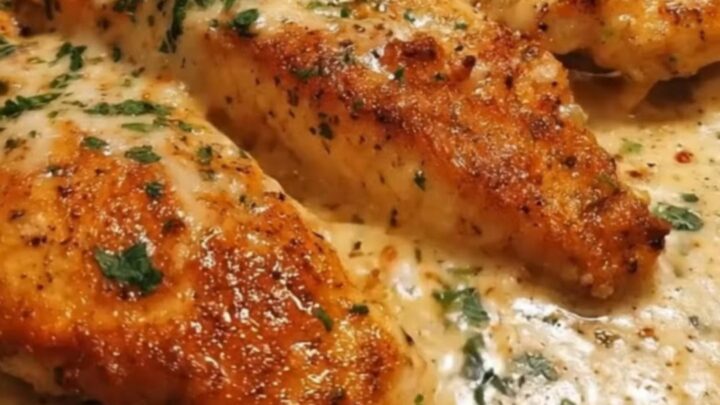
- Combine and GarnishReturn the seared chicken fillets and any accumulated juices back into the bubbling garlic cream sauce. Spoon the rich sauce generously over the top of the chicken to coat it completely. Simmer for an additional 1 to 2 minutes until the chicken is heated through and the sauce clings beautifully to the meat. Sprinkle the fresh chopped parsley evenly over the skillet and serve immediately.Look for The sauce should bubble vigorously around the chicken, becoming thick enough to coat the back of a spoon.Tip Garnish with the parsley at the very end to keep its color vibrant and its flavor fresh.
At the final checkpoint, the cream sauce should be bubbling vigorously around the chicken, clinging beautifully to the meat. The chicken breasts will look glossy and fully coated in the speckled sauce. The fresh green parsley sprinkled over the top provides a vibrant contrast to the rich, golden tones of the dish, and the entire skillet will smell intensely savory.
Common mistakes
One common mistake is burning the garlic. Garlic burns incredibly fast in a hot skillet, which introduces a bitter flavor that ruins the delicate cream sauce.
To prevent this, always lower the heat before adding the garlic and stir it constantly, pouring in the heavy cream as soon as the garlic becomes fragrant. Another mistake is moving the chicken too much while searing; let it sit undisturbed to form a proper crust.
How to tell it’s done
To determine perfect doneness, always rely on a reliable digital meat thermometer rather than visual cues alone. Insert the probe into the thickest part of the chicken breast fillet.
The chicken is fully cooked and safe to eat when it reaches an internal temperature of 165°F (74°C). The meat should feel firm to the touch, and any juices that escape should run completely clear, never pink.
- Poultry: 165°F (74°C) in the thickest part
Up next · Part 3 of 3
2 variations · storage & make-ahead · 3 answers · printable card
Tips, FAQ & printable recipe (Part 3)← Back to the ingredients (Part 1)