Dinner · Part 2 of 3: Instructions
One-Pan Coconut Curry Prawns with Thai Basil Step-by-step instructions
- Prep
- Cook
- Total
- Serves
- 4
Before you start
Before cooking, set out all the ingredients. Slice the bell peppers into strips, butterfly the prawns, and pat them very dry with paper towels—this ensures a good sear. Grate the creamed coconut and ginger using a box grater.
Have the Thai red curry paste, coconut cream, basil, chili, lime, and butter measured and ready. Because the cooking goes quickly, having everything prepped and within reach makes the process smooth and enjoyable.
Ingredients at a glance (11)
- 2 red bell peppers, sliced into strips
- 1 1/2 lb jumbo tiger prawns, butterflied
- 1/2 cup creamed coconut, grated
- 2 tbsp fresh ginger, grated
- 3 tbsp Thai red curry paste
- 1 cup coconut cream
- 1/2 cup Thai basil leaves, torn
- 1 red chili, thinly sliced
- 1 lime, juiced
- 2 tbsp unsalted butter
- Salt, to taste
Instructions
Prep and Sear
- Prep the peppers and prawnsSlice the red bell peppers into thin strips. Butterfly the jumbo tiger prawns by cutting along the back, removing the vein, and opening them flat like a book. Pat the prawns dry with paper towels.Look for Peppers are uniform strips; prawns are butterflied and dry.Tip Butterflying helps the prawns cook quickly and absorb more sauce.
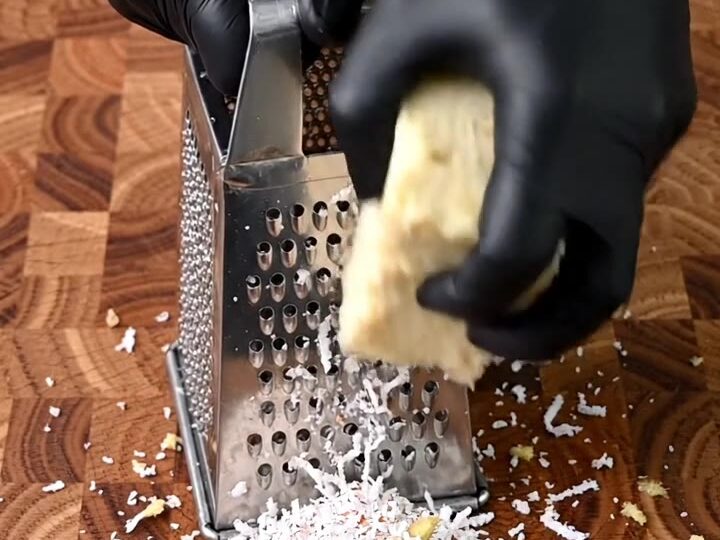
- Grate coconut and gingerUsing a box grater, grate the creamed coconut into fine shreds. Grate the fresh ginger on the fine side of the grater. Set both aside.Look for Coconut is fluffy; ginger is juicy and aromatic.Tip If the creamed coconut is too hard, let it sit at room temperature for 10 minutes.
At the end of this phase, the peppers are bright and crisp-tender, and the prawns are seared with a golden-brown crust. The pan has a rich fond that will flavor the sauce. The kitchen smells of toasted coconut and ginger. The prawns should be just opaque—they will finish cooking in the sauce.
Build the Sauce
- Sear prawns and peppersHeat a large cast iron skillet over high heat. Add the prawns in a single layer and sear for 1–2 minutes per side until just opaque and lightly charred. Remove the prawns to a plate. Add the sliced peppers to the same skillet and sauté for 2–3 minutes until crisp-tender.Look for Prawns turn pink and curl slightly; peppers brighten and soften.Safe temperature 145°F (63°C) internal temperature (shellfish)Tip Do not overcrowd the pan—sear in batches if needed.
- Make the curry sauceReduce the heat to medium. Add the grated creamed coconut, ginger, and Thai red curry paste to the skillet. Stir for 1 minute until fragrant. Pour in the coconut cream and stir to combine, scraping up any browned bits. Bring to a simmer and cook for 3–4 minutes until the sauce thickens slightly.Look for Sauce is thick enough to coat the back of a spoon.Tip Taste and adjust salt—curry pastes vary in saltiness.
- Return prawns and simmerReturn the seared prawns to the skillet, nestling them into the sauce. Simmer for 2–3 minutes, spooning sauce over the prawns, until they are cooked through and the sauce has thickened to a glossy consistency.Look for Prawns are opaque and firm; sauce clings to them.Safe temperature 145°F (63°C) internal temperature (shellfish)Tip Do not overcook—prawns become rubbery if left too long.
The sauce is a deep red, creamy, and fragrant. It has thickened slightly and coats the back of a spoon. The curry paste has bloomed, releasing its complex aromas.
The grated coconut has melted into the sauce, leaving no grainy texture. The pan is bubbling gently, and the sauce clings to the prawns and peppers.
Finish and Serve
- Finish with basil, chili, and limeTurn off the heat. Scatter the torn Thai basil leaves and sliced red chili over the skillet. Squeeze the lime juice over everything. Add the butter and stir gently until melted and glossy. Serve immediately.Look for Basil wilts slightly; chili adds a pop of red; sauce is shiny.Tip Add the butter at the end for a luxurious finish.
The basil is wilted, the chili adds a pop of color, and the lime has brightened the sauce. The butter has melted into a glossy sheen. The prawns are plump and opaque, and the sauce is thick and luxurious. Serve immediately over rice or with crusty bread to soak up every last drop.
Common mistakes
A common mistake is overcooking the prawns, which turns them rubbery. Keep a close eye on them and remove them from the pan as soon as they turn pink and opaque. Another pitfall is using too low heat for the sear—the pan must be hot to get a good crust.
If the sauce becomes too thick, add a splash of water or coconut milk to loosen it. Finally, don't skip the butter and lime at the end; they are what make the sauce sing.
How to tell it’s done
The dish is done when the prawns are opaque throughout and have reached an internal temperature of 145°F (63°C). The sauce should be thick enough to coat the back of a spoon and cling to the prawns and peppers.
The peppers should be tender but still have a slight bite. The basil will be wilted, and the sauce will look glossy from the butter. Taste and adjust salt if needed—it should be savory, slightly sweet from the coconut, and bright from the lime.
- Shellfish: 145°F (63°C) in the thickest part
Up next · Part 3 of 3
4 variations · storage & make-ahead · 5 answers · printable card
Tips, FAQ & printable recipe (Part 3)← Back to the ingredients (Part 1)