Dinner · Part 2 of 3: Instructions
One-Pan Cheesy Roasted Vegetable Pasta Step-by-step instructions
- Prep
- Cook
- Total
- Serves
- 4
Before you start
Before you start, make sure you have a deep oven-safe pan or Dutch oven with a lid. If you don’t have a lid, a sheet of foil will work. Bring a large pot of salted water to a boil for the pasta.
Have the vegetables washed and the herbs chopped. The oven should be preheated to 425°F (220°C). The whole recipe moves quickly once the vegetables are roasted, so having everything ready makes it smooth.
Ingredients at a glance (11)
- 1 large eggplant
- 2 sweet red peppers
- 4 ripe tomatoes
- 1 large onion
- 3 tbsp olive oil
- 1 tsp paprika
- kosher salt, to taste
- black pepper, to taste
- 12 oz pipe rigate pasta
- 1 cup shredded mozzarella
- fresh herbs (such as basil or parsley), chopped, for garnish, to taste
Instructions
Roast and Season
- Roast the Whole VegetablesPreheat the oven to 425°F (220°C). Place the whole eggplant, sweet red peppers, tomatoes, and onion in a deep oven-safe pan or Dutch oven. Drizzle with olive oil and season with kosher salt and black pepper. Toss gently to coat the vegetables in oil. Cover the pan with a glass lid or tightly with foil. Roast for 25–30 minutes, until the eggplant skins blister and the vegetables are very tender.Look for The vegetables will collapse, the peppers will char in spots, and the liquid in the pan will be deeply colored.Tip Keep the vegetables whole so they steam and soften evenly without drying out.
- Season with PaprikaRemove the pan from the oven. Carefully uncover, watching for hot steam. Sprinkle the paprika over the roasted vegetables and stir gently to combine, breaking up the tomatoes and peppers slightly. The mixture should be jammy and fragrant.Look for The paprika will bloom in the residual heat, turning the sauce a deep red.Tip Stir gently to keep some texture—the vegetables should still hold their shape a little.
After roasting, the vegetables should look collapsed and deeply colored, with blistered skins on the eggplant and peppers. The pan will have a shallow pool of released juices. When you stir in the paprika, the whole mixture turns a rich red and smells intensely savory. The onion should be soft and translucent, and the tomatoes should have broken down into a chunky sauce.
Cook and Combine
- Cook the PastaBring a large pot of salted water to a boil. Add the pipe rigate and cook according to the package instructions until al dente, usually 9–11 minutes. Reserve about 1 cup of pasta water before draining. Drain the pasta in a colander.Look for The pasta should be tender but still firm to the bite.Tip Reserve the pasta water—it helps loosen the sauce if needed.
- Combine Pasta and VegetablesAdd the drained pipe rigate to the pan with the roasted vegetables. Stir to coat the pasta evenly with the vegetable sauce. If the mixture looks dry, add a splash of the reserved pasta water, a few tablespoons at a time, until the sauce clings to the pasta.Look for The pasta shells should be evenly coated with the thick, chunky vegetable sauce.Tip Don’t over-stir—the shells are delicate and you want them to stay intact.
- Melt the MozzarellaSprinkle the shredded mozzarella evenly over the pasta mixture. Cover the pan with the lid or foil and let it sit off the heat for 2–3 minutes, until the cheese melts into long, stretchy strands. Stir gently once or twice to distribute the melted cheese.Look for The cheese will be glossy and stretchy, with long strings when you lift the spoon.Tip Covering the pan traps the heat and melts the cheese without drying out the pasta.
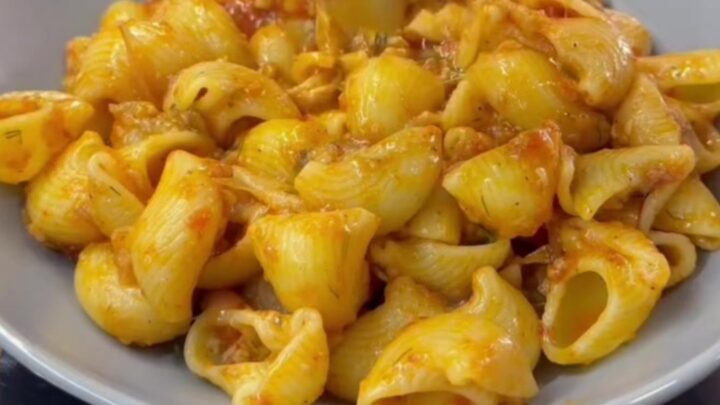
The pasta should be al dente and drained, then tossed with the vegetable sauce until every shell is coated. The sauce should cling to the pasta without being dry—if it looks tight, add a splash of the reserved pasta water.
The mixture will look glossy and chunky, with visible pieces of eggplant, pepper, and tomato. The mozzarella is sprinkled on top and melts into long, stretchy strands.
Finish and Serve
- Garnish and ServeTaste the pasta and adjust the seasoning with more salt and black pepper if needed. Sprinkle with the chopped fresh herbs. Serve immediately, scooping the pasta into bowls while the cheese is still molten and stretchy.Look for The herbs add a fresh, bright note against the rich, cheesy pasta.Tip Serve right away—the cheese sets as it cools.
The finished dish should be steaming hot, with the mozzarella fully melted and pulling into long strings when you lift a spoonful. The fresh herbs add a bright green contrast against the red sauce and white cheese. The pasta shells should be intact, each one coated with sauce and cheese. Serve immediately while the cheese is still molten and stretchy.
Common mistakes
A common mistake is cutting the vegetables before roasting, which causes them to dry out and cook unevenly. Keep them whole so they steam and soften properly. Another is overcooking the pasta—make sure to cook it just to al dente, as it will continue to soften slightly when mixed with the hot vegetables.
Don’t skip the paprika; it adds a warm, smoky depth that ties the dish together. Finally, resist the urge to stir too vigorously after adding the cheese—gentle folding keeps the shells intact.
How to tell it’s done
The vegetables are done when the eggplant skins are blistered and the flesh is completely tender when pierced with a fork. The peppers should be soft and collapsing, and the tomatoes should have burst and released their juices.
The sauce should be thick and jammy, not watery. The pasta is done when it’s al dente—tender but still firm to the bite. The mozzarella is ready when it has melted into glossy, stretchy strands that pull away from the spoon.
Up next · Part 3 of 3
4 variations · storage & make-ahead · 5 answers · printable card
Tips, FAQ & printable recipe (Part 3)← Back to the ingredients (Part 1)