Dinner · Part 2 of 3: Instructions
One-Pan Cheesesteak Hamburger Helper Step-by-step instructions
- Prep
- Cook
- Total
- Serves
- 4
Before you start
Before heating the skillet, take a few minutes to organize and measure all the ingredients to ensure a smooth cooking process. Chop the green bell peppers into uniform, bite-sized pieces so they cook evenly alongside the ground beef.
Measure out the dry macaroni, beef broth, cheddar cheese sauce, and shredded cheese into separate bowls. Having everything prepped and within arm's reach prevents the pasta from overcooking or the beef from burning while searching for ingredients. Ensure the skillet is clean and dry before placing it on the stovetop.
Ingredients at a glance (7)
- 1 lb ground beef
- 1 cup chopped green bell pepper
- 2 cups dry elbow macaroni
- 2 cups beef broth
- 1 1/2 cups cheddar cheese sauce
- 1 cup shredded mozzarella cheese
- 1 tbsp chopped fresh parsley
Instructions
Searing the Beef and Peppers
- Brown the Beef and PeppersHeat a large skillet over medium-high heat. Add the ground beef and chopped green bell pepper, breaking the meat apart with a spoon. Cook until the beef is fully browned and reaches a safe internal temperature of 160°F (71°C), ensuring no pink remains. Drain any excess grease from the skillet.Look for The beef is fully browned and the peppers are slightly softened.Safe temperature 160°F (71°C) internal temperature (ground meat)Tip Use a wooden spoon to break the beef into small, uniform pieces for even cooking.
At the end of this phase, the ground beef should be fully browned with no visible pink areas, reaching a safe internal temperature of 160°F (71°C).
The chopped bell peppers will appear slightly softened and vibrant green, having absorbed the savory rendered fat from the beef. A rich, savory aroma of seared meat and sweet peppers will fill the kitchen, and a light sizzle should be audible in the hot skillet.
Simmering Pasta and Mixing Sauce
- Simmer the MacaroniPour the dry elbow macaroni and beef broth directly into the skillet with the beef and peppers. Stir well to combine, bring the liquid to a boil, then cover with a tight-fitting lid. Reduce the heat to medium-low and simmer for about eight to ten minutes.Look for The macaroni is tender and most of the liquid has been absorbed.Tip Stir the mixture occasionally during simmering to prevent the pasta from sticking to the skillet.
- Stir in Cheddar SauceUncover the skillet and pour in the cheddar cheese sauce. Stir thoroughly to ensure all the macaroni and beef are evenly coated. Continue to cook over medium-low heat for two minutes, allowing the sauce to heat through completely and release steam.Look for The cheddar sauce is hot, velvety, and bubbling gently.Tip If the sauce seems too thick, add a tablespoon of milk to reach the desired consistency.
By the end of this stage, the macaroni will be tender to the bite, having absorbed most of the beef broth. The velvety cheddar cheese sauce should be fully incorporated, coating every noodle in a thick, glossy, and steaming orange glaze. Gentle bubbles will rise through the thick sauce, emitting a rich, cheesy, and savory aroma as the mixture reaches a uniform, hot temperature.
Melting Cheese and Garnishing
- Melt Cheese and GarnishSprinkle the shredded mozzarella cheese evenly over the top of the pasta mixture. Place the lid back on the skillet and let it sit over low heat for two minutes until the cheese is completely melted and stretchy. Garnish with chopped fresh parsley.Look for The cheese is fully melted, bubbly, and stretching beautifully.Tip Serve immediately while the cheese is hot and stretchy for the best presentation.
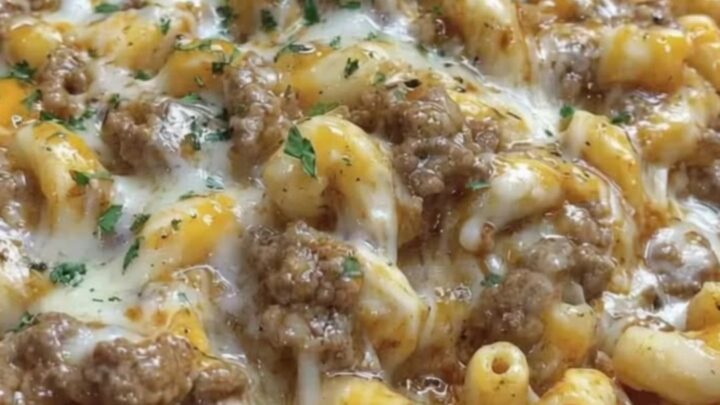
In this final phase, the shredded cheese on top will be completely melted, bubbling, and stretching beautifully when lifted. The edges of the skillet will show gentle bubbling cheese, and the bright green fresh parsley garnish will stand out vividly against the rich, golden-orange cheese. The dish is now piping hot, cohesive, and ready to be served immediately from the skillet.
Common mistakes
One common mistake is failing to drain excess fat from the ground beef before adding the pasta and broth. Too much grease can cause the final cheddar sauce to split, leaving an oily layer on top of the dish.
Another error is simmering the macaroni over heat that is too high, which evaporates the beef broth before the pasta has a chance to cook through. Keep the heat at a gentle simmer and keep the skillet covered to trap the moisture needed to cook the macaroni perfectly.
How to tell it’s done
To determine when the dish is perfectly done, check both the pasta texture and the internal temperature of the meat. The ground beef must reach a safe internal temperature of 160°F (71°C) during the initial browning phase.
The elbow macaroni should be al dente—tender but still holding its shape without becoming mushy. Finally, the cheese topping should be fully melted, gooey, and bubbling around the edges of the skillet, indicating that the entire dish is heated through and ready for serving.
- Ground meat: 160°F (71°C) in the thickest part
Up next · Part 3 of 3
2 variations · storage & make-ahead · 3 answers · printable card
Tips, FAQ & printable recipe (Part 3)← Back to the ingredients (Part 1)