Dinner · Part 2 of 3: Instructions
One-Pan Caprese Chicken with Melted Mozzarella Step-by-step instructions
- Prep
- Cook
- Total
- Serves
- 4
Before you start
Before you begin cooking, ensure all your ingredients are prepped and within reach, as this recipe moves quickly once the heat is applied. Slice the fresh mozzarella into even rounds to ensure uniform melting across all pieces of chicken.
Wash and dry the cherry tomatoes thoroughly, removing any stems. Chop the fresh basil leaves and set them aside. Have your spatula and tongs ready beside the stove. If your chicken breasts are thick, pound them to an even thickness to ensure they cook through at the same rate as the tomatoes.
Ingredients at a glance (4)
- 4 pieces boneless skinless chicken breasts
- 1 pint cherry tomatoes
- 8 oz fresh mozzarella cheese, sliced
- fresh basil leaves, for serving
Instructions
Searing the protein
- Sear the chickenPlace the chicken breasts into the hot cast-iron skillet. Sear until golden brown on both sides. Ensure the chicken reaches an internal temperature of 165°F (74°C).Look for golden brown crust on both sidesSafe temperature 165°F (74°C) internal temperature (poultry)Tip Do not crowd the skillet to ensure a proper sear.
At the end of this phase, the chicken should have a deep, golden-brown crust on both sides and feel firm to the touch. The pan should be hot, and you might hear a steady, gentle sizzle. Check that the chicken is not sticking to the bottom of the skillet; if it is, wait a few more seconds for the proteins to release naturally. Ensure the skillet is clean of any burnt bits before proceeding to add the tomatoes.
Creating the pan sauce
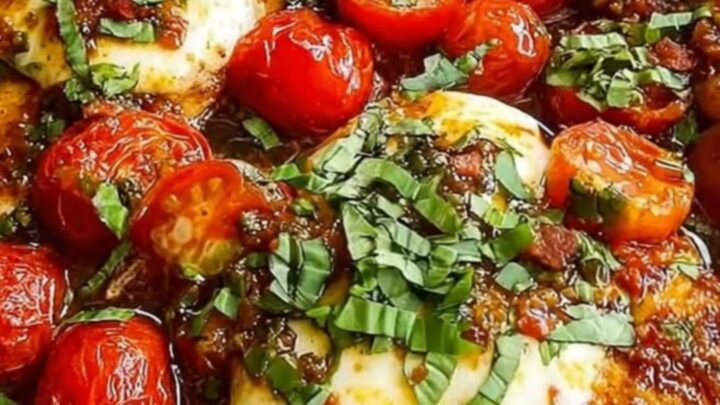
- Blister the tomatoesAdd the cherry tomatoes to the skillet around the chicken. Cook for a few minutes until the skins begin to burst and release their juices, creating a light pan sauce.Look for tomatoes are soft and burstingTip Use a spatula to gently press the tomatoes if they are not popping on their own.
The tomatoes should be visibly softened and blistered, with their skins beginning to crack and release juices into the pan. You should see a small amount of liquid gathering at the bottom of the skillet, which will act as the base for the sauce. The aroma of roasted tomatoes should be prominent. If the liquid evaporates too quickly, you can lower the heat slightly to ensure the tomatoes cook through without burning.
Melting and finishing
- Melt and serveTop each chicken breast with slices of fresh mozzarella. Cover the skillet briefly until the cheese is melted and stretchy. Remove from heat, garnish with fresh chopped basil, and let the chicken rest for 5 minutes before serving.Look for cheese is fully melted and bubblingTip Serving immediately ensures the cheese remains soft and stretchy.
The final result should feature perfectly melted, gooey mozzarella that covers the chicken. The kitchen will smell of fresh basil and savory chicken. The skillet should be removed from the heat source to prevent the bottom from scorching while you finish the dish.
Check that the cheese is melted to your preference and that the basil is bright green. If the cheese is not melting quickly, a lid can be placed over the skillet for thirty seconds.
Common mistakes
A common mistake is overcrowding the skillet, which lowers the pan temperature and causes the chicken to steam rather than sear properly. Work in batches if your skillet is small.
Another error is using too much heat for the cheese; if the pan is too hot when you add the mozzarella, it may become oily or separate before the chicken is finished. Avoid turning the chicken too early, as this prevents a good crust from forming and can cause the meat to stick to the pan surface.
How to tell it’s done
The chicken is done when it is opaque throughout and reaches an internal temperature of 165°F (74°C) at its thickest part. Using a digital meat thermometer is the most reliable way to ensure safety. The cherry tomatoes should be soft and beginning to collapse, releasing their juices into the skillet.
The mozzarella will appear fully melted, slightly bubbly, and will stretch when lifted with a fork. Always allow the chicken to rest for at least 5 minutes before cutting to ensure the juices redistribute throughout the meat, keeping it moist.
- Poultry: 165°F (74°C) in the thickest part
Up next · Part 3 of 3
2 variations · storage & make-ahead · 3 answers · printable card
Tips, FAQ & printable recipe (Part 3)← Back to the ingredients (Part 1)