Dinner · Part 2 of 3: Instructions
One-Pan Blistered Vine Tomato and Ground Beef Spaghetti Bolognese Step-by-step instructions
- Prep
- Cook
- Total
- Serves
- 4
Before you start
Before you start, bring a large pot of salted water to a boil and cook the spaghetti until just shy of al dente. Drain, reserving about a cup of the starchy pasta water.
Meanwhile, have the tomatoes, ground beef, and garlic ready at the stove. Heat the olive oil in a wide skillet over medium-high heat. This is a fast-moving dish, so having everything prepped and within reach makes the process seamless.
Ingredients at a glance (10)
- 2 tbsp olive oil
- 5 whole ripe vine tomatoes
- 400 g seasoned minced beef
- 4 cloves garlic, smashed
- salt to taste
- black pepper to taste
- 1 tsp dried oregano
- 1/2 tsp chili flakes
- 300 g cooked al dente spaghetti
- 1/4 cup fresh parsley, chopped
Instructions
Searing and Simmering the Ragù
- Sear the Beef and TomatoesHeat the olive oil in a large skillet over medium-high heat. Add the whole vine tomatoes, seasoned minced beef, and smashed garlic cloves to the skillet in a single layer. Cover and cook for 10 minutes, allowing the tomatoes to blister and the beef to brown.Look for The tomatoes blister and soften, and the beef browns in the rendered juices.Safe temperature 160°F (71°C) internal temperature (ground meat)Tip Do not stir during this phase; let the beef develop a deep sear.
- Crush the Tomatoes into the BeefUsing a wooden spoon, crush the softened tomatoes into the browned beef, stirring to combine. Season with salt, black pepper, oregano, and chili flakes. Continue to simmer for 5 minutes, stirring occasionally, until the mixture thickens into a rich ragù.Look for The sauce thickens and the tomatoes break down into a rustic, chunky ragù.Tip Crush the tomatoes gently to leave some texture.
At the end of this phase, the tomatoes are blistered and softened, the beef is browned and cooked through, and the garlic is fragrant. The mixture smells intensely tomatoey and meaty.
The sauce should be thick and chunky, with the tomatoes crushed into the beef. Check that the beef reaches 160°F (71°C) before proceeding.
Tossing the Pasta
- Add the SpaghettiAdd the cooked al dente spaghetti directly to the skillet. Toss vigorously with tongs or a wooden spoon until every noodle is coated in the meat sauce.Look for The spaghetti becomes glossy and evenly coated with the ragù.Tip If the sauce seems dry, add a splash of pasta cooking water.
- Finish with ParsleySprinkle the chopped fresh parsley over the spaghetti and toss once more to distribute. Cook for 1 minute until the parsley is wilted and fragrant.Look for The parsley brightens the dish and releases a fresh aroma.Tip Reserve a little parsley for garnish if desired.
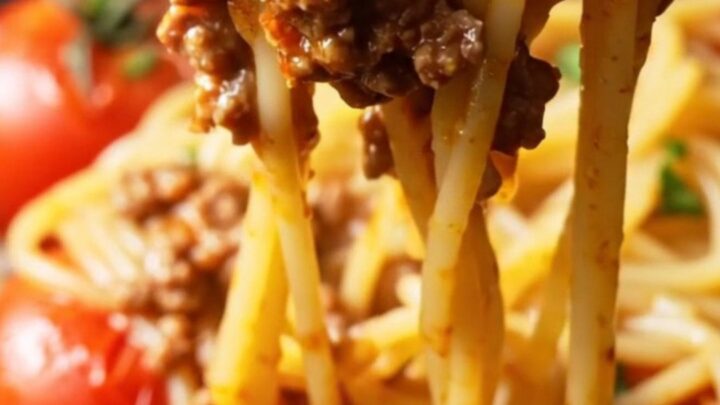
The spaghetti is added and tossed until every strand is coated in the glossy ragù. The pan looks vibrant with red sauce and green parsley. The pasta should be al dente and the sauce clinging, not runny. The aroma is savory and herby. Taste a strand to ensure it's perfectly seasoned.
Serving the Dish
- Serve ImmediatelyTwirl a forkful of the spaghetti and transfer to warm bowls. Spoon any remaining sauce from the pan over the top. Serve hot.Look for The pasta is steaming and the sauce clings to every strand.Tip Use tongs to twirl neat nests for serving.
The finished spaghetti is twirled into neat nests and served hot. The sauce glistens, and the parsley adds a fresh finish. The dish looks rustic and inviting, with the sauce evenly distributed. Serve immediately to enjoy the best texture and flavor.
Common mistakes
One common mistake is overcrowding the skillet, which causes the tomatoes and beef to steam instead of sear. Use a wide pan and give the ingredients space. Another pitfall is overcooking the spaghetti — undercook it slightly so it doesn't turn mushy when tossed with the sauce.
Don't skip the resting step after crushing the tomatoes; simmering helps the flavors meld. Finally, resist the urge to add too much liquid; the sauce should be thick, not soupy. If it does get too thick, add a splash of pasta water.
How to tell it’s done
The dish is done when the beef reaches an internal temperature of 160°F (71°C) and the sauce has thickened to a rustic ragù that clings to the spaghetti. The tomatoes should be completely softened and crushed into the sauce, with no large chunks remaining.
The spaghetti should be al dente — tender but still with a slight bite — and glossy with the meat sauce. A forkful should hold together without dripping excess liquid. Taste and adjust seasoning with salt and pepper before serving.
- Ground meat: 160°F (71°C) in the thickest part
Up next · Part 3 of 3
4 variations · storage & make-ahead · 5 answers · printable card
Tips, FAQ & printable recipe (Part 3)← Back to the ingredients (Part 1)