Dinner · Part 2 of 3: Instructions
One-Pan Blistered Tomato and Sweet Pepper Pasta Step-by-step instructions
- Prep
- Cook
- Total
- Serves
- 4
Before you start
Before starting, gather all your ingredients and equipment. Bring a large pot of salted water to a boil for the pasta. While the water heats, you can begin searing the vegetables.
Have a lid for your skillet ready, and a blender or immersion blender for the sauce. Measure out the olive oil, and shred the mozzarella if you bought a block. The entire dish comes together quickly, so having everything within reach makes the process smooth.
Ingredients at a glance (7)
- 1/4 cup olive oil
- 4 whole ripe tomatoes
- 2 whole red horn peppers
- 1 medium onion, quartered
- 5 cloves garlic
- 300 g pipe rigate pasta, boiled al dente
- 1 cup shredded mozzarella cheese
Instructions
Searing the Vegetables
- Sear the vegetablesHeat a large skillet over medium heat and add the olive oil. When the oil shimmers, carefully place the whole tomatoes, red horn peppers, quartered onion, and garlic cloves in the skillet. Cover with a lid and let the vegetables sear, turning occasionally, until they are blistered and tender, about 10 minutes.Look for The tomatoes will blister and soften, the peppers char in spots, and the onion and garlic become fragrant and lightly golden.Tip Keep the heat at medium to avoid burning the garlic. If the pan seems dry, add a splash of water.
- Blend the sauceOnce the vegetables are blistered and tender, transfer them to a blender or use an immersion blender directly in the skillet. Blend until smooth, or leave it slightly chunky for a more rustic texture. Return the sauce to the skillet if you used a blender, and keep it warm over low heat.Look for The sauce should be thick, aromatic, and a deep red-orange color, with visible charred bits for extra flavor.Tip For a chunkier sauce, pulse the blender a few times instead of running it continuously.
The vegetables should be blistered and tender, with charred spots on the tomatoes and peppers. The garlic will be soft and fragrant, and the onion will have translucent edges. The oil should be sizzling but not smoking. The aroma will be sweet and savory, with a hint of smokiness from the char. Check that the tomatoes have collapsed slightly and the peppers are easily pierced with a fork.
Combining Pasta and Cheese
- Add the pastaAdd the boiled pipe rigate pasta directly to the skillet with the sauce. Toss well to coat every shell with the tomato-pepper mixture.Look for The pasta shells are evenly coated with the glossy sauce.Tip If the sauce seems too thick, add a splash of pasta cooking water to loosen it.
- Melt the cheeseSprinkle the shredded mozzarella over the pasta and toss gently until the cheese melts and clings to the pasta, creating a creamy, gooey texture. Cook for 1-2 minutes, just until the cheese is fully melted.Look for The cheese is melted and stretchy, coating the pasta and the inside of each shell.Tip Remove the skillet from the heat just as the cheese melts to avoid it becoming stringy or oily.
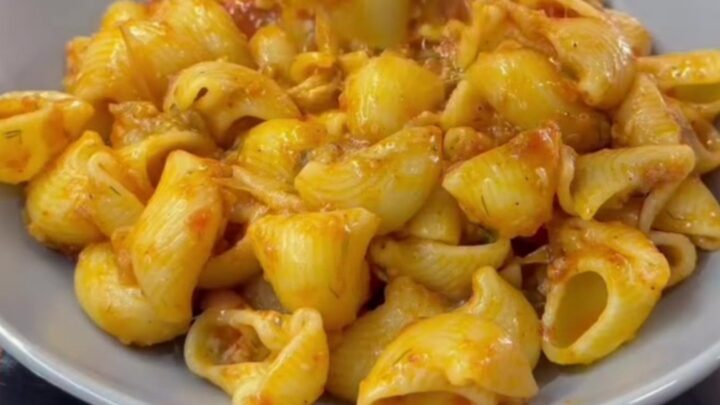
The pasta should be evenly coated with the sauce, and the mozzarella should be melted and stretchy, clinging to the shells. The sauce should be thick enough to coat the back of a spoon, and the cheese should be glossy, not oily.
The skillet will look vibrant and inviting, with the red sauce and white cheese creating a beautiful contrast. Taste to ensure the flavors are balanced and the pasta is al dente.
Serving the Dish
- Serve immediatelySpoon the saucy, cheesy pasta into warm bowls. Serve right away while the cheese is still molten and the sauce is bubbling.Look for Each spoonful should be rich, saucy, and loaded with melted cheese.Tip For an extra touch, drizzle a little olive oil over the top just before serving.
The pasta should be hot, with the cheese still molten and the sauce bubbling slightly. Spoon it into bowls, making sure each serving gets a good amount of sauce and cheese. The texture should be creamy and cohesive, with the sauce clinging to every shell. The dish should look rustic and hearty, with visible charred bits of pepper and tomato. Serve immediately for the best experience.
Common mistakes
A common mistake is overcooking the vegetables, which can make them mushy and lose their charred flavor. Keep the heat at medium and turn them occasionally, just until they blister and soften.
Another pitfall is adding the pasta to the sauce too early, before the sauce has had a chance to thicken. Let the sauce simmer for a few minutes after blending to reduce slightly. Finally, don’t over-stir the mozzarella; once it’s melted, stop stirring to avoid a stringy, tough texture.
How to tell it’s done
The dish is done when the pasta is heated through and the cheese is fully melted and clinging to the pasta and sauce. The sauce should be thick and glossy, not watery, and the pasta shells should be coated evenly.
If you’re using a protein, such as cooked chicken or sausage, ensure it’s heated to 165°F (74°C). Since this recipe doesn’t include raw protein, the main indicator is visual: the cheese is melted and stretchy, and the sauce has a rich, deep color. Taste a spoonful to check the seasoning.
Up next · Part 3 of 3
4 variations · storage & make-ahead · 5 answers · printable card
Tips, FAQ & printable recipe (Part 3)← Back to the ingredients (Part 1)