Dinner · Part 2 of 3: Instructions
One-Pan Balsamic Honey Roasted Chicken and Grapes Step-by-step instructions
- Prep
- Cook
- Total
- Serves
- 4
Before you start
Start by organizing your workspace to ensure a smooth assembly. Preheat the oven fully before placing the pan inside to ensure the initial sear starts immediately. Wash and dry the grapes thoroughly, and ensure the red onion is sliced into uniform wedges to promote even cooking.
Pat the chicken thighs dry with paper towels; this is the most important step for achieving that signature golden, crispy skin. Having all ingredients measured and ready to go will make the assembly process take less than ten minutes, allowing the oven to do all the work.
Ingredients at a glance (7)
- 4 pieces bone-in skin-on chicken thighs
- 2 cups red grapes
- 1 large red onion, cut into wedges
- 3 tbsp balsamic vinegar
- 2 tbsp honey
- 2 sprigs fresh rosemary
- 1 tsp flaky salt
Instructions
Preparation and Arrangement
- Prep the PanPreheat your oven to 400°F (200°C). Line a rimmed aluminum sheet pan with parchment paper to ensure easy cleanup. Arrange the bone-in skin-on chicken thighs, red onion wedges, and red grapes in a single layer on the prepared pan, ensuring they are evenly spaced for proper roasting.Look for The chicken pieces should be arranged skin-side up to ensure the skin becomes crispy and golden during the roasting process.Tip Ensure the grapes and onion wedges are tucked around the chicken rather than piled on top to allow for even browning.
At this stage, the ingredients should be neatly arranged on the parchment-lined pan. The chicken thighs are skin-side up, providing a clean canvas for the glaze.
The onions and grapes are distributed evenly, ensuring no overcrowding. Before moving on, verify that the oven has reached 400°F (200°C) to ensure the roasting process begins at the correct temperature for immediate browning.
Glazing and Seasoning
- Glaze and SeasonIn a small bowl, whisk together the balsamic vinegar and honey until smooth. Drizzle this mixture evenly over the chicken, grapes, and onions. Scatter the fresh rosemary sprigs over the pan and sprinkle everything generously with the flaky salt to enhance the natural flavors.Look for The glaze should coat the ingredients lightly; do not drown the pan, as the natural juices from the grapes and onions will combine with the glaze during cooking.Tip Use a pastry brush if you prefer a more precise application of the glaze over the chicken skin.
The ingredients are now coated in the balsamic honey mixture, which should look glossy and well-distributed. The rosemary sprigs are placed strategically to infuse the chicken as it cooks. Ensure the salt is sprinkled evenly across the entire tray. The pan should look composed and vibrant, with the deep colors of the red grapes and onions contrasting beautifully against the chicken.
Roasting to Perfection
- Roast and ServePlace the pan in the preheated oven and roast for 35 to 40 minutes. The dish is finished when the chicken skin is deep golden brown and the internal temperature of the chicken reaches 165°F (74°C). Remove from the oven and let the chicken rest for at least 5 minutes before serving to ensure the meat remains succulent.Look for The grapes should be blistered and slightly jammy, and the onions should be tender and caramelized around the edges.Safe temperature 165°F (74°C) internal temperature (poultry)Tip Check the internal temperature with a meat thermometer at the thickest part of the thigh, avoiding the bone for an accurate reading.
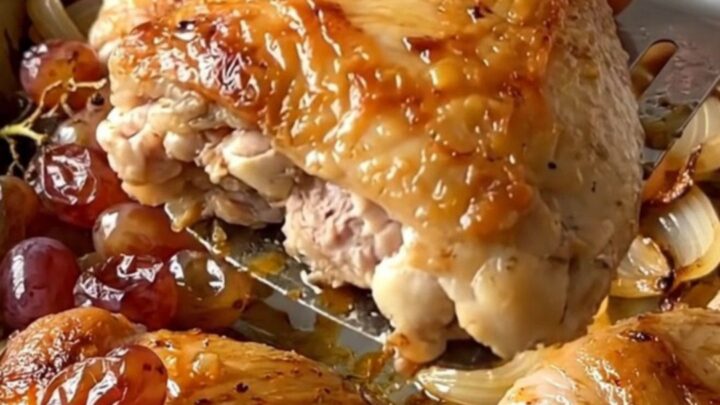
After roasting, the kitchen should smell aromatic with the scent of caramelized onions and rosemary. The chicken skin should be crisp and golden brown, and the grapes should have transformed into a jammy consistency. Ensure the chicken has reached 165°F (74°C) internally. The pan juices should be thick and syrupy, ready to be spooned over the chicken before plating.
Common mistakes
A common error is crowding the pan, which causes the chicken to steam rather than roast, leading to pale, rubbery skin instead of a crisp exterior. Another frequent mistake is neglecting to pat the chicken dry, as surface moisture prevents browning.
Ensure the balsamic honey mixture is whisked well, as the honey can settle at the bottom of the bowl. Finally, avoid using a pan that is too small; the ingredients need space for the heat to circulate properly, or the grapes will not caramelize effectively.
How to tell it’s done
The chicken is perfectly cooked when the skin is deep golden brown and crispy to the touch. Use a digital meat thermometer to verify that the internal temperature has reached at least 165°F (74°C) at the thickest part of the thigh, making sure not to touch the bone.
The grapes should appear blistered, soft, and slightly shriveled, indicating they have released their juices, and the onions should be tender and translucent with charred edges. Always allow the chicken to rest for 5 minutes before serving to distribute the juices.
- Poultry: 165°F (74°C) in the thickest part
Up next · Part 3 of 3
2 variations · storage & make-ahead · 3 answers · printable card
Tips, FAQ & printable recipe (Part 3)← Back to the ingredients (Part 1)