Dinner · Part 2 of 3: Instructions
One-Pan Baked Rigatoni with Garlic Meatballs and Mozzarella Step-by-step instructions
- Prep
- Cook
- Total
- Serves
- 6
Before you start
Before starting, gather all the ingredients and measure them out. Preheat the oven's broiler and have a large oven-safe skillet ready. If using a cast-iron or stainless steel skillet, ensure it is well-seasoned or lightly oiled to prevent sticking.
Mix the meatball ingredients in a bowl and have the marinara, broth, and pasta measured and within reach. This is a quick-cooking dish, so having everything prepped and ready will make the process smooth. Also, shred the mozzarella and grate the parmesan if not using pre-shredded. Finally, set out the fresh basil for garnish.
Ingredients at a glance (15)
- 1 lb ground beef
- 1/2 cup breadcrumbs
- 1/2 cup grated parmesan cheese
- 1 large egg
- 4 cloves garlic, minced
- 1 tsp dried oregano
- 1 tsp kosher salt
- 1/2 tsp black pepper
- 2 tbsp olive oil
- 2 cups marinara sauce
- 1 cup chicken broth
- 12 oz uncooked rigatoni pasta
- 2 cups shredded mozzarella cheese
- 1/2 cup grated parmesan cheese
- 1/4 cup fresh basil leaves
Instructions
Sear and Season
- Make the Garlic MeatballsIn a large bowl, combine the ground beef, breadcrumbs, grated parmesan, egg, minced garlic, oregano, salt, and pepper. Mix gently until just combined; do not overwork. Form the mixture into mini meatballs, about 1 inch in diameter.Look for The mixture should be moist but hold together when rolled.Tip Wet your hands lightly to prevent sticking when rolling the meatballs.
- Sear the MeatballsHeat the olive oil in a large oven-safe skillet over medium-high heat. Add the meatballs in a single layer and sear until browned on all sides, about 4–5 minutes total. They do not need to be cooked through yet.Look for The meatballs should have a deep brown crust on the outside.Safe temperature 160°F (71°C) internal temperature (ground meat)Tip Turn them gently with a spatula to keep them intact.
At the end of this phase, the meatballs should be nicely browned on all sides, with a rich crust. The skillet will have browned bits stuck to the bottom, which are full of flavor. The kitchen will smell of garlic and oregano.
The meatballs are not fully cooked at this point, but they are well on their way. The mixture should have held together, and the meatballs should be firm enough to handle without falling apart. The pan should be hot, and the oil shimmering.
Simmer and Absorb
- Add Sauce and PastaPour the marinara sauce and chicken broth into the skillet with the meatballs. Stir to scrape up any browned bits from the bottom. Add the uncooked rigatoni and stir to coat the pasta in the sauce.Look for The sauce should be bubbling gently around the pasta.Tip Ensure the pasta is mostly submerged in the liquid.
- Simmer the PastaBring the mixture to a simmer, then cover the skillet with a lid. Reduce the heat to medium and cook for 12 minutes, stirring once halfway through, until the rigatoni is al dente and has absorbed most of the liquid.Look for The pasta should be tender but still firm to the bite.Tip If the skillet looks dry before 12 minutes, add a splash of broth or water.
After 12 minutes of simmering, the rigatoni should be al dente, and the sauce should have reduced to a thick, coating consistency. The liquid should be mostly absorbed, leaving a saucy but not soupy mixture. The meatballs should be cooked through, and the sauce should be bubbling gently. The aroma is rich and tomatoey, with hints of garlic and herbs. The pasta should be tender but still have a slight bite. If the skillet looks dry, add a splash of broth.
Broil and Brown
- Top with CheesePreheat the broiler. Sprinkle the shredded mozzarella and grated parmesan evenly over the top of the pasta and meatballs.Look for The cheese should cover the surface completely.Tip Use a mix of cheeses for extra flavor, if desired.
- Broil Until BubblingPlace the skillet under the broiler and cook for 4 minutes, until the cheese is melted, blistered, and golden brown in spots. Watch closely to prevent burning.Look for The cheese should be bubbling and browned at the edges.Safe temperature 160°F (71°C) internal temperature (ground meat)Tip If your skillet is not oven-safe, transfer the mixture to a baking dish before broiling.
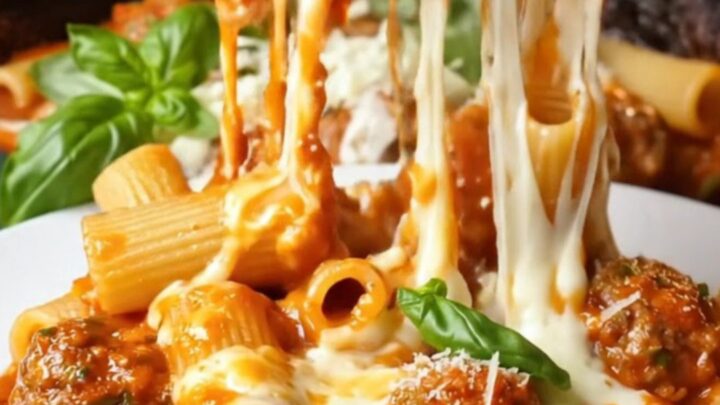
- Garnish and ServeRemove the skillet from the oven and let it rest for a few minutes. Shower with fresh basil leaves, then scoop onto plates, making sure to get a long cheese pull.Look for The cheese should stretch when lifted.Tip Letting it rest helps the dish set and makes serving easier.
The cheese should be melted, bubbling, and golden brown in spots, with a blistered, appetizing appearance. The edges of the skillet may have some caramelized sauce, adding to the flavor. The meatballs should reach an internal temperature of 160°F (71°C). The whole dish should be steaming and fragrant, with the aroma of toasted cheese and herbs. Let it rest for a few minutes to set, then garnish with fresh basil and serve with a satisfying cheese pull.
Common mistakes
A common mistake is overmixing the meatball mixture, which can result in tough, dense meatballs. Mix just until the ingredients are combined. Another is not browning the meatballs enough—the fond left in the skillet adds depth to the sauce.
If the pasta absorbs all the liquid before it's tender, add a little broth or water and continue cooking. Avoid stirring the pasta too vigorously, as it can break the meatballs. Finally, watch the broiler closely; cheese can go from golden to burnt in seconds. If the top is browning too quickly, move the skillet to a lower rack.
How to tell it’s done
The dish is done when the rigatoni is al dente—tender but still firm to the bite—and the sauce has thickened to a rich, clinging consistency. The meatballs should be cooked through, reaching an internal temperature of 160°F (71°C). To check, insert an instant-read thermometer into the center of a meatball; it should read at least 160°F.
The cheese topping should be melted, bubbling, and golden brown in spots, with a slightly blistered appearance. Let the skillet rest for a few minutes before serving to allow the dish to set slightly, making it easier to scoop and enhancing the cheese pull.
- Ground meat: 160°F (71°C) in the thickest part
- Egg dishes: 160°F (71°C) in the thickest part
Up next · Part 3 of 3
4 variations · storage & make-ahead · 5 answers · printable card
Tips, FAQ & printable recipe (Part 3)← Back to the ingredients (Part 1)