Dinner · Part 2 of 3: Instructions
Old Bay Butter Lemon Caper Sea Scallops in Crockpot Step-by-step instructions
- Prep
- Cook
- Total
- Serves
- 4
Before you start
Before starting, ensure the slow cooker is clean and ready. Pat the scallops and shrimp dry with paper towels to remove excess moisture—this helps the sauce cling better.
Slice the Meyer lemons thinly, about 1/4-inch thick. Drain the capers. Measure out the white wine, garlic butter, and Old Bay seasoning.
If using garlic herb butter, melt it in a small saucepan or microwave until fully liquid. Have the jasmine rice cooked or ready to steam, and keep lemon wedges on hand for serving. Set out all ingredients within reach so you can layer them quickly.
Ingredients at a glance (9)
- 1 lb dry-pack sea scallops
- 1 lb raw peeled jumbo shrimp
- 2 Meyer lemons, thinly sliced
- 3 tbsp capers, drained
- 1/2 cup crisp white wine
- 1/2 cup melted garlic herb butter
- 2 tbsp Old Bay seasoning
- 2 cups steamed white jasmine rice, for serving
- Lemon wedges, for serving
Instructions
Layer the Base
- Layer the Seafood and AromaticsPlace the dry-pack sea scallops and raw peeled jumbo shrimp in the bottom of a 7-quart slow cooker in an even layer. Arrange the sliced Meyer lemons over the seafood, then scatter the capers over the top. Pour the crisp white wine evenly over everything.Look for The seafood should be evenly spread, with lemon slices covering most of the surface.Tip Pat the scallops and shrimp dry with paper towels before adding to ensure the butter sauce clings well.
- Add Butter and SeasoningPour the melted garlic herb butter over the seafood, then sprinkle the Old Bay seasoning generously over the top. Do not stir—the layers will meld as the slow cooker works.Look for The butter and seasoning should visibly coat the top of the seafood.Tip For even flavor, drizzle the butter in a zigzag pattern and then dust the Old Bay evenly.
At the end of this phase, the slow cooker contains a neat layer of seafood topped with lemon slices, capers, and a splash of wine. The aromatics are bright and fresh, and the seafood is raw and moist. This is the canvas for the rich sauce that will develop during cooking.
Slow-Cook to Perfection
- Slow-Cook Until TenderCover the slow cooker and cook on LOW for 2 hours, or until the scallops are opaque and the shrimp are pink and cooked through. The internal temperature of the seafood should reach 145°F (63°C) when measured with an instant-read thermometer.Look for The sauce will be bubbling gently, and the seafood will look opaque and plump.Safe temperature 145°F (63°C) internal temperature (shellfish)Tip Avoid lifting the lid during cooking to keep the heat steady; check at the 1 1/2-hour mark if needed.
After 2 hours on low, the slow cooker is bubbling gently, and the kitchen smells of garlic, lemon, and Old Bay. The sauce has turned a golden hue, and the seafood looks opaque and plump. The lemon slices have softened and released their juices, creating a fragrant, glossy bath.
Serve and Savor
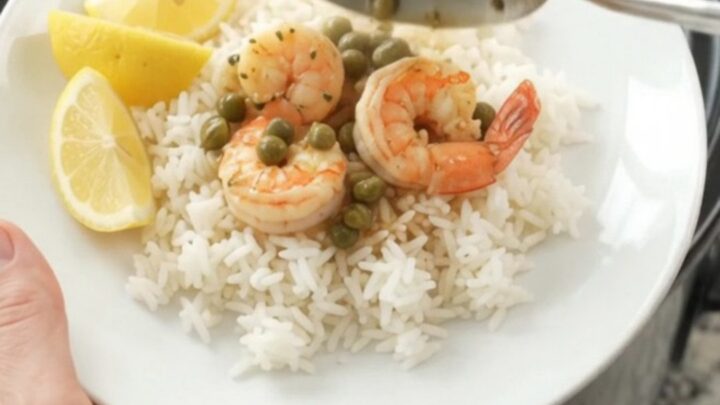
- Check and ServeOnce the seafood is cooked, use a slotted spoon to transfer the scallops and shrimp to a serving platter or directly onto plates. Spoon some of the lemon-caper butter sauce over the top. Serve hot with steamed jasmine rice and lemon wedges on the side.Look for The seafood should be tender and glistening with the golden sauce.Tip If the sauce seems thin, let it sit for a few minutes after removing the seafood—it will thicken slightly as it cools.
The seafood is transferred to plates or a platter, and the sauce is spooned over the top. The rice is fluffy and ready to soak up the buttery liquid. Each bite should be tender, juicy, and bursting with flavor—a satisfying, complete meal.
Common mistakes
One common mistake is using wet-packed scallops, which can water down the sauce and make the dish overly salty. Another is lifting the lid frequently to check on the cooking—this releases heat and extends the cooking time.
Also, resist the urge to stir the mixture after adding the butter and Old Bay; stirring can break up the scallops and make the sauce cloudy. Finally, be careful not to overcook the seafood—it can go from tender to rubbery quickly. Stick to the suggested time and use a thermometer to check doneness.
How to tell it’s done
The seafood is done when the scallops are opaque and firm to the touch, and the shrimp are pink and curled. The internal temperature should read 145°F (63°C) on an instant-read thermometer inserted into the thickest part of a scallop or shrimp.
The sauce will be bubbling gently, and the lemon slices will have softened. Overcooking can make the seafood tough, so check at the 1 1/2-hour mark if your slow cooker runs hot. If not done, continue cooking in 15-minute increments until the temperature is reached.
- Shellfish: 145°F (63°C) in the thickest part
Up next · Part 3 of 3
4 variations · storage & make-ahead · 5 answers · printable card
Tips, FAQ & printable recipe (Part 3)← Back to the ingredients (Part 1)