Desserts · Part 2 of 3: Instructions
Molten Uji Matcha Basque Cheesecake for a Decadent Dessert Step-by-step instructions
- Prep
- Cook
- Total
- Serves
- 8
Before you start
Before beginning, ensure the oven is fully preheated to 430°F (220°C). Proper preheating is essential for the high-heat blast required to caramelize the top of the cheesecake.
Take your cream cheese and eggs out of the refrigerator at least 30 minutes before mixing to bring them to room temperature. Prepare your springform pan by lining it with parchment paper, ensuring the paper is crumpled and extends well above the sides of the pan to capture the rustic look.
Ingredients at a glance (6)
- 35 g ceremonial-grade Uji matcha powder
- 750 g cream cheese
- 220 g sugar
- 4 eggs
- 380 ml heavy whipping cream
- matcha powder for serving
Instructions
Batter Preparation
- Prepare the BatterIn a large mixing bowl, combine the cream cheese and sugar. Whisk thoroughly until the mixture is smooth. Sift the ceremonial-grade Uji matcha powder into the bowl to ensure no lumps remain. Gradually whisk in the eggs one at a time, followed by the heavy whipping cream, until the batter is uniform in color and consistency.Look for The batter should be smooth, lump-free, and a vibrant emerald green color.Tip Sifting the matcha is crucial to avoid bitter clumps in the creamy batter.
The batter should be completely smooth and free of any lumps of matcha or cream cheese. It should possess a vibrant, consistent emerald green color and a silky, pourable texture. If you notice any small clumps of matcha, whisk the mixture vigorously or pass the batter through a fine-mesh sieve one final time before pouring it into the prepared baking pan.
High Heat Baking
- Bake the CheesecakePreheat the oven to 430°F (220°C). Line an 8-inch springform pan with crumpled parchment paper, allowing the edges to rise above the rim. Pour the matcha batter into the prepared pan. Bake for 24 minutes. The edges should be deeply charred while the center remains liquid and trembling when the pan is gently shaken.Look for The edges are dark and caramelized, and the center still jiggles significantly.Safe temperature 160°F (71°C) internal temperature (egg dishes)Tip Do not overbake, or the center will lose its signature molten texture.
Observe the cheesecake closely during the final minutes of baking. The edges should be dark, almost mahogany in color, and slightly puffed. The surface should be charred but not burnt. When the pan is nudged, the center must exhibit a distinct, fluid wobble, indicating that the core remains molten while the perimeter has set sufficiently to hold the shape of the dessert.
Setting and Dusting
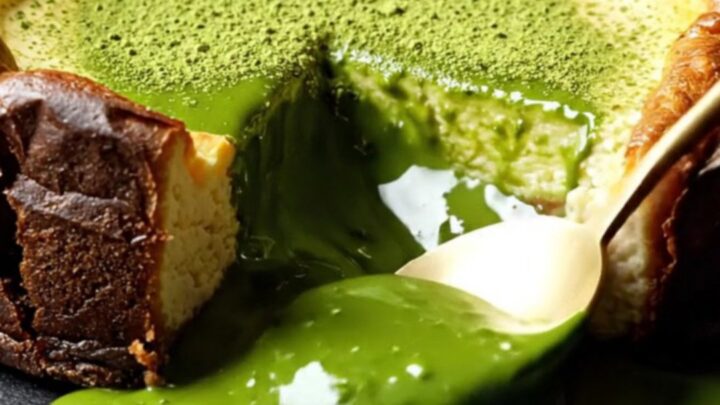
- Cool and ServeRemove the cheesecake from the oven and let it rest at room temperature for at least 60 minutes to allow the structure to set slightly while keeping the center molten. Before serving, dust the top with a light coating of extra matcha powder for a vibrant finish. Use a spoon to scoop out the flowing center.Look for The cheesecake should be cooled enough to handle but still soft in the middle.Tip Use a warm, clean knife if you need to slice it, but scooping is recommended for the best experience.
Allow the cheesecake to rest on a wire rack at room temperature. The cooling process is vital for the final texture; it allows the custard to stabilize slightly so it does not collapse entirely when served.
A light dusting of matcha powder over the cooled surface provides a final visual flourish, highlighting the vibrant green color against the dark, caramelized edges of the charred crust.
Common mistakes
A common mistake is using low-quality or culinary-grade matcha, which can result in a dull color and a bitter, astringent taste that overwhelms the cream cheese. Another frequent error is failing to reach the required high oven temperature, which prevents the proper caramelization of the crust.
Ensure the oven is calibrated or use an oven thermometer to verify the temperature. Finally, overbaking the cheesecake is the most common pitfall; even a few extra minutes will set the center, turning a molten dessert into a standard baked one.
How to tell it’s done
The cheesecake is done when the edges are deeply charred and set, while the center remains jiggly and liquid. When you gently shake the pan, the center should move like a wave.
If the center feels firm to the touch, it has been baked too long and will not provide the intended molten experience. The internal temperature of the egg-based custard should reach at least 160°F (71°C) to ensure it is cooked through while maintaining the soft, molten core.
- Egg dishes: 160°F (71°C) in the thickest part
Up next · Part 3 of 3
2 variations · storage & make-ahead · 3 answers · printable card
Tips, FAQ & printable recipe (Part 3)← Back to the ingredients (Part 1)