Breakfast · Part 1 of 3: Ingredients
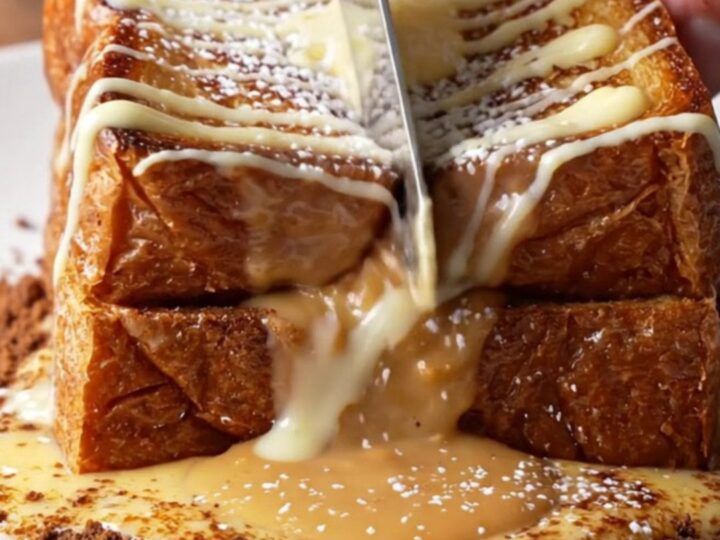
Molten Biscoff Stuffed French Toast with White Chocolate Drizzle
- Prep
- Cook
- Total
- Serves
- 4
This is the French toast that turns breakfast into a dessert-worthy event. Thick slices of brioche are cut into deep pockets, stuffed with a generous amount of Lotus Biscoff cookie butter, then dipped in a vanilla-scented custard and pan-toasted in butter until golden. The edges get rolled in crushed Biscoff cookies for extra crunch, and the whole thing is finished with a white chocolate drizzle and a snow of powdered sugar.
This recipe takes classic French toast and gives it a luxurious upgrade. The key is using thick, soft brioche that can hold a deep pocket of cookie butter without falling apart. The custard is simple—just eggs, milk, and vanilla—but it creates a rich, silky coating that crisps up beautifully in the skillet.
The crushed cookie crust adds a spiced, crunchy layer that contrasts with the tender bread and gooey filling. Finished with melted white chocolate and powdered sugar, this dish is perfect for a special breakfast, brunch, or even dessert. It's indulgent, satisfying, and surprisingly easy to put together.
Ingredients
- 4 slices thick brioche bread
- 1/2 cup Lotus Biscoff cookie butter
- 3 large eggs
- 1/2 cup whole milk
- 1 tsp vanilla extract
- 2 tbsp unsalted butter
- 1/2 cup finely crushed Lotus Biscoff cookies
- 1/2 cup white chocolate chips
- Powdered sugar, for dusting, to taste
Why this recipe works
The method works because it layers textures and temperatures. The brioche is thick and sturdy enough to be hollowed out and filled without tearing, while still being soft enough to soak up the custard. The cookie butter stays molten during cooking, creating a warm, gooey center that contrasts with the crisp, caramelized exterior. Pan-toasting in butter adds rich flavor and helps the bread develop a golden, crunchy crust that holds up to the filling.
Rolling the toasted edges in crushed Biscoff cookies adds a second layer of crunch and a deep spiced caramel flavor that echoes the filling. The white chocolate drizzle brings a creamy sweetness that balances the warm spice of the cookie butter.
Each element is designed to complement the others, creating a dish that is greater than the sum of its parts. The result is a French toast that is both comforting and impressive, with every bite offering a mix of crispy, creamy, and molten textures.
Notes and substitutions
For the best results, use a high-quality brioche that is sliced thick—about 1 to 1 1/2 inches. The bread should be slightly stale or left out overnight, as this helps it absorb the custard without becoming soggy.
Lotus Biscoff cookie butter is the classic choice, but any speculoos or cookie butter will work. If using a crunchy version, the filling will have a bit more texture. Make sure the cookie butter is at room temperature so it is easy to pipe into the pockets.
The custard is a simple ratio of eggs to milk, about 1 egg per 1/4 cup of milk. For a richer custard, use half-and-half or add a splash of heavy cream. The vanilla extract adds warmth, but you can substitute with a pinch of cinnamon or nutmeg.
When dipping the stuffed bread, do not soak it too long—15 seconds per side is enough for brioche. The skillet should be preheated over medium heat, and the butter should be foaming but not browned before adding the bread.
- Lotus Biscoff cookie butter: Any speculoos or cookie butter spread works; if using a crunchy version, the texture will be a bit chunkier but still delicious.
- Brioche bread: Challah or Texas toast are excellent substitutes; they are thick and sturdy enough to hold the filling.
- White chocolate chips: Use a chopped white chocolate bar for a smoother melt; or substitute with milk or dark chocolate if preferred.
- Whole milk: Half-and-half or a non-dairy milk like oat milk can be used; the custard will be slightly richer or lighter accordingly.
Equipment
- Large skillet
- Sharp paring knife
- Piping bag or zip-top bag
- Shallow dish for custard
- Whisk
- Tongs
- Cutting board
- Small saucepan
Up next · Part 2 of 3
5 steps · 12 min of cooking · what to look for at each stage
Step-by-step instructions (Part 2)