Desserts · Part 2 of 3: Instructions
Molten Biscoff Cookie Butter Core Cookies Step-by-step instructions
- Prep
- Cook
- Total
- Serves
- 12
Before you start
Before starting, measure all ingredients and set them out. Freeze the Biscoff spread scoops at least an hour ahead, or even overnight, so they are solid. Brown the butter and let it cool to room temperature. Crush the Biscoff cookies into coarse crumbs, leaving some larger pieces for texture.
Line a baking sheet with parchment paper. Preheat the oven to 375°F (190°C) just before baking. Ensure the egg is at room temperature for better incorporation. Have a cookie scoop or spoon ready for portioning the dough.
Ingredients at a glance (11)
- 12 tbsp Biscoff spread
- 1/2 cup browned butter, cooled
- 3/4 cup dark brown sugar, packed
- 1 large egg
- 1 tsp vanilla extract
- 1 1/2 cups all-purpose flour
- 1/2 tsp baking soda
- 1/2 tsp salt
- 1/2 cup crushed Biscoff cookies
- 1/2 cup milk chocolate chips
- 2 tbsp Biscoff spread, melted
Instructions
Prepare the Filling and Dough
- Freeze the Biscoff coresLine a small baking sheet or plate with parchment paper. Scoop twelve tablespoons of Biscoff spread onto the parchment, spacing them apart. Place the sheet in the freezer and freeze until the scoops are firm, about 1 hour. While the cores freeze, prepare the dough.Look for The Biscoff scoops should be solid enough to handle without losing their shape.Tip Use a cookie scoop for even, round cores. If the spread is too soft, freeze the scoops for 30 minutes before shaping.
- Brown the butterIn a small saucepan, melt the butter over medium heat. Continue cooking, swirling occasionally, until the butter turns golden brown and smells nutty, about 5 minutes. Pour the browned butter into a large mixing bowl and let it cool for 10 minutes.Look for The butter should be amber-colored with dark specks at the bottom of the pan.Tip Watch closely, as the butter can go from browned to burnt quickly. Remove from heat as soon as it smells nutty.
- Mix the wet ingredientsTo the cooled browned butter, add the dark brown sugar, egg, and vanilla extract. Beat with an electric mixer on medium speed until smooth and well combined, about 2 minutes. The mixture should be glossy and slightly thickened.Look for The mixture should be uniform and slightly lighter in color.Tip Ensure the butter is not hot, or it will cook the egg. If it is still warm, let it cool longer.
- Add the dry ingredientsIn a separate bowl, whisk together the flour, baking soda, and salt. Gradually add the dry ingredients to the wet mixture, mixing on low speed until just combined. Fold in the crushed Biscoff cookies and milk chocolate chips with a spatula.Look for The dough should be thick and cohesive, with no dry streaks of flour.Tip Do not overmix after adding the flour, or the cookies will be tough. Stop as soon as the flour disappears.
The Biscoff cores should be frozen solid and hold their shape. The browned butter should be cooled to room temperature, and the dough should be smooth and cohesive, with the crushed cookies and chocolate chips evenly distributed. The dough will be soft but manageable.
Assemble and Bake
- Assemble the cookiesPreheat the oven to 375°F (190°C). Line a baking sheet with parchment paper. Scoop about 2 tablespoons of dough, flatten it in your palm, and place a frozen Biscoff core in the center. Wrap the dough around the core, sealing it completely. Place on the prepared baking sheet, spacing them 2 inches apart.Look for Each cookie should be a smooth ball with no visible filling.Tip Work quickly to keep the cores frozen. If the dough becomes too soft, chill it for 10 minutes.
- Bake the cookiesBake the cookies in the preheated oven for 10 minutes, until the edges are golden brown and the centers look slightly set but still soft. The tops may crack slightly, revealing the molten Biscoff inside. Remove from the oven and let cool on the baking sheet for 5 minutes.Look for The edges should be crisp and golden, while the centers are puffed and slightly soft.Safe temperature 160°F (71°C) internal temperature (egg dishes)Tip Do not overbake, as the cookies will continue to set as they cool. The centers should be slightly underdone when removed.
The cookies should be evenly shaped balls with the filling completely sealed inside. During baking, the edges will turn golden brown and the centers will puff up. The kitchen will smell of browned butter and caramel. The cookies are done when the edges are crisp and the centers are still slightly soft.
Drizzle and Serve
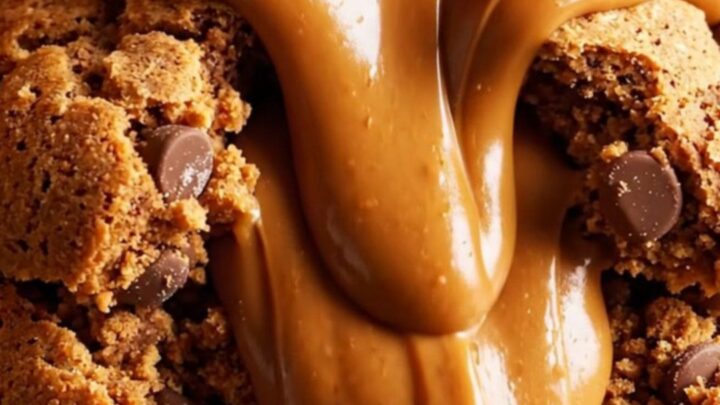
- Drizzle with melted BiscoffWhile the cookies are still warm, drizzle the melted Biscoff spread over the tops. Use a spoon or a small piping bag for a clean drizzle. The warm cookies will allow the drizzle to set slightly, creating a glossy finish.Look for The drizzle should be thick and glossy, with some pooling in the cracks.Tip Melt the Biscoff in the microwave in 10-second intervals, stirring between each, until smooth.
- Serve warmServe the cookies warm for the best molten center. Use a spatula to transfer them to a serving plate. The centers will be gooey and the edges crisp. Enjoy immediately, as the filling will set as the cookies cool.Look for The cookies should be warm to the touch, with a soft, molten center when broken.Tip If the cookies have cooled, reheat them in a 350°F (175°C) oven for 3-4 minutes to restore the molten texture.
The melted Biscoff drizzle should be glossy and thick, creating a beautiful finish. When a cookie is broken open, the center should be molten and flowing. The cookies should be served warm, with the filling oozing out.
Common mistakes
One common mistake is overmixing the dough after adding the flour, which develops gluten and results in tough cookies. Mix until just combined, with no dry streaks. Another issue is not freezing the Biscoff cores long enough; if they are not solid, they will melt into the dough and lose the molten effect.
Ensure the cores are frozen for at least 1 hour. Overbaking is another pitfall; the cookies should be slightly underdone in the center when removed from the oven, as they will continue to set on the hot baking sheet.
Finally, if the dough is too sticky, it can be chilled for a few minutes to make it easier to handle.
How to tell it’s done
The cookies are done when the edges are golden brown and the centers look slightly set but still soft to the touch. The tops may crack slightly, revealing the molten Biscoff inside. The internal temperature of the cookies should reach at least 160°F (71°C) to ensure the egg is fully cooked.
Insert an instant-read thermometer into the center of a cookie to check; it should read 160°F (71°C). The cookies will continue to set as they cool, so it is better to underbake slightly than to overbake. Let them cool on the baking sheet for 5 minutes before serving.
- Egg dishes: 160°F (71°C) in the thickest part
Up next · Part 3 of 3
4 variations · storage & make-ahead · 5 answers · printable card
Tips, FAQ & printable recipe (Part 3)← Back to the ingredients (Part 1)