Breakfast · Part 2 of 3: Instructions
Maple Pecan Sticky Buns with Caramel Glaze for Easy Weekend Baking Step-by-step instructions
- Prep
- Cook
- Total
- Serves
- 9
Before you start
Start by bringing the brioche dough to room temperature so it rolls without tearing. Soften the butter until it spreads easily, and mix the packed brown sugar with the ground cinnamon in a small bowl. Chill the block of caramel for at least 30 minutes so it grates cleanly over the board.
Toast the pecan halves and chop the remaining pecans, letting them cool completely before they go on the buns. Lightly flour your work surface and rolling pin, and gather the dark round pan, a sharp knife or dental floss, a box grater, and a small saucepan for the glaze. Set the rack in the center of the oven and set a wooden board close by for serving.
Ingredients at a glance (10)
- 1 lb brioche dough, store-bought or made ahead, at room temperature
- all-purpose flour, for dusting the board, to taste
- 1/2 cup packed brown sugar
- 2 tsp ground cinnamon
- 3 tbsp unsalted butter, softened
- block of caramel, chilled, for grating, to taste
- 1/2 cup pecans, chopped
- 9 whole pecan halves, toasted
- 1/2 cup maple syrup
- 2 tbsp caramel sauce, warmed
Instructions
Filled and arranged
- Roll and fill the doughRoll the brioche dough on a lightly floured board into a rectangle about 12 by 9 inches. Mix the brown sugar and cinnamon, then spread the softened butter over the dough and sprinkle the cinnamon sugar evenly over it. Roll the dough into a tight log from the long edge.Look for The dough is evenly covered with filling and rolls into a firm, even log without tearing.Tip If the dough springs back, let it rest five minutes and roll again.
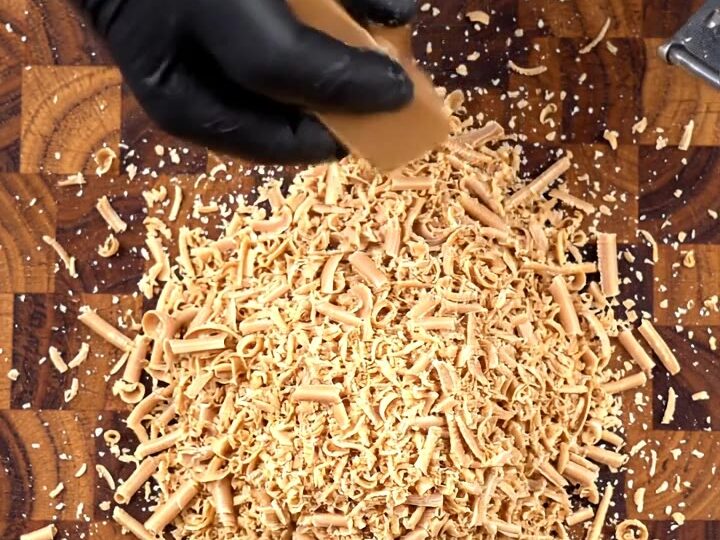
- Slice and top the bunsCut the log into nine equal slices, about 1 1/2 inches thick, using a sharp knife or dental floss. Grate the chilled block of caramel over the board so the shavings fall over the buns, then scatter the chopped pecans on top.Look for Each slice shows a clear cinnamon spiral, and the caramel shavings cover the tops.Tip Chill the caramel so it grates cleanly without softening into paste.
The dough is rolled into a rectangle with an even layer of butter and cinnamon sugar across the surface, then rolled into a firm, tight log without gaps. When you slice it, each round should hold its spiral shape, with a visible cinnamon swirl and no filling falling out.
The caramel should be grated in fine shavings across the buns, and the pecans should sit evenly over the tops. Check that the buns are roughly the same size so they bake at the same rate. If any slice looks loose, pinch the edges gently and reshape it before placing it in the pan. Good structure at this stage is what gives the finished buns their clean, glossy spirals.
Baked to golden
- Arrange and bake the bunsArrange the buns cut side up in the dark round pan, leaving a small gap between them. Set the pan in a warm spot and let the buns rise until puffed, about 30 minutes. Bake at 350°F (175°C) until golden brown and fully set on top.Look for The buns are puffed, deep golden on top, and the caramel has melted into the spirals.Tip A dark pan browns the bottoms and edges more evenly than a light one.
After rising, the buns should look visibly puffed and full, with the edges touching slightly in the pan. Once baked, the tops turn deep golden brown, the caramel bubbles through the spirals, and a faint smell of toasted sugar and cinnamon rises from the oven. The centers should feel springy and fully set when you press them lightly with a fingertip. If the tops are browning too quickly before the centers are done, tent the pan loosely with foil. Let the pan rest a few minutes before moving on, so the buns hold together when you lift them out. A properly baked batch looks evenly colored from the edge to the middle.
Glazed and finished
- Make the maple-caramel glazeWarm the maple syrup and caramel sauce in a small saucepan over low heat, stirring until smooth and thick enough to coat a spoon. Transfer the baked buns to a wooden board and pour the warm glaze generously over the tops so it drips down the sides.Look for The glaze is smooth, amber and glossy, and it flows slowly off a spoon.Tip Pour the glaze while it is warm so it soaks into the tops of the buns.
- Finish with pecans and servePress a whole toasted pecan half onto each bun and scatter the remaining chopped pecans over the board. Let the buns cool for a few minutes so the glaze sets slightly, then pull them apart and serve warm.Look for Each bun wears a pecan half, the glaze is glossy, and the tops feel sticky to the touch.Tip Serve them within an hour for the best texture and glaze.
The maple and caramel glaze should look smooth, amber and glossy, and it should flow slowly off a spoon without looking thin or watery. When you pour it over the warm buns, it should soak into the tops and run down the sides in thick ribbons. Each bun should carry a whole toasted pecan half and a light scatter of chopped nuts on the board. Check that the tops are coated evenly and no bun is left dry. Let the buns rest briefly before serving so the glaze sets just enough to hold its shine. The finished buns should feel sticky to the touch and look thoroughly coated.
Common mistakes
The most common mistake is rushing the rise. If the buns are not puffed before they go into the oven, the centers stay dense and the spirals never fully separate. Another frequent error is overheating the glaze. When maple syrup and caramel are boiled hard, they can turn bitter and too thick to pour, so keep the heat low and stir until just smooth.
Pouring the glaze over cold buns is also a problem, because the syrup sits on top rather than soaking in. Finally, cutting the log with a dull knife squashes the spirals and pushes out the filling. Use a sharp knife or dental floss, and pull the cut gently to keep each bun round and neat before it goes into the pan.
How to tell it’s done
The buns are done when the tops are deep golden brown, the caramel has bubbled through the spirals, and the centers feel springy and fully set when you press them lightly with a fingertip. A thin skewer inserted into the center of a bun should come out clean or with only a little moist, glossy caramel on it.
The glaze is ready when it is smooth, thick enough to coat a spoon, and amber in color. There is no protein in this recipe, so no internal temperature applies. Judge the buns by color, texture and shine, and let them cool briefly before pulling them apart so the spirals stay intact and the glaze settles into a glossy coating.
Up next · Part 3 of 3
4 variations · storage & make-ahead · 5 answers · printable card
Tips, FAQ & printable recipe (Part 3)← Back to the ingredients (Part 1)