Dinner · Part 2 of 3: Instructions
Loaded Seafood Baked Potato with Cajun Shrimp Step-by-step instructions
- Prep
- Cook
- Total
- Serves
- 4
Before you start
Before beginning, ensure all ingredients are gathered and prepped. Scrub the potatoes thoroughly to remove any dirt, and ensure they are completely dry before baking. Peel and devein the shrimp, and pat them dry with paper towels to ensure a good sear.
Chop the scallions and have the bacon pre-cooked and crumbled, as these will be used for the final assembly. Preheating the oven well in advance is critical to ensuring the potatoes bake evenly and achieve that desirable, crisp exterior.
Ingredients at a glance (7)
- 4 large russet potatoes, scrubbed
- 1 lb shrimp, peeled and deveined
- 1 tbsp cajun seasoning
- 4 slices bacon, cooked and crumbled
- 1 cup cheddar cheese, shredded
- 2 tbsp scallions, thinly sliced
- 1/2 cup creamy sauce, made ahead
Instructions
Baking the Potatoes
- Bake the PotatoesPreheat the oven to 400°F (200°C). Pierce the potatoes with a fork several times and bake them on a baking sheet for 50 to 60 minutes until they are tender when pierced with a knife.Look for Potatoes are tender and skin is crispyTip Ensure potatoes are dry before baking for crispier skin.
The potatoes are ready for the next step when the skin is crispy to the touch and the interior is soft and yielding. Test by inserting a fork into the center; it should meet no resistance. If the potato feels firm, return it to the oven for an additional five minutes. The potatoes should smell earthy and toasted, indicating they are ready for the filling.
Searing the Shrimp
- Sear the ShrimpToss the shrimp with Cajun seasoning in a bowl. Heat a skillet over medium-high heat and sear the shrimp for 2 to 3 minutes per side until they reach an internal temperature of 145°F (63°C).Look for Shrimp turns opaque and pinkSafe temperature 145°F (63°C) internal temperature (shellfish)Tip Do not overcrowd the pan to ensure even searing.
The shrimp are ready when they have developed a golden-brown crust from the seasoning and are no longer translucent. They should curl into a soft 'C' shape.
Check the internal temperature to ensure they reach 145°F (63°C). The aroma should be bold and spicy, filling the kitchen with the scent of the Cajun spices, indicating they are ready to be placed on the potatoes.
Final Assembly
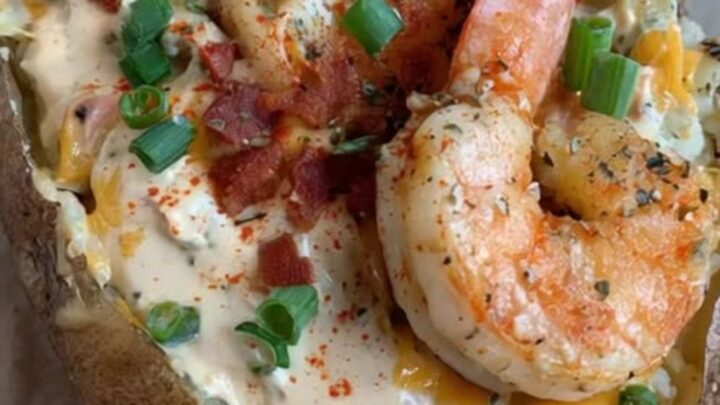
- Assemble the Loaded PotatoSlice the baked potatoes open and fluff the centers with a fork. Fill each potato with the creamy sauce, shredded cheddar cheese, crispy bacon crumbles, and the seared Cajun shrimp. Top with sliced scallions.Look for Potato center is steaming and cheese is meltedTip Add the cheese while the potato is still hot to ensure it melts thoroughly.
The potato is fully assembled when the cheese is melted and the sauce has combined with the fluffy potato center. Everything should be warm and visually appealing, with the vibrant colors of the shrimp and scallions standing out against the creamy filling. Ensure the bacon is distributed evenly for a balanced bite. The dish is now ready for immediate serving while steaming hot.
Common mistakes
A common mistake is failing to dry the potatoes before baking, which leads to soggy skin. Another error is overcrowding the skillet when searing the shrimp, which results in steaming rather than searing, preventing that nice crust.
Ensure the oven is fully preheated before putting the potatoes in, and avoid rushing the baking time, as undercooked potatoes will not have the fluffy texture required to support the toppings.
How to tell it’s done
The potatoes are done when they are tender throughout and can be easily pierced with a fork. The shrimp is perfectly cooked when it turns opaque and reaches an internal temperature of 145°F (63°C).
Overcooking the shrimp can make it rubbery, so keep a close watch during the searing process. When finished, the potato should be steaming hot, and the cheese should be visibly melted and bubbling slightly within the center.
- Shellfish: 145°F (63°C) in the thickest part
Up next · Part 3 of 3
2 variations · storage & make-ahead · 3 answers · printable card
Tips, FAQ & printable recipe (Part 3)← Back to the ingredients (Part 1)