Appetizers · Part 2 of 3: Instructions
Loaded Birria Waffle Fries — One-Pan Broiler Appetizer Step-by-step instructions
- Prep
- Cook
- Total
- Serves
- 4
Before you start
Set everything up before the broiler comes on, because the active part of this recipe lasts barely five minutes. Move the oven rack to the top position, about 6 inches from the element, and heat the broiler to 500°F (260°C). Pull the frozen waffle fries from the freezer and spread them out to knock off any frost. Warm the shredded birria and the consomé in a small saucepan over low heat until both are steaming, then keep them covered off the heat.
Ingredients at a glance (8)
- 1 lb extra-crispy waffle fries (frozen)
- 6 oz hot shredded beef birria (store-bought or made ahead)
- 2 cups shredded Chihuahua cheese
- 1/4 cup pickled jalapeño slices
- 3 tbsp sour cream
- 1/4 cup fresh pico de gallo
- 1/3 cup hot birria consomé
- Creamy guacamole, for serving
Instructions
Preheat and Build the Fry Base
- Heat the broilerMove an oven rack to the top position, about 6 inches from the broiler element, and heat the broiler to 500°F (260°C). Set the cast-iron skillet nearby and line up the birria, cheese and jalapeños so assembly takes seconds once the heat is ready.Look for The broiler element glows steady and even, with no flicker, and the kitchen air directly under it feels intensely hot when a hand is held well above the rack.Tip Cast iron heats slowly, so let the empty skillet sit near the stove while the broiler warms; a hot pan keeps the fries crisping from below the whole time.
- Spread the waffle friesSpread the waffle fries across the bottom of the skillet in a single even layer, filling gaps gently so the base is covered without thick piles. Aim for full coverage with only slight overlap; every topping sits on this layer, so an uneven base shows through the finished dish.Look for The skillet bottom is completely hidden, the fries sit mostly flat, and no spot is more than one fry deep anywhere in the pan.Tip Set the flattest, thickest fries cut-side down in the center, where the heat is strongest, for the crispiest bite under the cheese.
At the end of this phase the broiler is at full heat with the rack close to the element, and the cast-iron skillet holds a single, even layer of waffle fries that hides the bottom of the pan completely. Nothing is layered yet, so every fry should look dry and frost-free, sitting flat with only slight overlap where the lattice shapes interlock.
Layer and Broil
- Layer the birriaScatter the hot shredded birria evenly over the fries, pulling apart any clumps with a spoon so the beef settles into the gaps rather than sitting in mounds. Keep the layer thin and even; a heavy blanket of beef traps steam and softens the fries before the broiler can crisp them.Look for Every fry carries some beef, the layer looks flat rather than lumpy, and the birria steams gently as it meets the hot pan.Tip Warm the birria in a small saucepan over low heat with a splash of consomé first; cold beef drops the skillet temperature and slows the melt.
- Add cheese and jalapeñosShower the shredded Chihuahua cheese evenly over the beef, reaching all the way to the edges of the skillet, then scatter the pickled jalapeño slices across the top. Press the layer down very gently with the back of the spoon so the cheese nests into the beef instead of sliding off when the pan moves.Look for No beef peeks through the cheese, the jalapeños sit evenly spaced rather than clustered, and the edge of the skillet shows a solid ring of cheese.Tip Cheese at the pan edge browns fastest and gives the crisp, lacy bits everyone reaches for, so leave the border generously covered.
- Broil until bubblingSlide the skillet onto the top rack and broil for 3 minutes, until the birria is heated through to 145°F (63°C) at the center. Rotate the pan once, halfway through, if the browning looks stronger on one side, then let the beef rest 3 minutes before topping. Watch continuously; at this distance from the element, the difference between blistered golden cheese and burnt cheese is a matter of seconds.Look for The cheese bubbles actively, browned blistered spots spread across the surface, and the beef fat sizzles audibly at the edges of the pan.Safe temperature 145°F (63°C) internal temperature (steaks, chops and roasts)Tip Keep the oven door slightly ajar if the broiler allows it; watching through glass with the light on makes the browning easier to judge.
This phase ends with the transformation. The cheese should bubble actively across the entire surface, with browned blistered spots scattered through the middle and darker, lacy edges where it meets the hot cast iron. The beef fat sizzles audibly at the rim, and the birria steams when a fork lifts a strand.
The jalapeños soften slightly and their color deepens. Before pulling the skillet, confirm three things: no beef remains hidden under unmelted cheese, the browning reaches at least the center of the pan, and nothing has gone past golden into black.
Load the Toppings
- Drizzle the sour creamPull the skillet from the broiler onto a trivet with both hands and thick mitts. Drizzle the sour cream back and forth across the hot surface in thin ribbons. The contrast between the cool cream and the blistered cheese is what makes each bite balanced, so keep the drizzle light rather than pooling it.Look for Thin ribbons of cream hold their shape on the hot cheese for a few seconds before softening, instead of flooding into the layers.Tip Drizzle straight from the spoon close to the surface; pouring from high up breaks the ribbon into drops and loses the pattern.
- Add pico and consoméSpoon the fresh pico de gallo over the center, letting the juices run where they may, then ladle the hot consomé directly over the middle of the skillet. Serve straight away; the consomé is at its best the moment it hits the steaming cheese, soaking into the center while the edges stay crisp.Look for The consomé steams on contact, pools briefly in the center, and begins soaking outward while the skillet still sizzles softly.Tip Ladle the consomé at the table or in the last seconds; an early pour softens the fries and thins the cheese before anyone tastes it.
- Finish and serveDot spoonfuls of creamy guacamole around the pico de gallo and bring the whole skillet to the table on a trivet. Lift the first fry slowly from an edge so the molten cheese stretches into a long pull, then let everyone dig in with small plates and plenty of napkins while it is hot.Look for The first fry lifts with a stretchy cheese pull several inches long, the beef steams, and the consomé glistens in the center of the pan.Tip Set the skillet on a wooden board or folded towel to protect the table, and warn everyone that cast iron stays scalding long after serving.
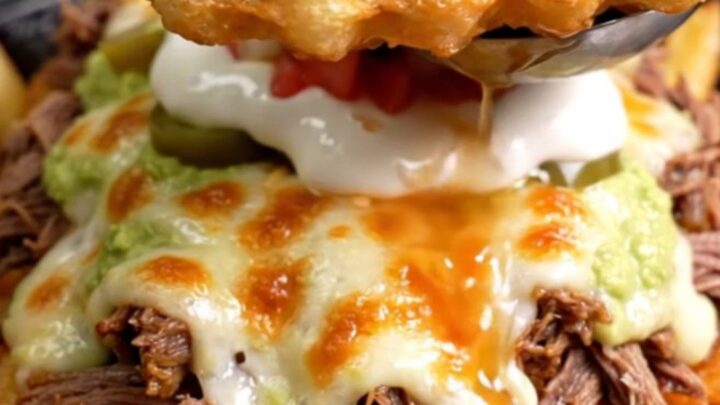
The finished skillet should look layered and alive: thin ribbons of sour cream holding their shape briefly on the blistered cheese, bright red and green pico de gallo piled over the center, pools of glossy consomé soaking outward from the middle, and guacamole dots scattered around the edge.
Steam should rise the moment the consomé lands, and the first fry lifted from an edge should stretch the cheese into a long pull while the base stays firm and crisp.
Common mistakes
The most common mistake is piling the layers too thick. A heavy blanket of beef traps steam against the fries and turns the base soft before the cheese even browns, so keep the birria in a thin, even layer.
Broiling with the rack too far from the element is the second trap: the cheese melts without ever blistering, and the dish loses its character. Walking away during the three minutes is risky, because cheese goes from blistered to burnt very quickly at this distance.
How to tell it’s done
The dish is done by sight and sound more than by a timer. Look for cheese that bubbles actively across the whole surface, with browned blistered spots spreading through the middle and lacy, deep-gold edges where the cheese meets the pan.
The beef should steam and the fat should sizzle audibly at the rim of the skillet. Since the birria is already fully cooked, the goal is simply heat all the way through: the beef and consomé should be steaming hot at the center, not just warmed at the edges.
- Steaks, chops and roasts: 145°F (63°C) in the thickest part, then a 3-minute rest
Up next · Part 3 of 3
4 variations · storage & make-ahead · 5 answers · printable card
Tips, FAQ & printable recipe (Part 3)← Back to the ingredients (Part 1)