Dinner · Part 2 of 3: Instructions
Spring Focaccia with Lemon Ricotta, Asparagus & Prosciutto Step-by-step instructions
- Prep
- Cook
- Total
- Serves
- 8
Before you start
Before starting, gather all ingredients and equipment. Bring the ricotta to room temperature for easier spreading. Trim the asparagus and cut any thick spears in half lengthwise. Measure the flour, yeast, and salt accurately.
Have a 9x13-inch baking pan ready and lightly oiled. If using a stand mixer, attach the dough hook. Clear a countertop for kneading. Prepare a warm, draft-free spot for the dough to rise. Preheat the oven to 450°F (232°C) when the dough is ready to bake.
Ingredients at a glance (11)
- 4 cups all-purpose flour
- 2 1/4 tsp instant yeast
- 1 1/2 tsp kosher salt
- 1 1/2 cups warm water (110°F)
- 1/4 cup extra-virgin olive oil, plus more for pan
- 1 cup whole-milk ricotta
- 1 tbsp lemon zest
- 1 bunch asparagus, trimmed
- 4 oz prosciutto, thinly sliced
- 2 tbsp hot honey
- flaky salt, for finishing, to taste
Instructions
Dough and Toppings
- Make the doughIn a large bowl or the bowl of a stand mixer fitted with the dough hook, combine the flour, instant yeast, and kosher salt. Add the warm water and 2 tablespoons of the olive oil. Mix on low speed until a shaggy dough forms, then increase to medium and knead for 5 to 7 minutes, until the dough is smooth and elastic. If kneading by hand, turn the dough out onto a lightly floured surface and knead for 8 to 10 minutes.Look for The dough should be smooth, supple, and spring back when poked.Tip Use warm water (not hot) to activate the yeast without killing it. If the dough is too sticky, add a little more flour, a tablespoon at a time.
- Prepare the pan and dimple the doughCoat the bottom and sides of a 9x13-inch baking pan generously with olive oil. Transfer the risen dough to the pan and gently stretch it to fit, using your fingertips to press it into the corners. If the dough resists, let it rest for 10 minutes before stretching again. Drizzle the remaining olive oil over the dough and use your fingertips to press deep dimples all over the surface, creating the classic focaccia texture.Look for The dough should be evenly spread in the pan with deep, distinct dimples.Tip Dimpling not only creates the signature look but also helps the toppings settle into the dough.
- Add the ricotta and asparagusIn a small bowl, stir the ricotta with the lemon zest until well combined. Dollop the ricotta mixture evenly over the dimpled dough, using the back of a spoon to create small wells. Arrange the asparagus spears over the dough, pressing them gently into the ricotta and dough. Let the assembled focaccia rest for 20 to 30 minutes while the oven heats.Look for The ricotta dollops and asparagus should be distributed evenly across the surface.Tip Trimming the asparagus to fit the pan ensures even cooking. If the spears are thick, slice them lengthwise.
After kneading, the dough should be smooth and elastic, and it should double in size during the rise. The dimpled surface should hold its shape, and the ricotta and asparagus should be evenly distributed. The dough should feel airy and spring back when poked. This phase sets the foundation for a light, airy focaccia.
Baking and Finishing
- Bake the focacciaPreheat the oven to 450°F (232°C) with a rack in the upper third. Place the focaccia in the oven and bake for 20 minutes, or until the crust is golden brown, the cheese is blistered in spots, and the asparagus is tender. Rotate the pan halfway through if the oven heats unevenly. The internal temperature of the dough should reach at least 200°F (93°C) in the center to ensure it is fully baked.Look for The crust is deep golden, the ricotta is browned in spots, and the asparagus is tender when pierced with a fork.Tip If the top browns too quickly, tent loosely with foil for the last 5 minutes. For extra crispness, bake on a preheated pizza stone or steel.
- Add prosciutto and hot honeyRemove the focaccia from the oven and immediately drape the prosciutto slices over the hot surface, letting them curl and crisp slightly from the residual heat. Drizzle the hot honey over the top. Sprinkle with flaky salt, if desired. Let cool for 5 minutes before slicing.Look for The prosciutto should be slightly crisp at the edges, and the honey should glaze the surface.Safe temperature 160°F (71°C) internal temperature (egg dishes)Tip Adding the prosciutto after baking keeps it from becoming tough and chewy; the residual heat warms it just enough.
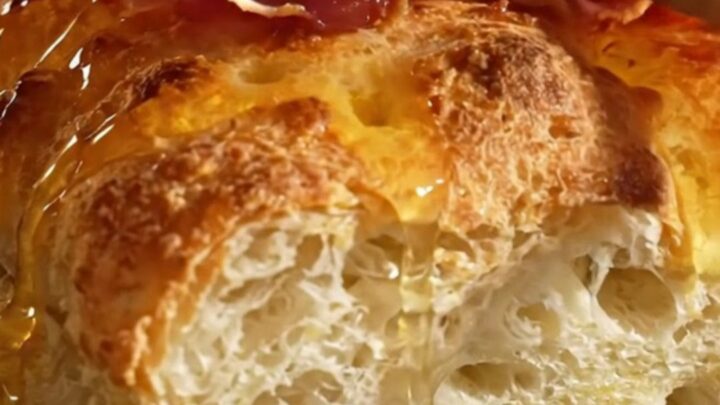
The focaccia should be golden brown with a crisp crust and blistered cheese. The asparagus should be tender, and the prosciutto should be slightly crisp at the edges. The hot honey should be drizzled evenly, and the flaky salt adds a final burst of flavor. The aroma should be savory, slightly sweet, and inviting.
Serving
- Slice and serveUse a sharp knife or a pizza cutter to slice the focaccia into squares or rectangles. Serve warm, with extra hot honey on the side if desired. This focaccia is best enjoyed the day it is made, but leftovers can be stored in an airtight container at room temperature for up to 2 days.Look for The focaccia is golden, aromatic, and the toppings are glossy.Tip For clean slices, use a serrated knife and gentle sawing motion. Reheat leftover slices in a toaster oven or under the broiler to refresh the crust.
The focaccia should be warm, with a crisp exterior and soft, airy interior. The toppings should be well-distributed, and the prosciutto should be slightly crisp.
The hot honey should add a subtle heat and sweetness. Each bite should be a balance of creamy, salty, sweet, and tangy flavors. Serve immediately for the best texture.
Common mistakes
Over-kneading the dough can make it tough; knead just until smooth and elastic. If the dough is too sticky to shape, use a little flour on your hands, but avoid adding too much, which can dry it out. Be sure to dimple the dough deeply enough to create pockets for the toppings.
Don't skimp on olive oil—it adds flavor and helps achieve a crisp crust. Avoid overloading the focaccia with toppings, as it can weigh down the dough and prevent even baking. Finally, don't skip the rest after topping; it allows the dough to relax and rise slightly, resulting in a better texture.
How to tell it’s done
The focaccia is done when the crust is deep golden brown and the internal temperature in the center reaches at least 200°F (93°C). The ricotta should be blistered and browned in spots, and the asparagus should be tender when pierced with a fork.
The edges of the dough should be crisp and pull away from the pan slightly. If the top browns too quickly, tent with foil and continue baking until the center is fully cooked. Let cool for a few minutes before slicing to allow the toppings to set.
- Egg dishes: 160°F (71°C) in the thickest part
Up next · Part 3 of 3
4 variations · storage & make-ahead · 5 answers · printable card
Tips, FAQ & printable recipe (Part 3)← Back to the ingredients (Part 1)